
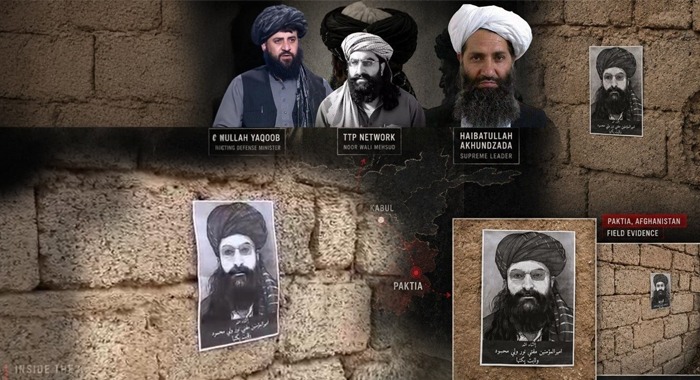
Recent reports of the arrest of members of Tehrik-e-Taliban Pakistan (TTP) in Kabul may represent more than an isolated security operation. Information emerging from sources familiar with developments inside Afghanistan points to potentially significant tensions within the Taliban’s leadership structure, involving competing political interests, relationships with militant networks, and the question of Afghanistan’s future leadership.
According to sources with knowledge of developments inside Afghanistan, Mullah Mohammad Yaqoob Mujahid, the Taliban’s acting defense minister, has for some time maintained a close relationship with elements associated with the TTP. The sources allege that this relationship has included the provision or facilitation of financial assistance to TTP members and support for the families of militants killed during Pakistani security operations.
These allegations have not been independently verified, and the precise nature and extent of any such assistance remain unclear.
Sources further claim that Mullah Mohammad Yaqoob’s relationship with the TTP forms part of a broader political calculation concerning the future balance of power within the Taliban movement. According to these accounts, Yaqoob is seeking to strengthen his political and institutional position ahead of any future leadership transition and is concerned about the growing influence of the Haqqani network. The sources characterize the position of Supreme Leader Haibatullah Akhundzada as central to an increasingly competitive internal political landscape and allege that Yaqoob has ambitions of eventually assuming the position of Emir of the Islamic Emirate.
These claims remain allegations rather than independently established facts. The reported rivalry reflects a broader question facing the Taliban authorities: how power would be redistributed in the event of a future leadership transition, and whether competing factions could maintain unity while protecting their respective political, military and regional interests.
Within this alleged political equation, Noor Wali Mehsud, the leader of the TTP, is reportedly becoming an increasingly important figure. Sources describe Noor Wali as maintaining a particularly close relationship with Yaqoob and characterize him as a potential reserve source of influence and manpower in the event of a serious internal confrontation within the Taliban leadership.
The sources further allege that Yaqoob has discussed a future political or administrative role for Noor Wali in Afghanistan’s southeastern region. According to these claims, such a role could involve a senior position under the broader authority of Afghanistan’s supreme leadership, potentially extending Yaqoob’s influence into areas bordering Pakistan where the TTP already maintains an established presence. There is currently no independently verified evidence confirming that any such arrangement has been formally agreed or implemented.
Sources also make a further, particularly serious allegation concerning Yaqoob’s purported contacts with elements of India’s intelligence establishment. According to these sources, Yaqoob has allegedly maintained contacts with Indian intelligence-linked actors and has discussed providing operational space inside Afghanistan in exchange for political, financial or other forms of support.
These allegations have not been independently substantiated. No independently verified documentation has been presented establishing the existence, nature or terms of any such arrangement. Given the sensitivity of the allegation and its potential implications for regional security, it requires particular caution and independent verification.
Adding another potentially significant dimension to the developing picture, photographs and videos obtained from sources in Paktia Province appear to show posters bearing the name and image of Noor Wali Mehsud. The posters reportedly refer to him as “Amir al-Mu’minin Mufti Noor Wali Mehsud” and contain references to “Wilayat Paktia.”
The imagery has not been independently geolocated, and the circumstances surrounding the production, distribution and display of the posters remain unclear. It is therefore not possible, on the basis of the imagery alone, to determine whether the posters represent an officially sanctioned development, a localized propaganda effort, an attempt at political messaging, or an effort by unidentified actors to manufacture the appearance of broader support. Nevertheless, if independently authenticated, the imagery could warrant further investigation because of the implications of publicly associating the TTP leadership with a territorial designation inside Afghanistan.
Against this backdrop, the reported arrests of TTP members in Kabul take on added significance. Sources claim that elements loyal to Haibatullah Akhundzada have become increasingly concerned about the growing relationship between Yaqoob and TTP leadership. According to these accounts, pressure was subsequently applied against TTP-linked individuals operating in Afghanistan.
The sources further allege that attempts to disrupt these networks did not permanently sever the relationship and that Yaqoob subsequently intervened on behalf of TTP members. The precise circumstances of the reported arrests, the identities of those detained, the reasons for their detention and the extent of any subsequent intervention require independent confirmation.
Taken together, these developments raise questions about whether the Taliban’s internal political landscape is entering a more competitive phase involving three principal centres of influence: the Haibatullah camp, the Yaqoob camp and the Haqqani network. It would be premature to conclude that an open confrontation is imminent. The Taliban leadership has repeatedly demonstrated an ability to manage internal differences through political bargaining, organizational discipline and negotiated power-sharing.
At the same time, competition over succession, security institutions, regional authority and relationships with armed groups could become increasingly important as Afghanistan’s political order evolves. The question is not simply who may eventually succeed the current supreme leader. It is also whether competing factions will be able to maintain a unified command structure while managing divergent relationships with militant organizations operating inside and around Afghanistan.
Any substantial fracture within the Taliban’s leadership could have consequences beyond Afghanistan’s internal politics. Afghanistan remains home to, or a significant operating environment for, multiple militant organizations and armed networks, including the TTP, Islamic State Khorasan Province (ISKP), Al-Qaeda, the East Turkestan Islamic Movement (ETIM), Jamaat Ansarullah and other groups.
A serious breakdown in political cohesion could create opportunities for such organizations to expand recruitment, establish new areas of influence, exploit security vacuums or intensify cross-border operations.
For Pakistan in particular, any strengthening of TTP networks along or near the Afghan-Pakistani frontier could carry significant security implications. The relationship between the Taliban authorities and the TTP has already been a major source of tension between Kabul and Islamabad. For other regional states, the possibility of Afghanistan becoming an arena for intensified competition among militant organizations and foreign intelligence interests would present an additional security concern.
The reported arrests in Kabul may therefore represent only one visible component of a much broader political and security dynamic. If the allegations concerning competing Taliban factions, TTP-linked networks and regional political maneuvering are eventually corroborated, they could point to a significant restructuring of relationships within Afghanistan’s ruling establishment.
However, the available information remains incomplete. Many of the allegations originate from sources whose identities and access cannot be independently established. The imagery purportedly originating in Paktia has likewise not been independently geolocated. Accordingly, the claims should be treated as reports requiring further verification rather than definitive evidence of an established political or military arrangement.
What can be said with greater certainty is that the intersection of Taliban succession politics, factional competition, militant networks and regional rivalries warrants close monitoring.
The political architecture established by the Taliban following its return to power remains subject to internal negotiations, competing interests and evolving security pressures. The balance among senior Taliban figures and networks could have profound implications for Afghanistan’s future governance and for the wider security environment of South and Central Asia.
The reported activities surrounding Yaqoob, Noor Wali Mehsud and TTP-linked networks therefore merit careful scrutiny not only because of their potential significance for Taliban internal politics, but also because of the possible consequences for Afghanistan’s neighbours and the broader region.
Further independent verification of the reported arrests, alleged financial links, political understandings, external contacts and Paktia imagery will be essential to determining whether these developments represent isolated incidents or evidence of a deeper realignment within Afghanistan’s power structure.
The situation remains fluid, and developments in Kabul, Kandahar and Afghanistan’s southeastern provinces warrant continued observation as the competing centres of influence seek to consolidate their positions.



