
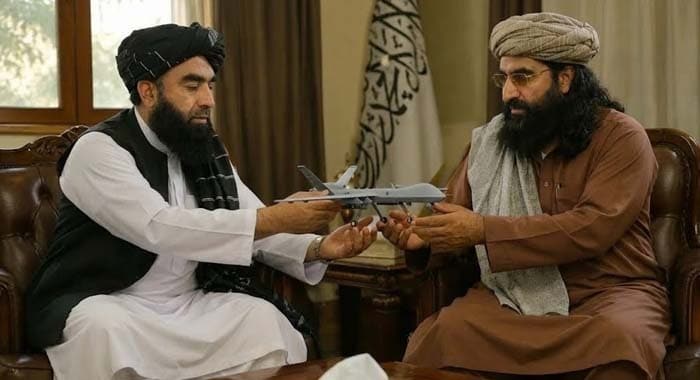
Reports of a significant and reportedly lengthy meeting between Taliban spokesman Zabihullah Mujahid and Tehreek-e-Taliban Pakistan (TTP) chief Noor Wali Mehsud in Afghanistan’s Nangarhar province are raising fresh questions about the evolving security relationship between Afghanistan and Pakistan and the continued presence of TTP networks on Afghan soil.
According to information attributed to internal sources, the meeting reportedly began at approximately 6:00 p.m. on Monday and continued for an estimated seven to eight hours. The discussions were reportedly centered on the regional security situation, escalating tensions between Pakistan and Afghanistan and a range of matters concerning the TTP.
The most consequential claim surrounding the reported meeting involves the alleged transfer of eight additional drones to Noor Wali Mehsud. The same sources further claim that discussions included the provision of a professional social media team and other resources intended to strengthen the TTP’s organizational and communications capabilities.
The reported gathering is said to have involved figures from both the Taliban and TTP. Several local Taliban commanders allegedly accompanied Zabihullah Mujahid, while a number of senior TTP leaders were reportedly present alongside Noor Wali Mehsud. If accurate, the reported participation of senior figures from both sides would make the alleged meeting particularly significant. It could potentially indicate discussions extending beyond routine political or security contacts and raise questions about the nature of communication between Taliban officials and the leadership of a militant organization that Pakistan has repeatedly identified as a major security threat. At the same time, the reported attendance of particular individuals should be treated as an allegation until corroborating evidence or official confirmation becomes available.
The reported transfer of eight additional drones is likely to attract particular attention because unmanned aerial systems can provide militant organizations with capabilities that extend beyond conventional ground operations. The allegation therefore raises important questions about the intended purpose, origin and potential use of the reported equipment. If the claim is eventually substantiated, investigators and security officials would likely seek to determine how the equipment was obtained, who authorized or facilitated its transfer, and whether the drones were intended for surveillance, reconnaissance or other operational purposes.
However, it is important to emphasize that the mere allegation of a transfer does not establish that the equipment was actually provided or that it has subsequently been used by the TTP. Those questions require independent evidence.
The reported discussion concerning a professional social media team adds another potentially significant dimension to the allegations. Militant organizations increasingly regard information operations, online propaganda and digital communications as integral components of their broader activities. Professionalized media capabilities can enable organizations to disseminate messaging rapidly, influence public narratives, attract supporters and amplify political or ideological claims.
If the reported discussions concerning additional media resources are confirmed, they could suggest an effort to enhance the TTP’s ability to operate not only on the ground but also within the information environment. This aspect of the allegations warrants particular attention because the modern security landscape increasingly extends beyond physical territory. Influence operations, digital propaganda and information campaigns can shape perceptions and political narratives even when no conventional military activity is taking place.
The reported meeting comes against a backdrop of persistent tensions between Islamabad and Kabul over the presence and activities of the TTP in Afghanistan. Pakistan has repeatedly called on the Taliban administration to prevent Afghan territory from being used by militant groups to conduct attacks or maintain networks targeting Pakistan. Islamabad has consistently raised concerns over the presence of TTP personnel and leadership inside Afghanistan and has pressed Kabul to take effective action against the group.
The Taliban administration, for its part, has repeatedly rejected allegations that it provides organized support to the TTP and has maintained that Afghanistan’s territory should not be used against other countries. The latest allegations therefore touch directly upon one of the most sensitive disputes between the two neighboring countries.
If independently verified, evidence of direct assistance involving equipment, personnel or organizational resources could further complicate an already strained bilateral relationship. It could also intensify pressure on the Taliban administration to provide clarification regarding its interactions with TTP figures and its broader policy toward militant groups operating from Afghan territory.



