
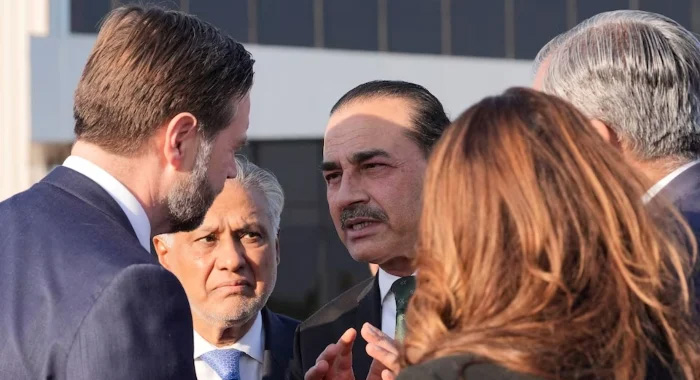
Senior officials from the United States and the Islamic Republic of Iran concluded their most significant direct talks in decades without reaching a final agreement, but multiple sources familiar with the negotiations confirmed that diplomatic engagement remains active and that both sides are continuing efforts toward a potential resolution.
The high-level meeting, held over the weekend at Islamabad’s Serena Hotel, marked the first direct encounter between U.S. and Iranian officials in more than a decade and the most senior engagement since Iran’s 1979 Islamic Revolution. The talks followed a Pakistan-brokered ceasefire announced days earlier, which paused six weeks of conflict that had resulted in thousands of deaths and caused widespread disruption to global energy supplies.
Negotiations unfolded over more than 20 hours in a tightly controlled and highly secure setting. Delegations were separated into different wings of the hotel, with one designated for the U.S. side, another for the Iranian delegation, and a shared area reserved for joint discussions facilitated by Pakistani mediators. Due to strict security protocols, mobile phones were not permitted inside the main negotiation room, requiring participants to step বাইরে during breaks to communicate with their respective governments.
Key figures involved in the discussions included U.S. Vice President JD Vance and senior Iranian leaders, among them Parliamentary Speaker Mohammad Baqer Qalibaf and Foreign Minister Abbas Araqchi. According to sources, these officials led the most substantive exchanges throughout the dialogue. Pakistani representatives, including Prime Minister Shehbaz Sharif, Army Chief General Asim Munir, and Foreign Minister Ishaq Dar, played an active mediating role, moving between the two sides throughout the night in an effort to sustain dialogue and prevent a breakdown in talks.
Sources described the atmosphere during the negotiations as tense, heavy, and at times confrontational. While there were moments of optimism, including a period when both sides appeared close to reaching a preliminary framework agreement—described by one source as being “approximately 80% complete” the discussions ultimately stalled due to unresolved differences on critical issues. At several points, raised voices were reportedly heard outside the negotiation room, prompting mediators to call breaks and separate the delegations in order to defuse tensions.
Central to the مذاکرات were deeply entrenched disagreements over Iran’s nuclear program, the future of the Strait of Hormuz, and the scope and sequencing of sanctions relief. The United States maintained a firm position that any agreement must ensure that Iran will never acquire a nuclear weapon, and it sought the dismantling of key nuclear enrichment facilities, the transfer of highly enriched uranium, the reopening of the Strait of Hormuz without restrictions or tolls, and broader commitments related to regional security, including ending support for proxy groups.
Iran, for its part, expressed strong skepticism regarding U.S. intentions and emphasized the need for binding guarantees. Iranian officials called for a permanent ceasefire, assurances against future military strikes on Iran and its regional allies, the lifting of both primary and secondary sanctions, the unfreezing of Iranian financial assets, recognition of its right to nuclear enrichment for peaceful purposes, and continued control over the Strait of Hormuz. Iranian sources also indicated that Tehran sought a broader agreement encompassing wider geopolitical and security considerations, in contrast to Washington’s more focused approach.
Distrust emerged as a significant obstacle during the discussions. At one point, Foreign Minister Abbas Araqchi reportedly questioned the credibility of U.S. assurances, referencing a prior round of talks in Geneva during which military action followed shortly after diplomatic engagement. Such concerns contributed to the breakdown of momentum in the later stages of the dialogue.
Despite the deadlock, there were indications of modest progress in tone toward of the talks. By early Sunday morning, the atmosphere had somewhat improved, and there was consideration of extending the negotiations by an additional day. However, this possibility did not materialize, and the talks concluded without a formal agreement.
Following the meeting, U.S. officials signaled that engagement with Iran is ongoing. President Donald Trump stated that Iran had reached out expressing interest in pursuing a deal, although this claim could not be independently verified. A U.S. official confirmed that communication between the two sides continues and that efforts toward an agreement remain underway. The White House reiterated that its position had not shifted, emphasizing that Iran must never obtain a nuclear weapon while affirming that diplomatic engagement would continue.
Regional diplomatic sources indicated that mediation efforts have persisted beyond the Islamabad meeting, with ongoing communication between intermediaries and both parties. Pakistani officials confirmed that they continue to relay messages between Tehran and Washington. Prime Minister Shehbaz Sharif stated publicly that comprehensive efforts are still being made to resolve the dispute.
Analysts suggest that both sides have strong incentives to pursue de-escalation. In the United States, recent military actions have faced domestic criticism and are unlikely to produce decisive political outcomes in Iran. Meanwhile, Iran’s restriction of energy flows through the Strait of Hormuz has contributed to rising global inflation and economic instability. Additionally, prolonged conflict risks further weakening Iran’s already strained economy and internal stability, particularly in the aftermath of recent domestic unrest.
While the Islamabad talks did not produce an immediate breakthrough, they represent a significant step toward reestablishing direct diplomatic engagement between two long-standing adversaries. The outcome underscores both the complexity of the issues at hand and the continued of sustained dialogue. Observers widely expect that further rounds of negotiations, whether direct or mediated, will be essential in determining whether a durable agreement can be achieved.



