
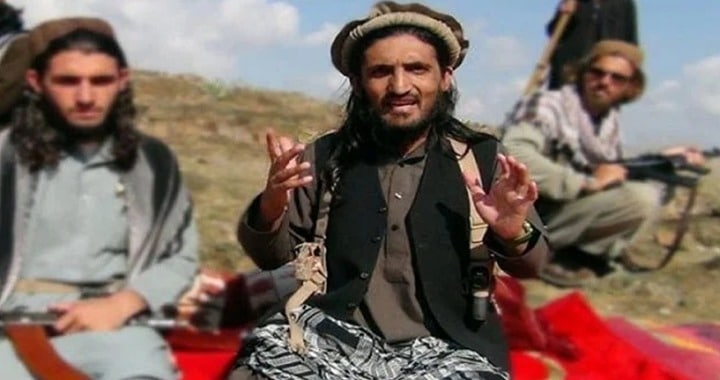
A newly released documentary-style report by Jamaat-ul-Ahrar (JuA) presents a structured account of Umar Khalid Khurasani’s involvement in terrorist networks, detailing his role in armed formations, internal factionalism, and violent splinter groups operating in the Pakistan–Afghanistan border region.
Rather than a neutral biography, the document effectively traces his operational association with multiple armed outfits and his eventual emergence as a key figure within the militant landscape linked to the banned Tehreek-e-Taliban Pakistan (TTP) and later Jamaat-ul-Ahrar.
According to the report, Khurasani originated from Mohmand Agency, a remote and underdeveloped region described in the document as having limited state presence under earlier governance frameworks. The narrative suggests that this environment was exploited by armed groups to expand recruitment and operational space.
However, the report itself documents how this environment translated into militant consolidation rather than neutral social development, with Khurasani moving through various armed affiliations before becoming part of coordinated insurgent structures.
Early Terrorist Links and Armed Consolidation
The report states that in 2007, Khurasani separated from Harakat-ul-Mujahideen and began aligning with smaller armed groups operating in Mohmand. He was also previously associated with the Akbar Shah network, according to the document.
His influence reportedly increased during a period of intensified militant activity in the region, where various armed factions were consolidating operational control and competing for territorial influence.
A consultative militant council was later formed in Kandaro village, bringing together fighters from Mohmand and Swat. This structure, according to the report, operated under the leadership of Maulana Fazlullah, with Khurasani appointed as a commander and Qari Shakeel Ahmed as deputy.
Internal Rivalries and Violent Fragmentation
The report also highlights sustained internal conflict within militant formations in Mohmand, including detentions, exchanges, and armed clashes between rival factions.
These disputes, rather than ideological disagreement alone, are described as part of a broader struggle for control, influence, and operational dominance among competing armed groups.
The resulting fragmentation contributed to further violence, splinter formations, and shifting alliances, reinforcing instability within the wider TTP-linked ecosystem.
Taken together, the document portrays Umar Khalid Khurasani not as a neutral historical figure, but as an actor embedded in successive phases of militant fragmentation, violent consolidation, and factional warfare within terror networks operating across the Pakistan–Afghanistan borderlands.
It also indirectly underscores how these groups evolved less as ideological monoliths and more as contested armed structures shaped by rivalry, splintering, and repeated cycles of internal violence.



