The situation in Afghanistan today cannot be understood without first looking at the internal divisions within the Afghan Taliban. These divisions are not new. For a long time, differences have persisted between the Kandahar group and the Kabul group, shaping the internal dynamics of power.
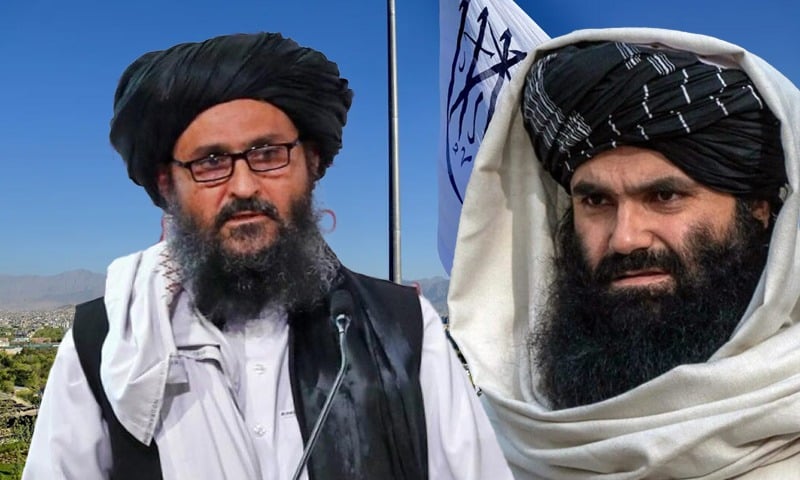
Recent developments have made these divisions more visible. Reports suggest that senior figures, including Siraj-ud-Din Haqqani and some of his associates, have faced accusations of rebellion. Alongside this, disagreements have emerged among different factions, particularly regarding relations with Pakistan. At the same time, opposition elements have begun to reassert themselves, with increasing reports of attacks against Taliban positions across different parts of Afghanistan.
When a leadership relies on force as its primary instrument, such outcomes are inevitable. The case of Motasim Agha Jan reflects this pattern. He has been a close associate of Mullah Omar and a key figure within the Taliban leadership, based in Kandahar. In that same stronghold, Mullah Hibatullah has established a parallel structure of authority, including a force that operates solely under his command. Reports indicate that this force has been involved in detentions, disappearances, and killings, with growing concerns about missing persons highlighted in international reporting.
Such methods are not unfamiliar in history. Systems built on unchecked authority often create parallel enforcement mechanisms that operate beyond accountability. In the case of the Taliban, this reflects a deeper issue: they are not a political entity shaped by electoral legitimacy, nor do they demonstrate a structured policy to accommodate opposition. Their evolution as a militant movement continues to define their approach to governance, where the use of force becomes the default response.
This environment has also led to targeting beyond internal rivalries. Even influential individuals are not immune, while broader resistance has started to take shape. Under the leadership of Ahmad Masood, resistance forces have claimed that since January 2025, around 180 members linked to the Afghan setup have been killed. Such figures raise serious questions about the nature of authority and the scale of internal conflict.
The situation extends further into the treatment of civilians and minorities. The incident in Herat, where members of the Shia community were killed, drew strong reactions from international forums, including the United Nations and the European Union. Despite this, the response within Afghanistan reflects a pattern of indifference. The broader issue lies in the creation of divisions based on ethnicity and exclusion, where representation is denied to various segments of society. Even within Taliban ranks, voices have begun to emerge, reflecting internal dissatisfaction, yet the overall direction suggests a continued unwillingness to tolerate dissent on religious or ethnic grounds.
In this context, discussions around negotiations must be viewed realistically. Engagements such as those in Urumqi cannot be described as formal negotiations. They remain routine interactions between officials of different countries without producing tangible outcomes. Pakistan’s position on this matter has remained consistent and clear at all levels. There can be no meaningful progress unless the Afghan Taliban provide practical and verifiable guarantees against terrorist groups and their safe havens. Without such assurances, dialogue does not translate into results.
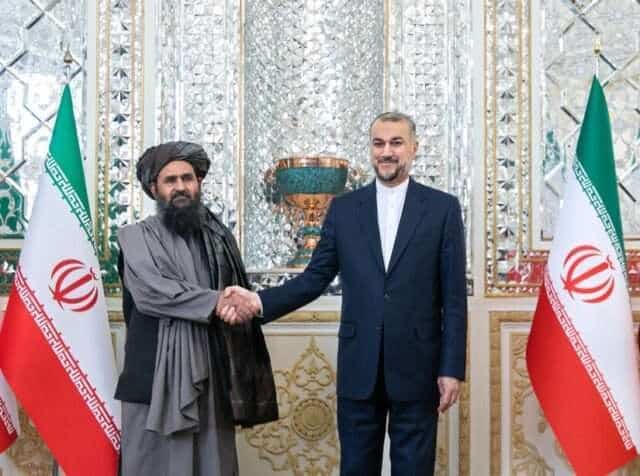
At the same time, Pakistan’s role in the broader regional context has expanded significantly. Preparations for further diplomatic engagements, including a second round of talks involving the United States and Iran, indicate increasing international recognition of Pakistan’s position. High-level interactions in Tehran, along with the reception by Iranian leadership, reflect a growing trust in Pakistan’s ability to facilitate complex diplomatic processes.
Statements emerging from international leadership, including remarks about potential developments linked to Pakistan, further underline this evolving role. Pakistan’s efforts in facilitating ceasefire understanding and maintaining stability between major powers represent a complex and demanding diplomatic undertaking.
Contrary to earlier narratives suggesting strained relations with regional partners, recent developments indicate a different trajectory. Engagements with countries such as Qatar and Turkey, along with broader regional coordination efforts involving Iran, Saudi Arabia, and the United Arab Emirates, highlight Pakistan’s active role in promoting dialogue and stability.
These developments point towards a significant shift in regional dynamics, where Pakistan is increasingly seen as a reliable partner in addressing both security and diplomatic challenges. And if these ongoing efforts continue, the coming days, in the form of talks or agreements, may witness a very big development.