
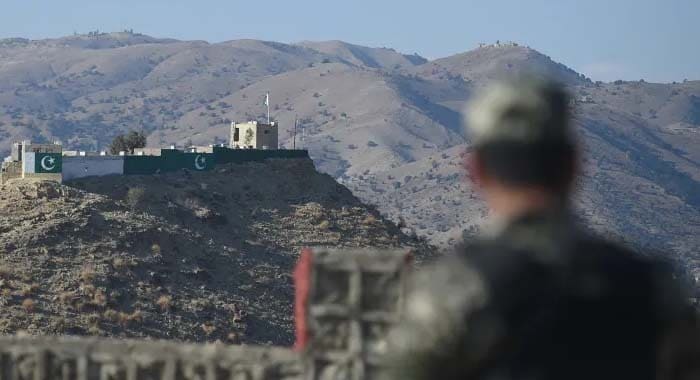
Pakistan continues to face a complex and evolving security challenge along its western frontier due to persistent cross-border terrorism and the presence of hostile elements operating from across the border. The recent precision-based and intelligence-driven operations conducted by the Pakistan Air Force along the Pakistan–Afghanistan border reflect Pakistan’s commitment to safeguarding its sovereignty, protecting its citizens, and preventing terrorist networks from threatening regional stability.
The operations were initiated following a series of attacks targeting Pakistani security personnel and civilians, including the 9 June attack on a Frontier Constabulary post in Musa Dara, the 2 June vehicle-borne suicide attack in North Waziristan, and the 9 May attack on a police station in Bannu.
According to official information, under Operation Azm-e-Istehkam, Pakistan’s security forces conducted targeted strikes against identified terrorist infrastructure linked with key commanders. The operations resulted in the neutralisation of armed militants and disruption of facilities being used for planning and executing attacks against Pakistan.
For Pakistan, the situation represents a serious national security challenge. No sovereign state can allow its citizens, law enforcement personnel, and armed forces to remain vulnerable to attacks originating from safe havens across an international border. The repeated targeting of Pakistani territory has compelled the state to take necessary measures to defend its people and national interests.
Pakistan’s current security challenges are the result of decades of regional instability and the complex security dynamics of the region. The return of the Afghan Taliban to power in 2021 created expectations of improved stability along Pakistan’s western frontier; however, continued attacks by groups such as the Tehrik-i-Taliban Pakistan (TTP) have remained a major concern.
The continued presence of terrorist networks and their ability to operate from Afghan territory has created a difficult environment requiring a comprehensive national security response.
Pakistan’s position remains that lasting peace in the region depends on preventing the use of any territory against neighbouring states and ensuring that terrorist groups do not receive space to reorganise, recruit, or launch attacks.
While intelligence-based kinetic operations provide immediate disruption to terrorist networks, Pakistan recognises that long-term security requires a broader and sustained strategy.
Terrorist groups have repeatedly demonstrated the ability to relocate, reorganise, and rebuild their networks. Therefore, counterterrorism efforts require a combination of military readiness, intelligence coordination, border management, diplomatic engagement, and socio-economic development.
The operational challenge is further complicated by the tactics used by terrorist organisations, which often attempt to operate from populated areas and use civilian environments to avoid direct confrontation. Such methods increase risks for innocent populations and create additional challenges for security forces.
The Pakistan–Afghanistan border is not only a security frontier but also an important economic and social corridor. Pakistan has historically maintained trade and connectivity links with Afghanistan and Central Asian regions.
However, security threats have repeatedly affected normal border activities, creating challenges for traders, transporters, and communities dependent on cross-border commerce.
A balanced approach requires strong security mechanisms alongside regulated trade, improved documentation systems, and effective border management to ensure that economic activities continue without compromising national security.
Pakistan continues to enhance its border security framework through improved surveillance, intelligence-based operations, and modern monitoring capabilities.
The transition towards advanced border management, including technology-driven surveillance systems, aerial monitoring, and improved coordination among security institutions, remains essential to prevent infiltration and disrupt terrorist movement.
At the same time, strengthening economic opportunities in border regions is critical to reducing vulnerabilities that extremist groups attempt to exploit.
The security situation along the Pakistan–Afghanistan frontier has broader implications for regional peace and stability. Terrorist networks operating in the region pose risks not only to Pakistan but also to neighbouring countries and international security interests.
Pakistan continues to advocate for effective international cooperation against terrorism and expects responsible action to ensure that Afghan territory is not used for activities threatening regional peace.
Engagement with regional partners, including countries concerned about terrorism, connectivity, and economic development, remains an important part of Pakistan’s broader strategy.
Pakistan’s security forces have made significant sacrifices in the fight against terrorism, protecting millions of citizens and preventing hostile networks from destabilising the country.
The nation remains determined to eliminate terrorism in all its forms and ensure that those responsible for attacks against innocent civilians and security personnel are brought to justice.
Through a combination of decisive security measures, strategic planning, and regional cooperation, Pakistan remains committed to defending its sovereignty and contributing towards lasting peace and stability.



