
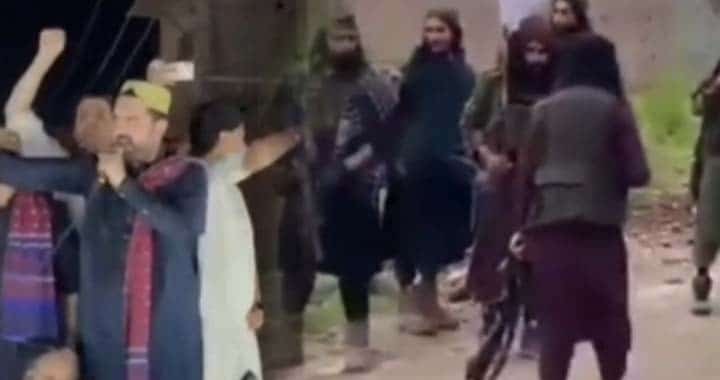
There is a striking contradiction unfolding in Pakistan’s politics: Khyber Pakhtunkhwa is battling terrorism, insecurity and economic hardship, yet its chief minister, Sohail Afridi, is spending his political energy on the highways and streets of Sindh, mobilizing
people for the political cause of his party’s imprisoned founder.
The contradiction becomes even sharper because Afridi comes from Khyber District, a region that has witnessed terrorists’ presence even today, and has repeatedly paid a heavy price for terrorism. The same Khyber that needs sustained attention from its political leadership is witnessing its chief executive campaigning hundreds of kilometers away, asking people to rally around an issue that is neither the constitutional responsibility of ordinary citizens nor the principal responsibility of a provincial government.
The question, therefore, is not whether a political party has the right to organize protests. It does.
The real question is whether a chief minister has his priorities in the right place.
For the people of Khyber Pakhtunkhwa, terrorism is not a political slogan. It is a daily threat to life, property, education, business and mobility. Communities have been forced to live with attacks, insecurity and the persistent fear that the violence that once devastated the tribal belt could again become a permanent feature of their lives.
Yet instead of making the security and economic revival of his province the centerpiece of his political activity, the chief minister is participating in a mobilization campaign in Sindh.
That would be difficult to justify even under ordinary circumstances. In the present environment, it is profoundly revealing.
Karachi Is Where People Go to Build a Life
There is another irony in taking this political campaign to Karachi.
For generations, people from Khyber Pakhtunkhwa and the former tribal districts have travelled to Karachi because they need what their home districts have struggled to provide consistently: employment, business opportunities, education and economic security.
Millions of Pashtuns have established themselves in Karachi and other urban centers, building businesses, working in transport and construction, entering trades and contributing substantially to the economies of the places where they settled.
They did not leave their homes because they were short of political causes.
They left because they needed livelihoods.
For many, Karachi became a second home precisely because economic opportunity was available there while insecurity and underdevelopment continued to restrict prospects in their native districts.
This makes the spectacle of a chief minister from terrorism-hit Khyber travelling through Sindh to mobilize those very people for a partisan political struggle particularly difficult to ignore.
The people need jobs.
They need security.
They need functioning schools and hospitals.
They need roads, investment and businesses capable of surviving without the constant shadow of terrorism.
They do not need their economic migration turned into a reservoir of political manpower.
A Court Sent Him to Prison. A Court Must Decide His Fate.
There is an even more fundamental question at the heart of PTI’s campaign.
Its founder is in prison because of judicial proceedings and court convictions. PTI disputes the cases and maintains that its founder has been politically targeted. That claim can be argued in courts, challenged through appeals and tested through the legal process.
But there is a line that a democratic political movement cannot responsibly cross.
A court sent him to prison. If he is innocent, a court can set him free.
That is the essence of the matter.
If convictions are overturned, if appeals succeed, if a higher court finds that the prosecution failed to establish guilt, or if the judicial process otherwise results in his acquittal, his release should follow.
What cannot become a substitute for that process is the mobilization of crowds with the implicit proposition that sufficient political pressure can achieve what the judicial system has not.
That is not democratic accountability.
That is an attempt to make numbers compete with law.
And mob justice has no legitimate place in a democracy.
This becomes particularly significant in the case of a politician whose public career has repeatedly been built around the claim that democracy is the political system he understands and champions better than others.
Democracy is not simply the right to assemble supporters when a verdict goes against you.
It also means accepting institutions, due process and the rule of law when the outcome is inconvenient.
A democratic movement cannot demand that courts be respected only when their decisions favor its political interests.
The Provincial Government Has a Different Job
A political party can campaign for its leader.
A party can organize demonstrations.
Its supporters can demand legal remedies.
But a chief minister occupies a different position.
Once elected to run a province, his responsibility extends beyond the membership of his party. He is responsible for the people who voted for him, those who did not, and millions who have no interest whatsoever in the fate of his party’s founder.
That responsibility is especially heavy in Khyber Pakhtunkhwa.
The province is confronting terrorism that has already taken the lives of civilians and security personnel, damaged communities and undermined economic activity. In such an environment, the chief minister’s principal political capital should be directed toward making his province safer and more prosperous.
The people of Khyber should be asking why their government cannot give them the security and economic opportunities that force so many of them to seek their futures elsewhere.
They should be asking why terrorism continues to dictate the rhythm of life in parts of the province.
They should be asking why political leadership is so readily available for party mobilization while communities confronting terrorists continue to demand protection.
These are not partisan questions.
They are governance questions.
Meanwhile, the Real Enemy Has Not Gone Away
There is an uncomfortable strategic consequence to this political distraction.
Terrorists do not need provincial governments to collapse completely. They benefit simply when state institutions become consumed by political confrontation, when public attention is diverted from security and when society becomes increasingly polarised.
A province fighting terrorism cannot afford to have its political leadership constantly pulled into battles whose center of gravity lies outside the province.
The terrorists threatening Khyber Pakhtunkhwa have no interest in who attends a political rally in Karachi.
They are interested in whether the state has the capacity, determination and public support to confront them.
That is where the political leadership of KP should be concentrating its energy.
The contrast could hardly be more stark.
One side is fighting to protect communities from terrorists.
The other is travelling from province to province to mobilize people over the imprisonment of a political leader whose legal fate ultimately rests with the courts.
Khyber’s People Deserve Better Priorities
There is nothing inherently wrong with political disagreement, protest or criticism of judicial decisions. Democracies need all three.
But there is something profoundly wrong when political mobilization begins to overshadow governance, particularly in a province where terrorism remains an existential challenge.
Sohail Afridi’s political identity is rooted in Khyber, but his present political activity is taking him away from the most urgent problems confronting Khyber Pakhtunkhwa.
That should invite a simple question: where should the chief minister of a terrorism-hit province be most urgently needed?
On the streets of Karachi, campaigning for the release of a jailed party founder?
Or in Khyber, standing with communities that have spent years paying the price of terrorism?
The answer should not require much political philosophy.
If PTI’s founder believes he has been unjustly convicted, his lawyers have courts in which to prove it. If the courts find him innocent, he should walk free.
But Pakistan is not a courtroom with a crowd outside holding the door open by force.
Nor can democracy become a system in which a political leader’s supporters attempt to substitute street strength for judicial determination.
Khyber Pakhtunkhwa needs leadership focused on defeating terrorism, rebuilding its economy and giving its people reasons to remain in their own towns rather than searching for a future in Karachi.
Its chief minister should be leading that effort.
The people of Khyber do not need another political procession.
They need their government to come home.



