
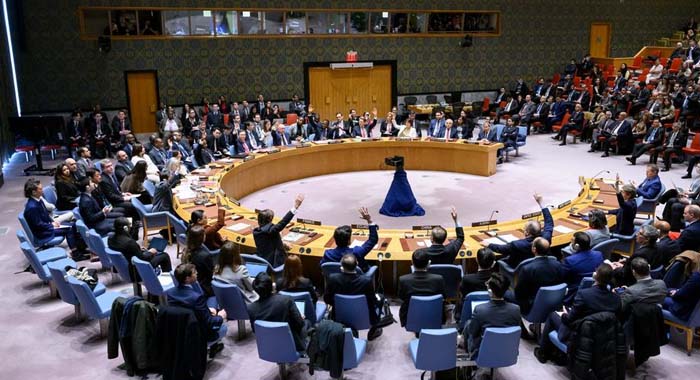
Pakistan’s longstanding concerns regarding the presence, support networks, and operational freedom of the Tehreek-e-Taliban Pakistan (TTP) in Afghanistan have received renewed international attention following the latest report of the United Nations Security Council’s Analytical Support and Sanctions Monitoring Team.
The report, submitted under the Security Council’s sanctions framework concerning ISIL (Da’esh), Al-Qaida and associated groups and entities, was published on 10 August 2026. It assesses the evolving threat posed by militant and extremist groups across South Asia and highlights continuing regional instability, including the security implications arising from TTP activity directed against Pakistan.
For years, Pakistan has maintained that Afghan territory must not be permitted to serve as a launching pad for attacks against Pakistan. Islamabad has repeatedly called upon the Taliban interim authorities to prevent the use of Afghan soil by the TTP and other hostile groups and to take concrete action against their infrastructure and support networks.
Pakistan has also consistently emphasized that the issue should be resolved through dialogue and diplomatic engagement. Friendly countries have made efforts to facilitate negotiations between Islamabad and Kabul; however, Pakistan’s position has been that the process has failed to produce a durable outcome because of what it regards as a lack of seriousness and willingness on the part of the Afghan authorities to address the core security concern.
The latest UN monitoring assessment adds further weight to concerns regarding the regional security environment. According to the report, the threat emanating from Afghanistan has remained broadly unchanged, while the ability of multiple extremist groups to maintain their activities inside Afghanistan continues to pose a persistent security challenge to neighbouring states and Central Asia. The report specifically notes continued support for the TTP from Afghanistan’s de facto authorities and links this environment to an increase in TTP attacks against Pakistan. It further observes that heightened TTP activity has contributed to repeated military confrontations between Pakistan and Afghanistan.
The assessment is particularly significant because the Taliban authorities have repeatedly rejected allegations that Afghan territory is being used against Pakistan. The contrast between these competing positions has remained at the heart of the Islamabad-Kabul security dispute.
Pakistan’s position has remained clear and consistent: Afghan territory must not be used for terrorism or hostile activity against Pakistan. Islamabad has repeatedly called upon the Taliban interim authorities to prevent the TTP from planning, organizing, training, or launching attacks from Afghan territory. Pakistan has maintained that continued TTP activity from locations inside Afghanistan represents a direct security threat to Pakistani citizens and security personnel.
As attacks attributed to the TTP intensified, Pakistan exercised what it described as its right to self-defence and carried out air operations against alleged militant hideouts inside Afghanistan. Islamabad subsequently conveyed a clear message to Kabul that if attacks originating from Afghan territory continued, Pakistan would continue to take necessary measures to protect its population and national security. The Afghan authorities, meanwhile, have consistently denied allegations of providing sanctuary or operational support to the TTP and have rejected Pakistan’s attribution of attacks to Afghanistan.
In February 2026, Taliban spokesperson Zabihullah Mujahid reiterated Kabul’s position that the TTP issue was an internal Pakistani matter and denied that Afghanistan was allowing its territory to be used against Pakistan.
The security implications of the dispute have become increasingly serious. According to the Pakistan Institute for Conflict and Security Studies (PICSS), July 2026 witnessed a major escalation in violence, with 205 people killed, including 112 security personnel, while security forces eliminated 401 militants during counterterrorism operations.
The figures underline the growing pressure on Pakistan’s security environment, particularly in Khyber Pakhtunkhwa and Balochistan. The use of increasingly sophisticated tactics and equipment by armed groups has also emerged as a major concern. Recent security assessments have highlighted the use of technologies such as drones, night-vision equipment and thermal imaging systems, raising concerns about the growing tactical capabilities available to extremist organizations operating in the region.
The latest UN assessment also raises concerns about the continued availability of large quantities of modern weapons and military equipment in Afghanistan and the possibility of such equipment reaching TTP and other extremist groups.
Another particularly concerning development identified in the UN assessment is the evolving relationship among extremist organizations operating in the region. The report notes that Al-Qaida has provided ideological guidance, training and support to the TTP in its insurgency against Pakistan. It further identifies a more overt development on 28 April, when Al-Qaida’s official media arm, As-Sahab Media Foundation, publicly endorsed TTP operations against Pakistan.
The development is significant because, according to the assessment, Al-Qaida’s previous relationship with the TTP had included ideological guidance, training and other forms of support, but the April statement represented a more direct public expression of solidarity. The report also points to the existence of broader networks involving extremist organizations operating in Afghanistan and the wider region, highlighting the possibility that cooperation, shared infrastructure, training and access to resources could further complicate the regional security landscape.
The UN assessment also addresses the continuing threat posed by ISIS-Khorasan (ISKP). According to the assessment, counterterrorism operations conducted by the Taliban authorities—particularly in northern Afghanistan and major urban centres including Kabul have weakened ISKP’s capabilities and contributed to a decline in its attacks inside Afghanistan.
However, the broader regional threat has not disappeared. Member states have reported that ISKP possesses advanced tactical equipment, including drones, night-vision devices and thermal imaging systems, while fighters have reportedly received training in urban combat and drone operations. The continued presence of multiple extremist organizations with access to weapons, training and logistical networks remains a major concern for Afghanistan’s neighbours and the wider region.
The Taliban interim authorities have repeatedly denied permitting Afghan territory to be used against Pakistan. In February 2026, Mujahid said the Taliban had firmly told the TTP and other groups that they would not be permitted to use Afghan territory against other countries. He has also stated that Kabul wants disputes with Pakistan to be resolved through dialogue. In February, following a period of serious cross-border hostilities, Mujahid said that the Afghan authorities continued to favour a peaceful solution through negotiations.
Pakistan, however, maintains that declarations alone are insufficient and that the credibility of Kabul’s assurances must ultimately be measured through verifiable action against TTP infrastructure and activities.
Over the past several years, multiple diplomatic initiatives have attempted to bridge the differences between Islamabad and Kabul. Pakistan has consistently advocated dialogue and has welcomed the involvement of friendly countries seeking to facilitate communication. However, these efforts have failed to produce a lasting resolution to the central dispute over the TTP.
Islamabad maintains that the Taliban authorities possess sufficient influence over groups operating inside Afghanistan to prevent them from using Afghan territory against Pakistan. At the same time, Kabul’s reluctance to launch a comprehensive military campaign against the TTP has remained a major obstacle.
The Taliban authorities have taken some measures, including relocating certain TTP elements away from border areas and establishing mechanisms described as reconciliation or reform initiatives. Pakistan, however, remains dissatisfied with the scale and effectiveness of these measures. A key difficulty is the Taliban leadership’s reported reluctance to initiate a major military confrontation with groups operating inside Afghanistan, partly because of concerns that such action could trigger another internal conflict.
The security situation is further complicated by growing armed and political opposition to Taliban rule inside Afghanistan. In northern Afghanistan, particularly Badakhshan, reports have emerged of intensified armed activity targeting Taliban positions and personnel. Among the principal armed opposition groups are the National Resistance Front (NRF), led by Ahmad Massoud, and the Afghanistan Freedom Front (AFF), associated with General Yasin Zia.
These groups have primarily operated in areas including Panjshir, Andarab and other northern provinces, conducting guerrilla-style attacks against Taliban security positions and infrastructure. Reports have also described attacks involving ambushes and improvised explosive devices in mountainous areas of Panjshir, Parwan, Kapisa and Baghlan. The existence of these armed opposition movements adds another layer of complexity to Afghanistan’s internal security environment and demonstrates that the Taliban authorities continue to face challenges from multiple directions.
Beyond the security dimension, Afghanistan continues to face significant political, social and humanitarian challenges. Under Taliban rule, Afghan women and girls continue to face severe restrictions on access to education, employment and broader civic participation. Concerns have also been raised over governance, ethnic discrimination, corruption and restrictions on fundamental rights.
These internal pressures have contributed to criticism of Taliban governance and have fuelled political and public opposition to the regime. The combination of internal instability, extremist networks, economic difficulties and strained relations with neighbouring countries continues to make Afghanistan a major source of regional security concern.
Despite the seriousness of the current situation, there remains a potential diplomatic pathway. Taliban spokesperson Zabihullah Mujahid has expressed a desire to improve relations with Pakistan and has emphasized the need to resolve bilateral disputes through dialogue. If Kabul demonstrates genuine commitment by taking verifiable and sustained measures to prevent TTP activity from Afghan territory, a renewed diplomatic process could become possible.
For Pakistan, the issue is not simply one of bilateral disagreement; it is fundamentally a question of national security and the protection of civilian lives and security personnel. A credible framework for renewed engagement would therefore require measurable steps, including preventing cross-border attacks, dismantling militant infrastructure, restricting movement and logistics, and ensuring that Afghan territory is not used to plan or execute attacks against Pakistan.
The continuing Pakistan-Afghanistan dispute has consequences that extend beyond the two countries. The UN monitoring assessment warns that the presence and operational capabilities of multiple extremist groups in Afghanistan could create additional security challenges for neighbouring countries and the wider Central Asian region.
The potential convergence of TTP, Al-Qaida, ISIS-K and other extremist networks, combined with access to advanced weaponry and tactical technologies, represents a security challenge that cannot be addressed through denial alone. A stable Afghanistan is in the interest of Pakistan, Afghanistan itself, Central Asia and the broader international community.
The latest UN Security Council monitoring assessment has once again placed the issue of Afghanistan-based extremist networks and their regional implications under international scrutiny. For Pakistan, the message remains unchanged: peaceful relations with Afghanistan are possible, but they require credible action against groups using Afghan territory to threaten Pakistan.
Islamabad has repeatedly demonstrated its willingness to pursue dialogue and diplomatic solutions. However, sustainable peace will depend on Kabul translating assurances into concrete, verifiable and lasting measures against the TTP and other groups involved in cross-border violence. The choice before both countries is therefore increasingly clear: continued confrontation and instability, or a serious return to dialogue supported by practical security measures.
If the Taliban authorities demonstrate genuine resolve to prevent TTP activities from Afghan soil, a renewed diplomatic process could provide an opportunity to rebuild trust, restore bilateral trade and people-to-people movement, reduce cross-border tensions, and ultimately establish a framework for peace, stability and economic development across the region.



