Pakistan is once again confronting a security challenge that cannot be dismissed as a series of isolated attacks in remote areas. The emerging pattern is far more troubling: militant violence is appearing across different provinces, police personnel are increasingly being targeted, terrorist groups are attempting to move closer to densely populated urban centres, and, in some areas, armed or semi-armed local groups are raising questions about the writ of the state itself.
The recent attack on police personnel in Lahore, for which Jamaat-ul-Ahrar reportedly claimed responsibility, is particularly significant. Lahore is not simply another city on the map. It is Punjab’s political, economic and cultural centre, and an attack there carries a psychological impact far beyond the immediate casualties. It sends a message that militant organisations want the public to believe that distance from the traditional conflict zones is no longer a guarantee of safety.
This is precisely why Pakistan must look at the current wave of terrorism not merely through the narrow lens of individual attacks, but as part of a broader and increasingly complicated security environment.
The Tehreek-e-Taliban Pakistan (TTP) remains active in Khyber Pakhtunkhwa, while Balochistan continues to face violence from groups including the Balochistan Liberation Army (BLA), the Balochistan Liberation Front (BLF) and the Majeed Brigade. Jamaat-ul-Ahrar, meanwhile, has demonstrated the ability and intention to strike beyond its traditional areas of activity. Daesh-linked elements also remain part of the wider militant landscape.
These organisations are not necessarily identical in ideology, structure or objectives. Yet the danger is compounded by the fact that militant networks can overlap, communicate, cooperate or exploit the same security weaknesses. Pakistan therefore faces not one insurgency but a fragmented and evolving ecosystem of violence.
For years, much of Pakistan’s counterterrorism debate revolved around militant activity in tribal districts, mountainous regions and border areas. Those locations remain critically important, but the geography of the threat appears to be changing.
The reported attack near Peshawar at night, occurring close to populated areas, illustrates the vulnerability of communities surrounding major urban centres. Peshawar itself has long experienced the consequences of militancy, but the continuing ability of armed groups to operate near population centres demonstrates that the problem remains unresolved.
The reported attack in Lahore is even more revealing. If Jamaat-ul-Ahrar is indeed expanding or attempting to expand its operational reach toward major cities, then Pakistan’s security planners must prepare for a new phase in which militants seek not only to hold territory or attack security installations but also to create fear in the heart of civilian life.
This is why the question is no longer simply where militants are hiding. The more important question is how easily they can identify targets, move personnel, acquire resources and launch attacks in urban environments.
The answer will depend not only on military operations but also on intelligence coordination, policing, border management, financial investigations and the ability of provincial and federal authorities to work together.
One of the most disturbing features of the recent violence is the repeated targeting of police personnel. Police officers are often the most accessible representatives of the state. Unlike heavily fortified military installations, police stations, checkpoints, traffic posts and patrols are distributed throughout cities, towns and villages. Officers routinely work in small numbers and often operate in environments where identifying a vulnerable target is relatively easy for militants.
Recent incidents in Lahore, Sindh and Karachi, as well as attacks around Peshawar and Khyber Pakhtunkhwa, demonstrate why police protection must become a central pillar of Pakistan’s counterterrorism strategy. The reported incident at Takhtabeg, close to Peshawar, in which an FC soldier was martyred, a police officer was martyred and another police officer was injured, underlines the human cost paid by frontline security personnel.
Pakistan often speaks of counterterrorism in terms of major military operations, but the daily war against militancy is also being fought by constables, traffic officers, investigators and station-house personnel. They are frequently the first people who confront the consequences of extremism.
If militants succeed in making police officers believe that they are unprotected, or if citizens begin to believe that the state cannot protect its own police, the damage extends beyond individual attacks. It strikes at public confidence.
Police stations should therefore be treated as critical security infrastructure. Intelligence-led policing, modern surveillance, rapid-response capabilities, protective equipment and stronger coordination between police, intelligence agencies and other security institutions are essential.
Perhaps the most politically sensitive issue raised in the discussion is the reported role of a so-called peace committee in Bannu and surrounding areas. The very concept of a community-based peace initiative can sound attractive in an environment exhausted by violence. Local communities possess knowledge, networks and influence that formal institutions sometimes lack. But a peace committee can become dangerous if it evolves into an armed structure operating outside clear legal authority. Reports cited in the discussion have alleged that members associated with such a group have been involved in killings, kidnappings and coercion against citizens who oppose them. These remain serious allegations that require transparent investigation rather than political silence.
The reported case involving a woman identified as Kari Rashid is especially disturbing. According to the account presented, she was allegedly kidnapped and later found dead, with accusations that members of the so-called peaceful group were involved and had demanded money. The figure of Rs900,000 was also mentioned in connection with the allegations. Such claims cannot simply be ignored. Nor should they be treated as established fact without a proper investigation, evidence and due process.
But even the existence of credible allegations should be enough to demand an immediate and transparent response from the government. A group cannot claim to represent peace while simultaneously being accused of kidnapping, extortion or violence. Peace cannot mean the absence of official fighting while armed individuals acquire the power to intimidate ordinary citizens.
The most alarming aspect of the Bannu debate is not merely whether particular allegations are true. It is the broader question of authority. If reports are accurate that local armed figures can challenge police orders, demand the transfer or removal of senior officers, or effectively dictate administrative decisions, then Pakistan faces a problem much larger than law and order.
The fundamental principle of a state is that lawful authority flows through institutions. A constable cannot become the de facto commander of multiple districts. A local armed group cannot determine which police officers remain in office. Citizens cannot be forced to obey unofficial authorities because they fear retaliation.
The reported transfers of senior police officials following such confrontations raise questions that deserve public answers. The government must clearly establish who is responsible for maintaining law and order, who has the authority to issue orders and under what legal framework any community-based security initiative is permitted to operate. If the state wants community participation in counterterrorism, that participation must exist under the law. Community policing is one thing; parallel armed authority is another. The difference is fundamental.
The discussion also raises a broader criticism of the government’s response: the perception that there is no sufficiently visible strategy for dealing with the deteriorating security environment. Whether one agrees with every criticism or not, the government cannot afford to communicate uncertainty when citizens are facing violence.
A credible counterterrorism policy requires more than occasional statements after attacks. It requires regular coordination meetings, measurable objectives, intelligence-sharing mechanisms, provincial cooperation and public communication. The state must explain what is being done.
Are militant financing networks being dismantled? Are facilitators being arrested? Are border routes being monitored? Are police stations being strengthened? Are local disputes being exploited by militant organisations? Are banned groups reorganising under new names? Are extremist networks using social media and informal fundraising channels to recruit or finance operations? These are not academic questions. They determine whether Pakistan is reacting to terrorism or preventing it.
Balochistan presents a different but equally serious challenge. The BLA, BLF and Majeed Brigade have operated in the province, while other militant and extremist organisations have also attempted to exploit instability. The motives, political narratives and organisational structures of these groups differ from those of the TTP and Jamaat-ul-Ahrar.
Yet from the perspective of the Pakistani state, there is a common problem: violence against civilians and security personnel undermines stability, economic development and public confidence. Security forces have conducted operations in Balochistan, including reported operations in Chagai and Panjgur, where a number of militants were reportedly killed. Similar operations have also been reported in Khyber Pakhtunkhwa, with security forces killing several terrorists.
Such operations are necessary when the state faces armed groups, but military action alone cannot permanently resolve a conflict that also contains political, economic and social dimensions. Counterterrorism must therefore be accompanied by governance. Where citizens feel abandoned, militants find space. Where justice is slow, armed groups can present themselves as alternative authorities. Where political grievances remain unresolved, extremist organisations can exploit anger even when their own objectives are destructive. The state must defeat terrorism while simultaneously strengthening the institutions that make terrorism less attractive and less sustainable.
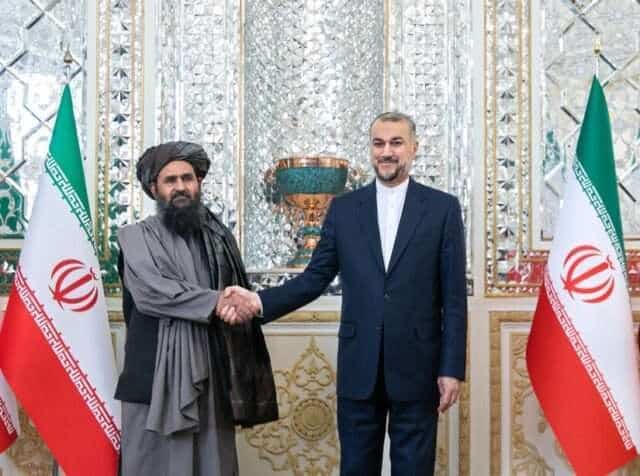
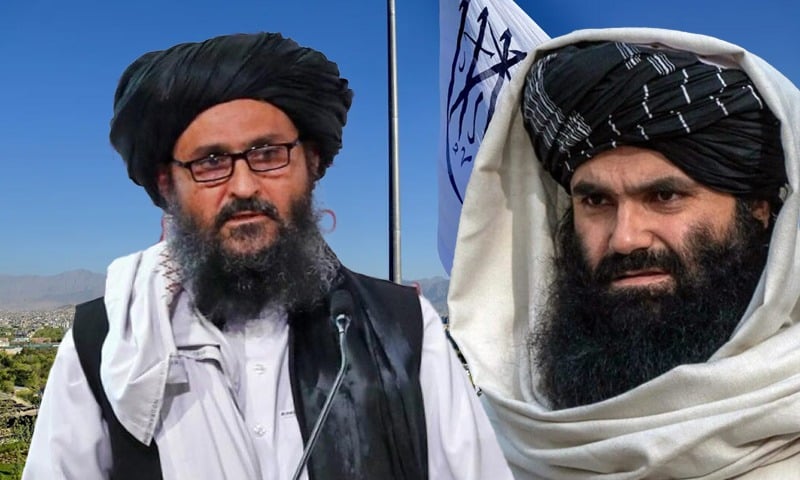
No discussion of Pakistan’s present security environment is complete without examining Afghanistan. Islamabad has repeatedly raised concerns about the presence and activities of TTP figures and fighters on Afghan soil. At the same time, Afghan authorities have issued statements suggesting that they want better relations with Pakistan and do not wish bilateral ties to deteriorate. This creates an obvious contradiction between diplomatic language and the security realities described by Pakistani officials and analysts.
The question surrounding TTP leadership is particularly important. The discussion cited conflicting reports about the whereabouts of Noor Wali Mehsud, with claims that he had left Afghanistan followed by reports suggesting that he remained there and was safe. Such contradictory information naturally creates suspicion. If Afghanistan genuinely wants improved relations with Pakistan, greater economic cooperation and increased bilateral trade, then the issue of militant sanctuaries cannot remain unresolved.
Pakistan’s demand for credible guarantees and monitoring is therefore understandable from a security perspective. A promise that militants will not operate against Pakistan is meaningful only if there is a mechanism to verify compliance. China, according to the discussion, has also encouraged dialogue and efforts to bring Pakistan and Afghanistan back to the negotiating table. That diplomatic effort deserves attention because neither country benefits from permanent hostility. But diplomacy cannot substitute for implementation.
The Afghan leadership has made different statements about relations with Pakistan. Some senior figures have spoken of friendship, peace and stronger economic ties. Others have adopted a more defensive or ambiguous position concerning the TTP. The result is a policy environment in which Pakistan hears positive statements but continues to confront security concerns. This disconnect must be addressed. If Kabul wants stronger economic relations with Islamabad, greater trade and regional connectivity, it must understand that Pakistan’s security concerns cannot simply be dismissed.
Likewise, Pakistan must recognise that Afghanistan is not a monolithic actor. Different factions and personalities within the Afghan system may have different calculations about the TTP, Pakistan and regional politics. The challenge, therefore, is to create a framework in which commitments are measurable and violations have consequences.
There is another important dimension to the present crisis: Pakistan is not as diplomatically isolated as it once appeared. The country’s international importance has increased amid a rapidly changing geopolitical environment. Tensions involving the United States and Iran, shifting regional alliances and broader Middle Eastern developments have created circumstances in which Pakistan’s strategic position matters to multiple powers. The discussion also referred to Pakistan’s growing engagement with countries including Turkey and Saudi Arabia and the possibility of a broader strategic alignment. This creates both opportunity and responsibility.
Pakistan can use improved diplomatic relevance to press for regional stability, but it must also demonstrate that it can manage its own internal security challenges. International partnerships are valuable, but no foreign alliance can replace effective domestic governance. Pakistan’s greatest diplomatic asset should ultimately be its ability to present itself as a stable, responsible and secure state.
The greatest danger facing Pakistan may not be any single militant organisation. It may be fragmentation. The TTP operates in and around Khyber Pakhtunkhwa. Jamaat-ul-Ahrar has demonstrated an ability to target elsewhere. Baloch insurgent organisations operate in Balochistan. Daesh-linked elements remain a concern. Criminal networks, kidnappers and local armed groups can further complicate the security picture.
If each threat is handled separately, gaps will emerge. Pakistan needs a national counterterrorism strategy that connects intelligence, policing, military operations, border security, financial enforcement, prosecution, local governance and diplomacy. The state must also distinguish between legitimate community participation and the emergence of parallel power structures. Most importantly, Pakistan must reject the idea that violence can be outsourced to unofficial actors in the name of peace. Peace enforced through fear is not peace. A group that intimidates citizens, kidnaps opponents or dictates to police cannot become legitimate merely because it uses the word “peace” in its name.
The central lesson from the current security situation is simple: Pakistan cannot afford to become complacent. The country has already paid an enormous price in blood and economic losses during decades of terrorism. Thousands of soldiers, police officers and civilians have lost their lives. Communities have been displaced, businesses disrupted and public confidence damaged.
The resurgence of militant activity should therefore be treated as an early warning, not as an inevitable return to the worst years of terrorism. The state still has the capacity to prevent that outcome.
But capacity must be matched by political will. The government needs to speak clearly. Security institutions need to coordinate. Police personnel need better protection. Local armed groups must remain subordinate to the law. Allegations of kidnapping and extrajudicial violence must be investigated impartially. Militants must not be allowed to exploit administrative weaknesses. And diplomatic engagement with Afghanistan must continue but with verification, accountability and clearly defined expectations. Pakistan should also resist the temptation to view every security problem exclusively through a military lens. The gun can eliminate a militant, but only good governance can eliminate the conditions that allow militancy to regenerate.
Ultimately, Pakistan’s fight against terrorism is a fight over who has the authority to decide the country’s future. Is that authority vested in constitutional institutions, elected governments, courts and lawful security agencies—or can armed groups, militants, criminal networks and unofficial committees impose their will through fear?
The answer must be unequivocal. The state must remain the only legitimate authority capable of using force. That principle applies equally to terrorists in the mountains, separatist militants in Balochistan, extremist networks targeting Lahore, armed groups operating around Bannu or any other organisation that believes it can intimidate ordinary citizens.
Pakistan’s people do not need another cycle of promises followed by silence. They need security that is visible, institutions that function and leadership that understands the seriousness of the moment. The reported rise in attacks, the targeting of police, the movement of militant violence toward populated areas, the allegations surrounding local armed groups in Bannu, continuing operations in Khyber Pakhtunkhwa and Balochistan, and the unresolved dispute over militant activity from Afghan territory are all parts of the same larger warning.
The warning is that insecurity becomes far more difficult to defeat once it becomes normal. Pakistan must therefore act before another generation grows accustomed to checkpoints, funerals, attacks on police and uncertainty about who controls the streets. Counterterrorism cannot be an occasional operation. It must become a permanent national commitment.
And peace cannot simply be announced in speeches. It must be enforced by law, protected by institutions, supported by diplomacy and ultimately experienced by ordinary citizens in their homes, markets, schools and streets. That is the real measure of whether Pakistan is winning the battle against terrorism. Not the number of operations announced. Not the number of militants reportedly killed.
Not the number of statements issued. The real victory will come when citizens no longer have to ask whether the state is strong enough to protect them and when every armed group, regardless of its name, understands that the law of Pakistan is stronger than the power of fear.