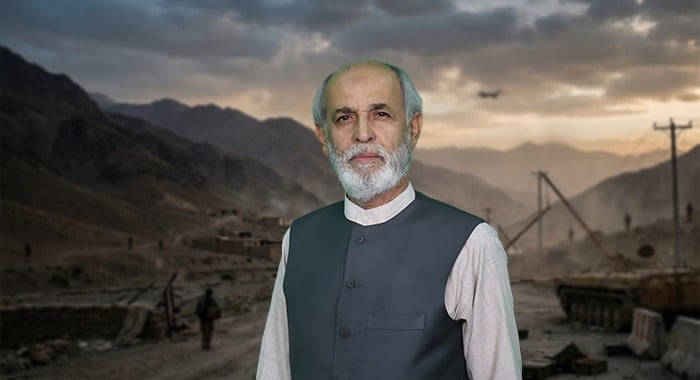
Pakistan’s security crisis is no longer a problem that can be understood through the narrow lens of isolated militant attacks. It is increasingly a complex regional challenge involving terrorism, instability along the Afghan border, militant sanctuaries, the future of Pakistan-Afghanistan relations, the humanitarian consequences of mass returns, and the widening political disconnect between security institutions and provincial governments.
The latest developments in Pakistan from security operations against terrorism to the situation in Panjgur and ongoing operations in Khyber Pakhtunkhwa raise a fundamental question: Can Pakistan defeat terrorism through military operations alone when the political, economic and diplomatic dimensions of the crisis remain unresolved?
At the same time, Afghanistan is facing its own deepening crisis. Large numbers of Afghans who had spent years living and working in Pakistan are returning to a country struggling with unemployment, poverty, housing shortages, water scarcity and limited economic opportunities. The irony is striking: while Pakistan is concerned about militants allegedly operating from Afghan territory, Afghanistan itself is struggling to absorb millions of people into an already fragile economy.
According to the discussion reflected in the available material, United Nations reporting has put the number of Afghans returning from Pakistan at more than six million. Whatever the precise figure at a given stage of the repatriation process, the scale of movement is enormous. Many of these people had lived for years in Pakistani cities, built businesses, worked in the informal economy and developed lives far removed from Afghanistan’s rural and conflict-affected environment.
Their return is therefore not simply a matter of crossing a border. It is a social and economic shock. One of the most immediate challenges confronting returnees is accommodation in Kabul. Many Afghans who spent years in Pakistani cities are returning without secure employment, stable income or adequate housing. Kabul already faces a severe shortage of affordable accommodation, and rents are reportedly beyond the reach of many families. For people arriving with limited savings and no job, finding a roof over their heads can become more urgent than finding work.
The transformation of older neighbourhoods illustrates the contradiction at the heart of Kabul’s housing problem. Areas such as Khair Khana have reportedly seen older houses demolished and replaced with multi-storey buildings, often through agreements between landowners and investors. Under such arrangements, the original owner may retain certain floors while investors receive ownership or control of the remaining space.
On paper, such construction can appear to represent economic development. In reality, however, modern construction does not automatically mean affordable housing. If new buildings are designed primarily for people who can pay higher rents, the poorest returnees remain excluded.
And Kabul’s housing crisis cannot be separated from another, even more serious problem: water. Water scarcity has become one of the capital’s most worrying challenges. The depth at which water can be accessed has reportedly increased dramatically from around 50 metres in earlier periods to approximately 200 metres in some areas. This is not merely an inconvenience. It is a warning about the sustainability of a rapidly growing city.
There has long been discussion of bringing water to Kabul from the Panjshir area. During the government of former president Hamid Karzai, work was reportedly proposed on a plan to address Kabul’s water needs through supplies from Panjshir. Yet the larger objective remains incomplete.
This is an important lesson for both Kabul and Islamabad: security cannot exist without functioning cities, water, employment and economic opportunity.
Housing is only one part of the crisis. For returnees, unemployment may be the greatest long-term threat. Many people who previously worked in Pakistan now find themselves back in Afghanistan without jobs. When employment disappears, household purchasing power collapses. When purchasing power declines, businesses suffer. When businesses suffer, employment falls further. That creates a vicious economic cycle.
The result is visible in growing poverty and, according to the discussion, an increase in the number of people begging on Afghan streets. This presents a stark contrast to Taliban claims about progress and governance. Whatever infrastructure or administrative achievements the Taliban government may point toward, a country cannot claim meaningful stability when large sections of its population remain unemployed and economically insecure. The disruption of trade with Pakistan makes the situation even more difficult.
For years, Pakistan and Afghanistan have been economically interconnected. Afghan fruits and agricultural products have depended heavily on access to Pakistani markets and transport routes, while Afghan consumers and traders have relied on imports from Pakistan. When bilateral trade is disrupted, both countries suffer but the impact can be particularly painful for Afghanistan because of its dependence on cross-border commerce.
A closed or dysfunctional border is therefore more than a diplomatic disagreement. It affects farmers, transporters, shopkeepers, labourers, exporters and ordinary consumers. Pakistan must understand this reality, but Afghanistan must also understand that economic interdependence cannot survive indefinitely alongside persistent security disputes.
This is perhaps the most difficult issue. Pakistan has repeatedly expressed concern that militant groups operating from Afghan territory are threatening its security. Afghan Taliban authorities, for their part, have rejected accusations that Afghan soil is being used to attack other countries.
The contradiction is obvious. Pakistan’s security leadership has accused Afghanistan of allowing or facilitating a proxy conflict against Pakistan, while the Taliban government insists that its territory is not being used against any other country. The disagreement has become one of the most serious obstacles to bilateral relations.
United Nations reporting has also highlighted the presence of numerous terrorist organisations in Afghanistan. The discussion referred to around 25 terrorist groups operating in the country and warned that their presence poses a serious threat to regional and international peace. If these assessments remain valid, the problem extends far beyond Pakistan.
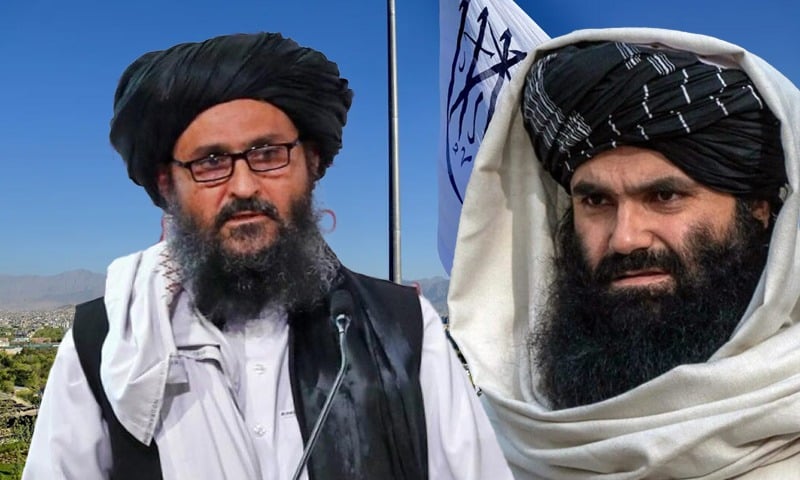
Afghanistan cannot become a stable state while multiple militant organisations operate within or around its territory. Nor can neighbouring countries be expected to ignore credible security threats simply because Kabul denies responsibility for them. The Taliban government therefore faces a choice. It can continue to insist that its policies are internally driven and that its territory is not being used against Pakistan, or it can recognise that Afghanistan’s international legitimacy will increasingly depend on demonstrable action against militant networks.
The concerns become even more serious when reports of militant training are added to the picture. The discussion referred to claims that Al-Qaeda and the Tehreek-e-Taliban Pakistan (TTP) maintain training or operational links in Afghanistan and that elements associated with the Balochistan Liberation Army (BLA) have allegedly received military training from militant networks there.
These are extremely serious allegations, and they should be distinguished from independently established facts. Yet even allegations of this nature deserve attention when they are repeatedly raised in official security discussions and reports. For Pakistan, the danger is not theoretical. The TTP has demonstrated the ability to conduct attacks inside Pakistan, particularly in areas close to the Afghan border. Baloch separatist militants, meanwhile, represent a separate but increasingly dangerous challenge in Balochistan. The possibility of different militant networks benefiting from training, financing, logistics or sanctuary in the same regional environment creates a far more complicated security picture.
That is why Pakistan’s counterterrorism strategy cannot focus exclusively on eliminating individual militant cells. It must also address the networks that enable recruitment, financing, training and movement.
The situation in Panjgur adds another layer to Pakistan’s security crisis. Security operations against Baloch separatist militants demonstrate the intensity of the challenge facing Balochistan. Pakistani authorities have described militants involved in such attacks as foreign-backed terrorists and have accused elements in Afghanistan and India of supporting anti-Pakistan violence. Taliban authorities have rejected such accusations. Again, the competing narratives are clear.
The Pakistani state argues that external support is helping sustain militancy. Afghan authorities deny providing their territory for attacks against Pakistan. Baloch separatist groups, meanwhile, have their own political and ideological narrative. But there is an important point that should not be overlooked: a security operation can suppress violence, but it cannot by itself eliminate the political grievances that help militant organisations recruit.
That is why calls from political figures for negotiations deserve serious consideration, even if negotiations must be accompanied by clear red lines against violence. The remarks attributed to Chief Minister Sarfraz Bugti regarding the Baloch separatist issue, along with pressure from other political leaders for him to use his authority to pursue negotiations, reflect an increasingly important debate inside Pakistan: should the state rely primarily on force, or should it combine force with political engagement?
The wiser answer is probably both. The state has a responsibility to protect citizens and confront armed groups. But it also has a responsibility to understand why certain communities become vulnerable to militant narratives in the first place.
The most immediate manifestation of Pakistan’s security crisis can be seen in Khyber Pakhtunkhwa. Operations have been reported in areas including Bannu and Lakki Marwat, while concerns have also emerged from Swat and Mansehra. These developments show that militancy remains a serious challenge across multiple districts rather than being confined to one isolated pocket. Yet alongside these security operations is another phenomenon: political mobilisation.
The provincial political leadership has been heavily engaged in street politics and preparations for a planned September 27 movement, following earlier political mobilisation around August 5. Large gatherings and political campaigns have taken considerable public attention, while soldiers and civilians continue to face the consequences of militant violence. This creates an uncomfortable impression of competing priorities. At a time when Khyber Pakhtunkhwa requires close coordination between the federal government, provincial administration, police and security forces, political confrontation can create a vacuum. And security vacuums are precisely where militant groups thrive.
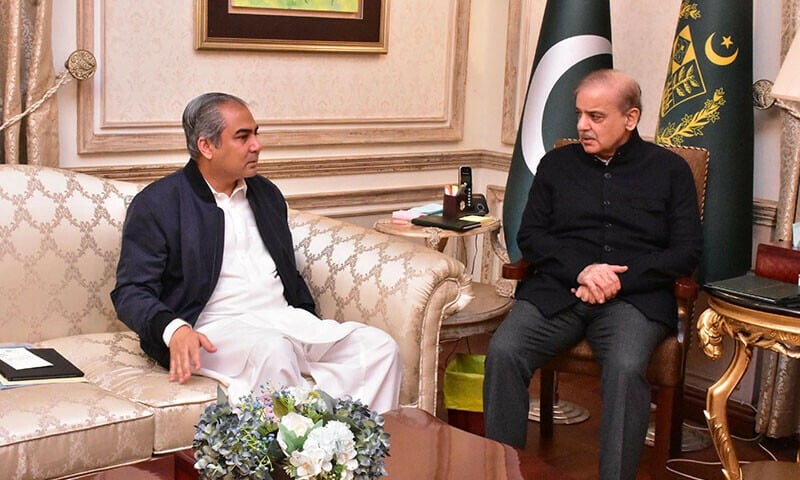
The question is therefore not simply whether an operation is taking place. The bigger question is whether the provincial government, federal government and security institutions are working together with a coherent strategy. The apparent gap between the provincial government and the federal authorities is deeply troubling.
Terrorism does not recognise political party boundaries. A militant attack in Bannu does not ask whether the victim supports the federal government or the opposition. A soldier killed in an operation is not a casualty of one political party. A displaced family does not care which government wins the next political confrontation.
The people of Khyber Pakhtunkhwa need security first. Perhaps the most dangerous aspect of the current situation is the absence of sustained political communication. When governments stop talking to one another, institutions begin operating in isolation. When institutions operate in isolation, strategies become fragmented. And when strategies become fragmented, militants find opportunities.
The focus on political rallies and street movements may be understandable within the context of Pakistan’s broader political conflict. But terrorism requires a different kind of politics one based on institutional coordination rather than permanent confrontation. The provincial government cannot treat terrorism as solely a federal issue. The federal government cannot treat provincial concerns as political distractions.
The security establishment cannot solve every political problem through force. And opposition parties cannot treat every security operation as merely another instrument of political competition. Pakistan needs a national counterterrorism consensus.
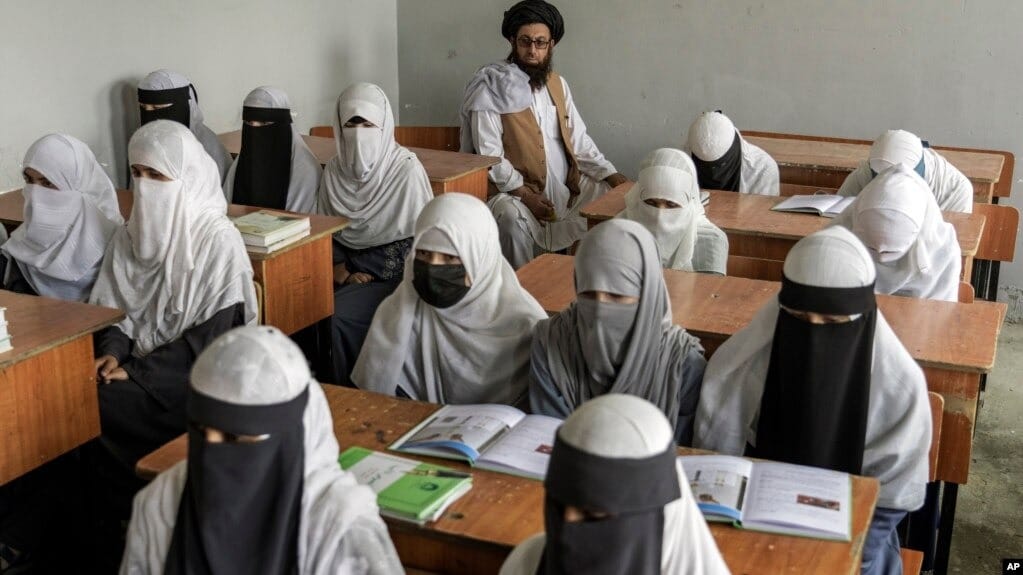
The Afghan question is equally political. The Taliban government has repeatedly argued that its actions are based on its interpretation of Islamic Shariah. Yet its restrictions on women, political activity, religious freedom and broader political participation have drawn criticism inside and outside Afghanistan. Former Afghan leaders and political figures have also increasingly criticised Taliban rule.
Former president Hamid Karzai has continued to comment on Afghanistan’s political future, while Gulbuddin Hekmatyar has also criticised the country’s isolation. Hekmatyar’s own political history is complicated. After years outside Afghanistan, he changed course during the period of inter-Afghan political engagement, returned to Kabul and eventually became part of the political landscape.
His latest argument that Afghanistan cannot remain isolated deserves attention even if his political record remains controversial. The message is straightforward: Afghanistan needs political inclusion. A government that excludes large segments of society cannot easily build lasting national legitimacy. Political freedom, participation and dialogue are not merely Western demands; they are mechanisms through which divided societies prevent conflict from becoming permanent.
Pakistan’s policy toward Afghanistan must avoid two opposite mistakes. The first is excessive patience with security threats. If militant groups are attacking Pakistan from across the border, Islamabad cannot simply hope that the problem will disappear. National security requires credible deterrence, intelligence cooperation, border management and, where necessary, targeted counterterrorism operations.
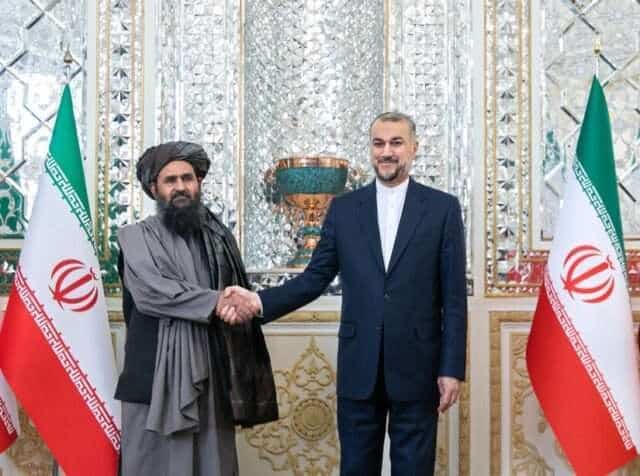
The second mistake would be to reduce the entire Afghan relationship to security alone. Afghanistan is Pakistan’s neighbour, economic partner and unavoidable geopolitical reality. Millions of people on both sides have familial, cultural and commercial connections. Trade, transit, water, refugees and border management cannot be separated from security. Pakistan therefore needs a comprehensive Afghanistan policy not a policy that changes every time a militant attack occurs.
The fight against terrorism will ultimately be judged not by the number of operations announced but by whether violence actually declines. That requires intelligence-led operations, effective policing, stronger border management, political coordination, economic development and a diplomatic strategy capable of engaging Kabul while firmly defending Pakistan’s interests. Balochistan requires both security and political engagement.
Khyber Pakhtunkhwa requires both counterterrorism operations and effective civilian governance. Afghanistan requires both humanitarian assistance and pressure to prevent its territory from being used by militant organisations. And returnees require far more than border crossings. They need homes, jobs, water, education and dignity.
The current crisis therefore cannot be solved by slogans. Pakistan cannot bomb its way out of a political problem. Afghanistan cannot deny its way out of a security problem. Political parties cannot rally their way out of terrorism. And the Taliban cannot govern indefinitely while ignoring the consequences of isolation.
The region is approaching a critical juncture. The Panjgur violence, the operations in Bannu and Lakki Marwat, instability in parts of Khyber Pakhtunkhwa, militant networks allegedly operating from Afghanistan, the continuing concerns surrounding Al-Qaeda and TTP, and the enormous humanitarian pressure on Afghan returnees are not separate stories. They are interconnected pieces of one regional crisis.
The answer must therefore be interconnected as well.
Pakistan needs security without abandoning politics, diplomacy without sacrificing national interests, and counterterrorism without losing sight of economic and social realities. Afghanistan needs stability without isolation, development without exclusion, and governance that recognises the rights and aspirations of its people.
Most importantly, both countries must understand a basic truth: instability on one side of the Durand Line inevitably affects the other.
For Pakistan, the immediate priority is to protect its citizens and dismantle militant threats. For Afghanistan, the priority should be to prevent its territory from becoming a sanctuary for armed groups while addressing the poverty, unemployment, water scarcity and political exclusion confronting its population.
Until those two objectives converge, the border will remain not merely a geographical boundary, but the fault line of a continuing regional crisis.
And if Pakistan and Afghanistan fail to address that crisis through a combination of security, diplomacy, political engagement and economic cooperation, the cost will not be paid by governments alone.
It will be paid by ordinary people by families displaced by violence, returnees searching for homes, workers searching for jobs, farmers unable to export their produce, citizens living under the shadow of terrorism, and soldiers whose lives are being sacrificed on an increasingly dangerous frontier.
The time has come to stop treating these as separate crises. They are one crisis. And they require one comprehensive strategy.