
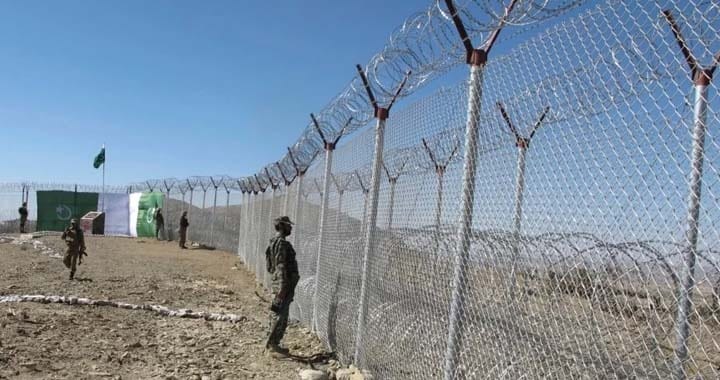
Pakistan-Afghanistan relations have never been defined solely by geography, culture or the deep people-to-people ties that connect the two countries. Beneath those common bonds lies a century-old political and territorial dispute that has repeatedly resurfaced in different forms—first as an irredentist claim, later as diplomatic confrontation and, increasingly, as a grave counterterrorism challenge.
At the centre of this troubled relationship is the Durand Line, the international frontier agreed in 1893 between the Afghan Amir Abdur Rahman Khan and Sir Mortimer Durand, representing British India.
For Pakistan, the issue is settled: upon independence in 1947, the country inherited the international boundaries of British India in accordance with established principles of state succession. Afghanistan, however, has historically challenged the legitimacy of the frontier, allowing the issue to remain a recurring source of political tension.
What began as a territorial disagreement has, over decades, evolved into something far more consequential.
Today, Pakistan’s principal concern is no longer simply the historical dispute over the frontier. It is the security environment that has developed along and beyond that frontier, particularly the presence and activity of terrorist organisations that Islamabad says operate from Afghan territory.
The result is a dangerous convergence of historical irredentism, political hostility, cross-border militancy and competing strategic interests.
The historical record surrounding the Afghanistan–British India frontier is frequently presented through competing narratives. Yet the establishment of Afghanistan’s modern borders was itself the product of extensive nineteenth-century diplomacy. In 1893, Amir Abdur Rahman Khan and Sir Mortimer Durand concluded an agreement defining the respective spheres of authority along the Afghan–British Indian frontier.
Importantly, the Afghan state was simultaneously engaged in defining its boundaries with other neighbouring powers. The Afghanistan–Russian frontier was delimited during the late nineteenth century, while the Afghanistan–Iran boundary was subsequently subjected to international arbitration and demarcation.
The Durand Agreement was followed by years of surveying and physical demarcation. Subsequent arrangements—including agreements associated with Kotkai, Chaman, Nashagam, Robat, Rawalpindi and Kabul further addressed aspects of the frontier.
The historical record therefore demonstrates that Afghanistan’s territorial boundaries were not static or self-evident. They were shaped through negotiations, agreements, arbitration and subsequent demarcation with neighbouring states.
The political argument surrounding the frontier has frequently drawn upon historical claims regarding territories that were once under Afghan influence. But the same historical logic creates a fundamental contradiction. The territory that constitutes modern Afghanistan has itself, at different periods, formed part of larger imperial formations, including the Mauryan and Mughal empires. The Sikh Empire under Maharaja Ranjit Singh subsequently extended its authority into Peshawar and established a military presence at Jamrud.
If modern borders were to be determined by the maximum territorial reach of historical empires, virtually every state in South and Central Asia could advance competing claims against its neighbours. Modern international relations cannot function on that basis. The contemporary international system rests upon the recognition of sovereign states and their internationally established boundaries not the redrawing of borders according to the shifting frontiers of ancient kingdoms and empires.
The nineteenth and early twentieth centuries witnessed repeated confrontation between Afghanistan and British India. The three Anglo-Afghan wars 1839–42, 1878–80 and 1919 were part of a wider struggle involving regional power, imperial competition and the strategic contest between British India and Russia.
The eventual settlement of Afghanistan’s frontiers was therefore not an isolated event but part of a broader process through which the modern geopolitical map of the region emerged. Following Pakistan’s independence in 1947, Islamabad inherited the western frontier previously administered by British India.
Afghanistan nevertheless continued to contest the border. The dispute became particularly visible when Afghanistan initially opposed Pakistan’s admission to the United Nations in 1947, before subsequently withdrawing its opposition. The episode was an early indication that the territorial question would remain embedded in bilateral relations.
In 1949, an Afghan Loya Jirga declared previous agreements concerning the frontier invalid. The development was followed by border tensions, military incidents and diplomatic confrontation. The dispute was no longer confined to historical arguments or diplomatic statements. It increasingly became intertwined with Afghanistan’s support for elements advocating a separate Pashtunistan.
During the 1950s, successive Afghan governments provided varying degrees of political and financial support to Pashtunistan-oriented elements, further complicating Pakistan’s relationship with Kabul. Afghan diplomatic missions in Pakistan and Pakistani diplomatic missions in Afghanistan also became targets of political hostility during periods of heightened tension.
The confrontation reached another serious point in 1960, when Afghan forces and pro-Afghan tribesmen crossed into Pakistan’s Bajaur region. Pakistan responded militarily, with regular forces, artillery and air support used against the incursion.
The episode deepened mistrust between the two countries and demonstrated that the frontier dispute had acquired a military dimension. The consequences were long-lasting. Rather than resolving the underlying dispute, successive confrontations reinforced mutual suspicion and established a pattern in which political disagreements could rapidly translate into security crises.
The overthrow of King Zahir Shah by Sardar Mohammad Daoud Khan in 1973 marked another turning point. Under Daoud, Afghanistan’s support for Pashtunistan-oriented elements became more pronounced, while Afghan territory was also used as a base by some anti-Pakistan groups.
Pakistan, in turn, increasingly viewed Afghanistan not simply as a difficult neighbour but as a potential platform for political and security pressure against the Pakistani state. This period established an enduring pattern: territorial disputes increasingly became intertwined with proxy politics.
The Soviet invasion of Afghanistan in 1979 transformed the region’s security landscape. Pakistan became one of the principal states supporting the Afghan resistance and hosted millions of Afghan refugees.
For a decade, Pakistan absorbed enormous humanitarian, economic and security costs associated with the Afghan conflict. Yet the end of the Soviet occupation did not produce a durable peace. Instead, Afghanistan entered a new phase of civil conflict, eventually culminating in the Taliban’s rise to power.
Between 1996 and 2001, the Taliban controlled most of Afghanistan and provided sanctuary to a range of militant organisations. The presence of Al-Qaeda and other transnational extremist networks demonstrated that instability inside Afghanistan could rapidly acquire consequences beyond its borders. Following the US intervention in 2001, militant networks continued to operate across the Afghanistan–Pakistan frontier.
Over subsequent years, Pakistan faced a growing terrorist threat, particularly in its tribal areas and Khyber Pakhtunkhwa. Among the most consequential developments was the emergence of the Tehrik-e-Taliban Pakistan (TTP).
The organisation increasingly conducted attacks against Pakistani civilians, security forces and state institutions. Pakistan repeatedly accused militant elements operating from Afghanistan of using Afghan territory as a sanctuary.
The Taliban’s return to Kabul in 2021 initially generated expectations in Pakistan that the new Afghan authorities could help stabilise the western border. Islamabad adopted an engagement-oriented approach and advocated humanitarian assistance, economic connectivity and international engagement with Afghanistan. Pakistan hoped that a Taliban government with its own historical links to militant networks would be able to prevent anti-Pakistan groups from operating from Afghan territory.
Those expectations, however, increasingly collided with the security reality. According to Pakistani authorities, attacks attributed to the TTP increased substantially after the Taliban takeover. Islamabad subsequently intensified demands that Kabul take verifiable and effective action against TTP leadership and fighters operating from Afghan territory.
Kabul has rejected Pakistan’s accusations and disputes Islamabad’s characterization of the situation. The disagreement has become one of the defining fault lines in bilateral relations.
This is where the nature of the Pakistan-Afghanistan dispute has fundamentally changed. For decades, Pakistan dealt with Afghanistan primarily through the prism of the Durand Line, Pashtunistan and competing territorial narratives. Today, the overriding concern is increasingly terrorism.
Pakistan’s argument is straightforward: whatever the historical interpretation of the frontier, Afghan territory must not be used as a launchpad for attacks against Pakistan. No state can permanently accept a situation in which armed groups enjoy sanctuary across an international border while conducting attacks against its citizens and security forces. For Islamabad, the issue is therefore one of national sovereignty and national security not merely bilateral politics.
The TTP has emerged as perhaps the single most consequential issue in the current Pakistan-Afghanistan relationship. Pakistan maintains that TTP elements based in Afghanistan have planned and facilitated attacks inside Pakistan. The Afghan Taliban authorities have repeatedly denied providing sanctuary for anti-Pakistan militants and have disputed Islamabad’s allegations.
This disagreement has produced a persistent cycle:
terrorist attack → Pakistani protest → Afghan denial → diplomatic confrontation → border tensions → renewed militant activity.
Unless this cycle is broken, relations between the two neighbours are likely to remain trapped in a pattern of escalation.
The implications extend far beyond Pakistan and Afghanistan. Afghanistan occupies a strategically critical position connecting South Asia, Central Asia and the broader region. A resurgence of militant networks operating from Afghan territory could once again create space for transnational terrorist organisations, criminal networks and extremist movements. The international community therefore has a direct interest in preventing Afghanistan from becoming a permissive environment for terrorism. The concern is not limited to Pakistan.
An unstable Afghanistan can generate refugee flows, organised crime, narcotics trafficking, extremist recruitment and cross-border militancy with consequences extending throughout the region and potentially beyond it.
Behind every statistic is a civilian family, a soldier, a police officer or a community confronting the consequences of violence. Pakistan has experienced repeated waves of terrorism over the past two decades.
Schools, markets, mosques, security installations and public spaces have all been targeted. The persistence of terrorist networks across the border has therefore transformed the Afghanistan question from an abstract geopolitical dispute into a matter of daily security for millions of Pakistanis living along the western frontier and beyond.
At the same time, the people of Afghanistan themselves continue to face the consequences of prolonged conflict, economic hardship and political isolation. A durable solution cannot be built around perpetual confrontation.
The central challenge is no longer simply whether Pakistan and Afghanistan can agree on their interpretation of nineteenth-century history. The more urgent question is whether the two states can establish a framework under which neither country’s territory is used against the other.
Such a framework would require: Effective action against terrorist organisations operating from Afghan territory. Verifiable mechanisms for preventing cross-border attacks. Improved border management and communication between security authorities. Sustained diplomatic engagement to prevent misunderstandings from escalating into military confrontation. Respect for established international borders and state sovereignty.Greater regional and international involvement in addressing Afghanistan’s security challenges. A coordinated approach to preventing transnational terrorist networks from exploiting instability inside Afghanistan.
The history of Pakistan-Afghanistan relations demonstrates that unresolved political grievances can survive for generations. But history cannot become a permanent justification for instability. The Durand Line dispute, however deeply embedded in Afghan political discourse, cannot by itself explain the modern terrorism challenge. Nor can terrorism be addressed without confronting the political, ideological and security environment in which militant groups operate.
Pakistan’s fundamental position is that peaceful relations with Afghanistan remain possible but only when sovereignty is respected and Afghan territory is not permitted to serve as a launching pad for attacks against Pakistan. The international community also has a responsibility. Afghanistan cannot be allowed to once again become a sanctuary for terrorist organisations capable of threatening regional and global security.
The choice before the region is therefore increasingly stark: continued confrontation driven by historical grievances and militant violence, or a new framework based on sovereignty, verifiable counterterrorism commitments, responsible border management and sustained diplomatic engagement.
For Pakistan, the objective is not perpetual confrontation with Afghanistan. It is a secure border, peaceful relations and an end to terrorism emanating from across that border. The long-term stability of South and Central Asia may depend on whether that objective can finally be translated from diplomatic declarations into concrete, verifiable action.



