
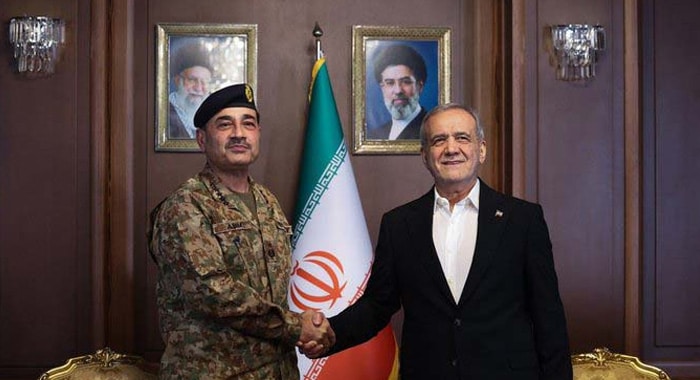
A high-level meeting was held in Tehran between the President of Iran, Masoud Pezeshkian, and Pakistan’s Chief of Army Staff, Field Marshal Asim Munir, underscoring the commitment of both nations to regional peace, stability, and strengthened bilateral relations.
The meeting was attended by Pakistan’s Interior Minister, Mohsin Naqvi, and Iran’s Foreign Minister, Abbas Araghchi, reflecting the significance of the dialogue at both strategic and diplomatic levels.
During the discussions, President Pezeshkian commended Pakistan’s “effective and responsible role” in promoting peace and facilitating dialogue in the region. He specifically acknowledged Pakistan’s efforts in contributing to de-escalation and ceasefire initiatives, describing them as “commendable and constructive.”
The Iranian President also expressed appreciation for Pakistan’s role in hosting diplomatic engagements in Islamabad, including its hospitality toward Iranian delegations during recent negotiations. He noted that such efforts have reinforced mutual trust and created pathways for sustained diplomatic cooperation.
Emphasizing Iran’s foreign policy priorities, President Pezeshkian reiterated his country’s commitment to regional peace, stability, and brotherly relations among neighboring states. He highlighted the importance of unity within the Muslim world, stating that collective cohesion would serve as a strong countermeasure to external pressures and geopolitical challenges.
“The unity of the Islamic Ummah can effectively prevent hostile agendas and contribute to lasting peace in the region,” President Pezeshkian remarked.
He further stressed the responsibility of regional countries to ensure collective security and reaffirmed Iran’s commitment to pursuing the rights of its people within the framework of international law.
The meeting reflects a broader convergence of views between Iran and Pakistan on key regional issues, including conflict resolution, diplomatic engagement, and the promotion of stability through cooperation.
Both sides agreed to continue high-level exchanges and deepen collaboration across political, security, and economic domains to further strengthen bilateral ties and contribute to regional harmony.



