
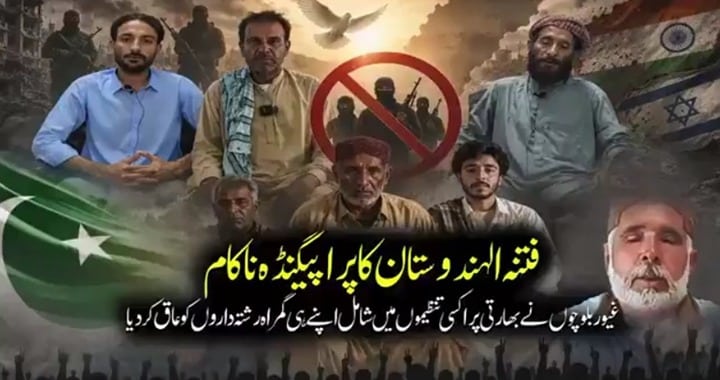
In a series of public declarations across Balochistan, several families have publicly distanced themselves from relatives associated with Fitna-al-Hindustan (FAH) and other armed groups, emphasizing that they neither support nor endorse involvement in militant activities.
The statements, made through press conferences and public appeals in various districts of the province, reflect growing concern among families regarding the recruitment of young individuals into armed organizations and the social consequences of militancy.
According to local reports, relatives of several individuals accused of links with militant networks issued formal declarations of disassociation, making it clear that any alleged involvement in unlawful activities would be the sole responsibility of those individuals.
One of the most notable statements was made during a press conference at the Lasbela Press Club, where the father of a woman identified in media reports as Sania publicly declared his disassociation from his daughter’s alleged links with Fitna-al-Hindustan.
Addressing journalists, he stated that the family had no connection with her reported activities and rejected any association with militant organizations. Observers noted that such public declarations are uncommon and underscore the emotional and social pressures experienced by families whose relatives become involved in extremist or armed groups.
In another case, a resident of Panjgur publicly announced his disassociation from his brother, stating that if his brother were found involved in any unlawful or militant activity, the family should not be considered connected to his actions.
Similarly, a resident of Gwadar issued a clear statement distancing himself from his brother, asserting that if any links to an armed organization were established, the family would bear no responsibility for his conduct. Both individuals emphasized that personal decisions to join armed groups should not be interpreted as representing the views or intentions of their families.
Several statements also emerged from Turbat, where family members expressed concern over relatives who had reportedly left home and subsequently lost contact with their families. One resident appealed to state institutions, explaining that his brother had left home approximately six months earlier in search of employment. He stated that if authorities determined that his brother had become affiliated with an armed organization, the family should not be held accountable for his actions.
In a separate case, another father from Turbat publicly declared complete disassociation from his son, stating that the young man had left home and allegedly joined an armed group without the family’s knowledge or consent. The father emphasized that his son’s decisions were made independently and did not reflect the values or beliefs of the family.
A resident of Quetta also publicly distanced himself from his son, declaring that he no longer maintained any relationship with him after the latter allegedly became involved with militant elements. According to the statement, the father urged his son to understand that his actions had severed family ties and that the family rejected any association with unlawful activities.
The declaration echoed similar sentiments expressed by other families across the province who have sought to publicly separate themselves from relatives accused of involvement in violence. Security analysts note that family disassociation statements often emerge in environments where militant organizations actively seek to recruit young people through ideological influence, social pressure, or deceptive narratives.
Experts argue that families frequently become unintended victims of radicalization, facing emotional distress and social stigma when relatives become involved in armed groups. Community leaders have repeatedly emphasized the importance of awareness, education, and family engagement in preventing vulnerable individuals from being drawn into violent networks.
Observers suggest that the recent public declarations may also reflect broader societal rejection of violence and militancy within many communities of Balochistan. Local elders and community representatives have consistently called for peaceful solutions to political and social challenges while discouraging youth from joining armed organizations. Analysts note that such public statements send a message that families and communities should not automatically be associated with the actions of individual relatives who choose to engage in unlawful activities.
The recent declarations from families across Lasbela, Panjgur, Gwadar, Turbat, and Quetta highlight the profound human and social impact of militancy on local communities. By publicly distancing themselves from relatives allegedly involved in armed organizations, these families have sought to make clear that they reject violence and do not support activities that threaten peace and stability. Observers note that the statements also underscore the broader challenges posed by radicalization and recruitment efforts, as communities continue to grapple with the consequences of militancy while advocating for peace, security, and development throughout Balochistan.



