
Pakistan’s fight against terrorism has undergone a significant transformation over the past two decades. What began as a largely military campaign to reclaim territory from violent extremist organizations has gradually evolved into a multidimensional national strategy that combines intelligence, diplomacy, border security, financial oversight, technological innovation, and international cooperation. Recent developments suggest that this evolution is continuing, with Pakistan increasingly seeking to complement operational successes on the ground with greater regional engagement and diplomatic outreach.
The security landscape confronting Pakistan remains challenging. Terrorist organizations have demonstrated remarkable adaptability, abandoning rigid organizational structures in favor of decentralized cells capable of conducting targeted attacks, spreading extremist propaganda online, and exploiting technological advances to evade detection. Rather than relying exclusively on traditional methods of warfare, these groups increasingly operate through hybrid tactics that combine physical violence with psychological operations intended to undermine public confidence and disrupt economic activity.
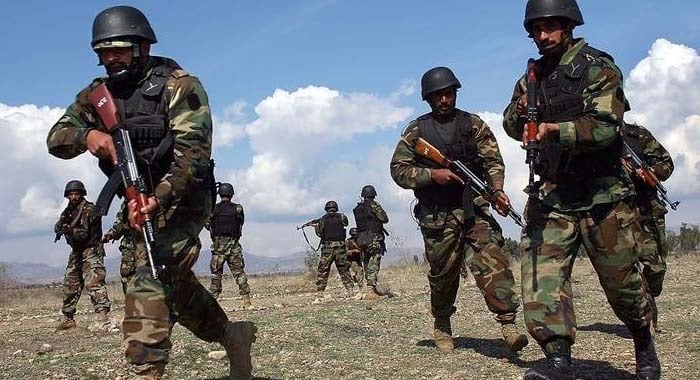
Pakistan’s response has reflected this changing reality. Intelligence-based operations have become the defining feature of contemporary counterterrorism efforts. Recent successful operations in Khyber Pakhtunkhwa and Balochistan illustrate an emphasis on preemptive action, enabling security forces to disrupt terrorist planning before attacks materialize. Such operations are supported by enhanced intelligence coordination, digital surveillance, forensic capabilities, and closer cooperation among military, intelligence, police, and civilian institutions.
This integrated approach recognizes that defeating terrorism requires dismantling entire operational ecosystems rather than merely targeting individual attackers. Recruitment networks, financial facilitators, weapons suppliers, propagandists, and logistical coordinators all contribute to sustaining terrorist organizations. Consequently, Pakistan’s security strategy increasingly focuses on disrupting these interconnected structures through coordinated national action.
Border management has likewise become a central pillar of Pakistan’s security framework. Pakistani authorities have consistently maintained that several terrorist organizations responsible for attacks inside the country operate from sanctuaries across the border in Afghanistan. Islamabad has repeatedly urged the Afghan authorities to take effective and verifiable measures to prevent Afghan territory from being used for planning or facilitating attacks against neighboring countries. Enhanced border fencing, biometric systems, surveillance technologies, and regulated crossing points are intended to reduce illegal movement while strengthening national security.
Recent remarks by former Afghan National Army Deputy Chief Lt. Gen. Syed Sami Sadat have added renewed attention to regional security concerns. In a widely circulated statement, he alleged that armed groups responsible for attacks inside Pakistan receive support from the Afghan Taliban and financial assistance originating from India, allegations that have attracted considerable discussion among regional observers while being rejected by those accused. Regardless of differing interpretations, the broader issue of cross-border terrorism continues to influence relations between Pakistan and Afghanistan and remains an important element of regional security discussions.
Alongside military and intelligence efforts, Pakistan has increasingly pursued diplomatic engagement aimed at building international consensus against terrorism. Pakistani officials have consistently emphasized that terrorism constitutes a shared regional and global challenge requiring coordinated responses rather than isolated national efforts. This position reflects the understanding that terrorist networks frequently exploit international borders, illicit financial channels, and transnational communication platforms that cannot be effectively addressed by any single country acting alone.
The financial dimension of counterterrorism has become equally significant. Pakistan has strengthened regulatory mechanisms to combat terrorist financing, improve financial transparency, and prevent extremist organizations from accessing resources needed to sustain their operations. These measures have complemented broader efforts to strengthen institutional resilience while reinforcing international confidence in Pakistan’s commitment to combating terrorism in accordance with global standards.
Technology has emerged as another defining feature of modern counterterrorism. Advances in data analysis, digital forensics, artificial intelligence-assisted monitoring, satellite imagery, and unmanned surveillance systems have expanded the capabilities available to security institutions. At the same time, terrorist organizations have also demonstrated increasing sophistication in exploiting encrypted communications, social media platforms, and commercially available technologies. This dynamic requires continuous innovation, ensuring that security agencies remain capable of anticipating evolving threats rather than merely responding to them.
Equally important is the role of public resilience. Terrorism seeks not only to inflict physical harm but also to generate fear, polarization, and uncertainty. Pakistan’s experience demonstrates that societal resilience, responsible journalism, community engagement, and public cooperation with law enforcement significantly enhance national security. Citizens who reject extremist narratives and support peaceful democratic institutions deny terrorist organizations the broader societal influence they seek to achieve.
Pakistan’s expanding regional engagement also reflects broader geopolitical realities. Economic connectivity initiatives, trade corridors, and infrastructure projects increasingly depend upon stable security conditions. Protecting these initiatives therefore serves both national and regional interests by fostering economic growth, encouraging investment, and strengthening interdependence among neighboring states.
The country’s counterterrorism campaign is therefore no longer defined solely by the number of successful operations conducted or terrorist networks disrupted. Increasingly, its effectiveness is measured by the ability to preserve public confidence, strengthen institutions, encourage economic development, deepen regional cooperation, and deny extremist organizations opportunities to regenerate.
As Pakistan continues confronting evolving security challenges, the combination of intelligence-led operations, institutional coordination, diplomatic engagement, technological modernization, and public resilience represents a comprehensive strategy adapted to the realities of twenty-first century terrorism. While the threat has by no means disappeared, the country’s approach increasingly reflects an understanding that lasting security is achieved not through military strength alone but through the integration of national capabilities, regional cooperation, and sustained commitment to peace, stability, and the rule of law.



