(Shamim Shahid)
The recent reports emerging from Kandahar about a high-level, reportedly secretive meeting within the Taliban leadership circle have once again brought the complex and deeply entangled issue of the Tehreek-e-Taliban Pakistan (TTP) into sharp focus. According to these accounts, the meeting said to have been chaired by the Afghan Taliban’s supreme leadership produced a directive that Afghan territory should not be used against any other country, particularly Pakistan, and that unauthorized armed groups operating in ungoverned or semi-governed spaces should be brought under control.
At first glance, such declarations appear to signal a significant shift. However, beneath the surface lies a far more complicated reality one shaped by decades of ideological convergence, battlefield alliances, regional mistrust, and competing strategic pressures.
The central question now being debated in policy circles, media studios, and diplomatic corridors is straightforward yet deeply consequential: Is the Afghan Taliban genuinely preparing to take action against TTP sanctuaries, or is this yet another symbolic gesture aimed at external audiences?
From what has been reported, the Kandahar meeting reflects a familiar pattern in Afghan Taliban governance public reassurances under external pressure without clear operational commitments. International actors, including the United Nations, the European Union, and the United States, have repeatedly expressed concern over the presence and operational freedom of TTP elements inside Afghanistan. Pakistan, meanwhile, has consistently raised alarm over cross-border attacks and the use of Afghan soil by militant networks targeting its security forces.
In this context, the reported directive from Kandahar can be read as a response to mounting pressure from multiple directions. Pakistan’s tightening border controls, deportation measures affecting Afghan nationals, and strained trade routes have created tangible economic and humanitarian pressure on Kabul. Simultaneously, international diplomatic pressure has added another layer of urgency.
However, history cautions against taking such announcements at face value. The Afghan Taliban have previously issued similar assurances that Afghan soil would not be used against any neighboring state yet the operational reality on the ground has often told a different story.
One of the most critical dimensions often overlooked in surface-level analysis is the ideological and historical overlap between the Afghan Taliban and the TTP. Both movements emerged from the same broader ideological ecosystem shaped during and after the Soviet-Afghan war, later evolving under the shadow of the U.S.-led war on terror.
There exists not only ideological sympathy but also longstanding personal, logistical, and operational linkages. Many TTP members found refuge in Afghanistan after military operations in Pakistan’s tribal districts, while Afghan Taliban elements benefited from various forms of support during their years of insurgency.
This shared history complicates any expectation of swift or decisive action against the TTP. For segments within the Afghan Taliban, the TTP is not simply an external liability but part of a broader, interconnected militant landscape that cannot easily be isolated or dismantled without internal friction.
Another important aspect highlighted in discussions around TTP presence is the group’s fragmentation and mobility. Over the years, military operations, internal splits, and leadership losses have dispersed TTP networks across various regions. Rather than functioning as a centralized organization, it increasingly operates as a decentralized constellation of factions.
This dispersion makes enforcement actions significantly more complex. Even if a political directive is issued in Kandahar or Kabul, its implementation across remote, mountainous, and loosely governed regions remains uncertain. The ability of any central authority to identify, arrest, and dismantle such networks is limited by both capacity and local dynamics.
Furthermore, there are concerns that under pressure, militant groups may adapt by blending into civilian populations or shifting operational bases, making verification of any claimed crackdown extremely difficult.
A recurring theme in Afghan Taliban governance is the use of symbolic policy announcements to manage external expectations while maintaining internal cohesion. In this case, declaring that Afghan territory will not be used against Pakistan serves multiple purposes:
- Diplomatic signaling to Pakistan and international actors
- Internal messaging to factions within the Taliban system
- A narrative of sovereign control over Afghan territory
Yet the key question remains whether such declarations translate into actionable enforcement. The gap between policy statement and ground reality has historically been wide. As some analysts suggest, these announcements may be less about immediate operational change and more about buying time, easing diplomatic pressure, and projecting an image of control in a complex security environment.
Pakistan’s concerns are neither new nor isolated. The security situation in its western regions has seen repeated militant incidents attributed to TTP-linked groups. This has led to increased friction in bilateral relations, including border closures, deportation drives, and reduced economic engagement.
From Islamabad’s perspective, the expectation is clear: Afghan authorities must take concrete, verifiable steps against militant sanctuaries. However, frustration has grown over what is perceived as rhetorical assurances without measurable outcomes.
This tension reflects a broader structural problem both countries view the same militant networks through different strategic lenses. For Pakistan, the TTP is a direct security threat. For the Afghan Taliban, it is a more complicated issue tied to history, alliances, and internal political considerations.
Beyond bilateral dynamics, international pressure is also shaping current developments. Global actors are increasingly concerned that Afghanistan could once again become a permissive environment for transnational militancy. This concern is not only about regional stability but also about broader security implications.
However, international influence over ground realities in Afghanistan remains limited. Sanctions, diplomatic isolation, and conditional engagement can shape incentives, but they cannot directly enforce operational outcomes in remote regions. As a result, the Afghan Taliban leadership finds itself navigating a narrow path between external expectations and internal constraints.
One of the most striking contradictions in the current Afghan system is the attempt to transition from insurgency to governance. The same networks that once operated as decentralized militant formations are now expected to function as centralized state actors. This transition is inherently difficult. Governance requires enforcement capacity, administrative coherence, and institutional discipline qualities that are still evolving within Afghanistan’s current political structure.
Moreover, internal divisions within the Taliban movement further complicate decision-making. Different factions may hold differing views on how to handle groups like the TTP, leading to inconsistent or partial implementation of central directives.
Beyond geopolitics and security calculations lies a deeply human reality. Afghanistan’s broader population continues to face severe restrictions, economic hardship, and uncertainty. Minority communities and vulnerable groups often find themselves caught in cycles of insecurity and marginalization.
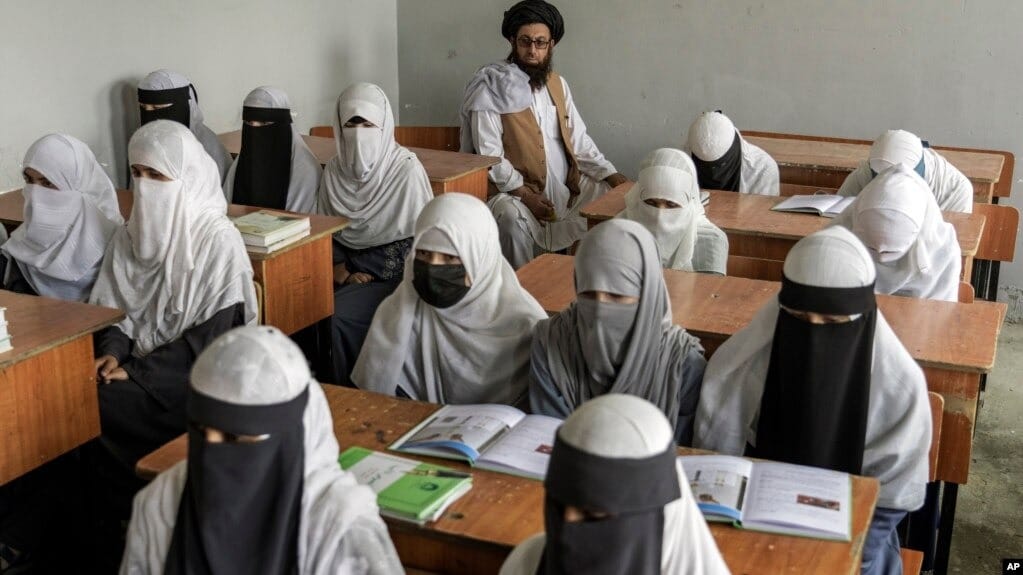
Reports of restrictions on social, educational, and economic participation particularly for women add another layer of complexity to the country’s internal landscape. These conditions contribute to a broader environment of instability, which in turn affects governance and security outcomes.
A state facing internal fragmentation and social tension is less likely to achieve sustained control over armed networks operating within its territory. The central concern remains whether the current moment represents a genuine turning point or yet another cycle of pressure, announcement, and partial implementation.
If the Afghan Taliban leadership moves beyond declarations and undertakes visible, sustained action against militant groups, it could mark a significant shift in regional dynamics. However, if past patterns are any indication, the more likely outcome is incremental, selective action that falls short of external expectations. In such a scenario, mistrust between Kabul and Islamabad will likely deepen further, and the broader security environment will remain unstable.
The Kandahar meeting, as reported, reflects the ongoing struggle within Afghanistan’s leadership to balance competing pressures. It also highlights the enduring complexity of the TTP issue an issue that cannot be resolved through declarations alone. Ultimately, the question is not only whether action will be taken, but whether there exists sufficient political will, institutional capacity, and internal consensus to sustain such action over time.
Until those conditions align, the gap between promise and practice is likely to remain wide. And in that gap lies the enduring uncertainty of the region’s security future.