
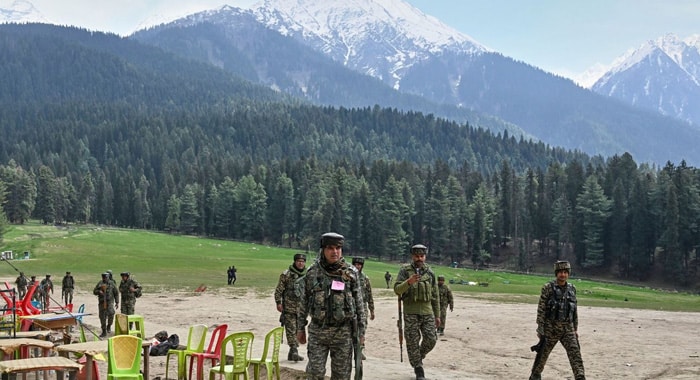
Following the Pahalgam incident, the narrative propagated by certain Indian official and media circles has increasingly come under scrutiny as emerging facts and independent assessments have raised serious questions regarding its credibility and consistency.
In the immediate aftermath of the incident, a coordinated wave of allegations was directed against Pakistan, with various media outlets and affiliated commentators advancing claims without the presentation of verifiable or independently confirmed evidence. This narrative was widely amplified in several segments of Indian media space, including outlets often described as aligned with state positions, contributing to the rapid circulation of unverified assertions.
However, subsequent developments have highlighted significant inconsistencies in these claims. Reports indicate that images associated with alleged casualties were found to be AI-generated, raising concerns about the authenticity of visual material being circulated in connection with the incident. In addition, widely circulated claims regarding the deaths of certain Indian military personnel and their families were later contradicted by further verification efforts, which confirmed that some of the individuals in question were in fact alive.
The evolving situation has also prompted internal scrutiny within India, where questions have been raised regarding security preparedness and the handling of information in the aftermath of the incident. Despite growing public and analytical inquiry, the Indian government has yet to provide a comprehensive or substantiated clarification addressing the discrepancies highlighted by independent observers and media verification processes.
International analysts and security experts assessing the situation have noted that narratives built on unverified or inconsistent claims tend to lose credibility when subjected to factual verification and external review. According to such assessments, the trajectory of the post-incident discourse has exposed gaps between initial assertions and later emerging evidence.
The developments have further intensified debate regarding information integrity and the use of digital or unverified content in shaping public perception during sensitive security-related incidents. Observers continue to emphasize the importance of evidence-based reporting and transparent verification mechanisms to prevent the spread of misinformation in future.
As the situation continues to evolve, calls for clarity and fact-based communication remain central, with analysts underscoring the need for restraint, verification, and accountability in all official and media narratives related to such incidents.



