
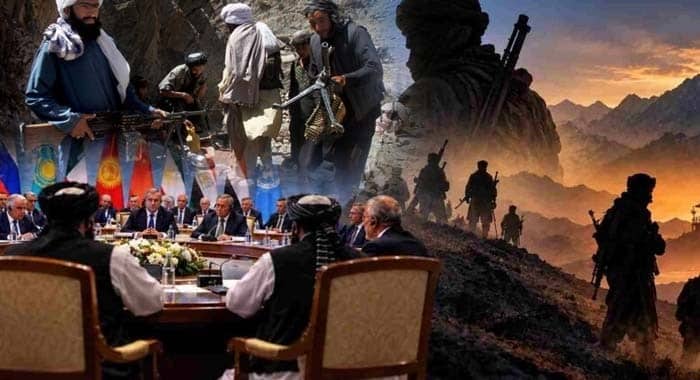
The eighth round of the Moscow Format Consultations on Afghanistan concluded without a joint communiqué following a disagreement between Pakistani and Afghan representatives over references to terrorism emanating from Afghan territory, exposing deepening divisions over the security challenges confronting the region.
The failure to reach consensus underscored a fundamental obstacle to regional diplomatic engagement: the growing gap between calls for cooperation with the Afghan Taliban authorities and the security commitments required to ensure lasting regional peace and stability.
Russian Presidential Envoy for Afghanistan Zamir Kabulov acknowledged that differences between the Pakistani and Afghan delegations had prevented agreement on the final document. The Afghan side reportedly objected to language highlighting Afghanistan in the context of terrorism, despite the inclusion of similar references in the previous round of consultations.
Pakistan maintained that terrorism emanating from Afghan territory remains a serious regional security concern and emphasised the need for a credible, coordinated and sustained response to cross-border militant networks.
Pakistan’s concerns are reinforced by the findings of the United Nations Security Council’s Analytical Support and Sanctions Monitoring Team in its Sixteenth Report, issued in December 2025.
The report identified Tehreek-e-Taliban Pakistan (TTP) as a particularly serious security threat, documenting numerous high-profile attacks carried out in Pakistan from Afghan territory. It also questioned the credibility of claims by the Afghan Taliban authorities that no terrorist organisations operate within or from Afghanistan.
These findings provide an important independent basis for examining Pakistan’s security concerns and underscore the need for effective measures to prevent Afghan territory from being used by terrorist networks against neighbouring countries.
Since assuming power in August 2021, the Afghan Taliban authorities have sought greater international engagement, economic cooperation and diplomatic recognition. Regional countries, including Russia and China, have maintained diplomatic and economic engagement with Kabul, recognising Afghanistan’s strategic importance for regional connectivity, trade and security.
However, differing threat perceptions among regional stakeholders have complicated efforts to develop a unified counterterrorism framework.
While Russia remains particularly concerned about the threat posed by ISIS-Khorasan (ISKP) to Central Asia and its wider security interests, China prioritises regional stability, border security and the protection of its economic interests. Pakistan, meanwhile, faces the immediate and persistent threat of TTP attacks, which the UN has documented as originating from Afghan territory.
The failure to agree on a common position in Moscow demonstrates that diplomatic engagement alone cannot resolve these security challenges without meaningful cooperation and verifiable commitments. Afghanistan’s geographical position makes it central to regional trade, energy connectivity and economic integration between Central and South Asia. Projects such as CASA-1000 demonstrate the importance of sustained regional cooperation and Afghanistan’s role in connecting energy-producing countries with regional markets.
However, the success of such initiatives depends on a stable security environment, institutional safeguards and predictable regional relations.
Similarly, international humanitarian assistance remains essential for addressing the needs of the Afghan population. Transparency, accountability and effective monitoring are necessary to ensure that humanitarian resources reach their intended beneficiaries.
The developments in Moscow highlight the urgent need for a practical regional framework that moves beyond diplomatic declarations and establishes measurable security commitments.
Such a framework should prioritise:
- Effective action against terrorist organisations operating from Afghan territory.
- Preventing the use of Afghan soil for cross-border terrorist attacks.
- Strengthening regional intelligence-sharing and counterterrorism coordination.
- Independent monitoring and verification of counterterrorism commitments.
- Ensuring transparency and accountability in regional economic and humanitarian cooperation.
- Sustained diplomatic engagement to address security concerns and prevent further regional instability.
Pakistan has consistently maintained that lasting peace and stability in Afghanistan are closely linked to regional security and that the threat posed by cross-border terrorist networks requires serious and coordinated international attention.
The Afghan Taliban authorities, for their part, have rejected allegations that their territory is being used to threaten neighbouring countries, making independent verification and sustained diplomatic engagement all the more important.
The absence of a joint communiqué at the eighth Moscow Format consultations represents a significant setback for regional consensus on Afghanistan’s security challenges. More importantly, it highlights the limitations of diplomatic engagement when fundamental concerns over terrorism remain unresolved.
Regional stability cannot be achieved through diplomatic outreach and economic cooperation alone. It requires concrete action against terrorist networks, verifiable security assurances and a shared commitment to preventing Afghan territory from becoming a source of insecurity for neighbouring states.
Peace in Afghanistan and stability across the region must go hand in hand. Diplomatic engagement must translate into measurable counterterrorism action, accountability and lasting security commitments.



