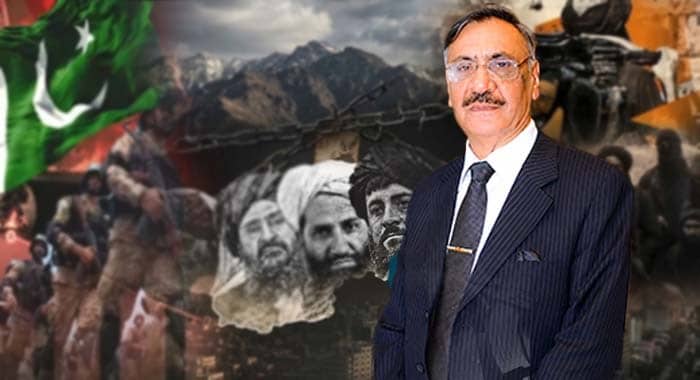
Pakistan’s fight against terrorism has entered a decisive phase, demanding a comprehensive strategy that goes far beyond conventional military operations. The changing security landscape has made one reality increasingly clear: eliminating armed militants alone is not enough to defeat terrorism. The networks that shelter them, facilitate their movement, provide intelligence, arrange transportation, supply food and help them evade security forces must also be dismantled. Without confronting these support structures, terrorist organisations can continue to survive, reorganise and threaten national security even after suffering significant losses.
The recent decisions taken at the Apex Committee meeting reflect this broader understanding of the terrorist threat. The clear emphasis on intelligence-based operations against both terrorist organisations and their facilitators signals an important shift in Pakistan’s counterterrorism strategy. It recognises that terrorism is not sustained by armed fighters alone but by an entire ecosystem of assistance, intimidation, logistical support and local connections. Targeting this ecosystem is essential to weakening militant organisations and restoring the writ of the state in areas affected by insecurity.
The reported impact of the emergency measures introduced in the affected areas further illustrates the importance of this approach. The movement of Noor Wali Mehsud and his network has reportedly become increasingly restricted, creating serious operational difficulties for the group. These developments suggest that the combination of intensified security measures, intelligence-based operations and pressure on support networks is making it increasingly difficult for terrorist organisations to operate freely.
One of the greatest misconceptions about counterterrorism is that the threat can be eliminated simply by targeting those who carry weapons. In reality, armed militants depend on an extensive network of individuals who provide them with shelter, transportation, food, intelligence and information about the surrounding environment. Some facilitate communication, others help identify locations, while certain individuals provide concealment and logistical assistance.
These people may not participate directly in terrorist attacks, but their contribution can be equally damaging. A militant organisation deprived of its support network faces significant difficulties maintaining its presence, moving between locations and coordinating its activities.
The distinction between deliberate facilitators and people cooperating under intimidation is equally important. In remote tribal and settled areas, some residents may be compelled to accommodate armed groups because they fear retaliation. When government authority appears weak or inconsistent, ordinary citizens can become vulnerable to pressure from those who exercise influence through violence.
Such circumstances create an atmosphere in which silence becomes a survival strategy and cooperation becomes an act of compulsion. The restoration of state authority is therefore essential not only for eliminating terrorism but also for freeing local communities from the influence of armed groups.
Those who deliberately support terrorism must face the law, while citizens forced into cooperation through fear must be protected and encouraged to return to normal life. This distinction can help prevent terrorist organisations from exploiting vulnerable populations and turning entire communities into unwilling participants in their activities.
The strategy of targeting facilitators is therefore a necessary step towards dismantling the foundations of militancy. It strikes at the organisational structures that allow terrorist groups to remain operational long after individual fighters have been neutralised.
The implementation of emergency measures has added another dimension to Pakistan’s counterterrorism efforts. The reported restrictions on the movement of Noor Wali Mehsud and members of his network indicate that the changing security environment is creating significant challenges for militant organisations.
For terrorist groups, freedom of movement is essential. Their ability to maintain connections, access support and operate across different locations depends on an environment in which they can move without facing sustained pressure from the state. When that freedom becomes restricted, their operational capacity is affected.
The growing pressure on these networks also sends an important message to individuals and groups providing them with assistance: the state is determined to challenge not only the visible threat but also the structures that sustain it.
However, the effectiveness of emergency measures must ultimately be judged by their long-term results. Temporary restrictions and security operations can weaken militant organisations, but lasting success requires a consistent government presence, effective law enforcement and the protection of local populations.
The state must ensure that areas previously influenced by terrorist organisations do not return to the same conditions once immediate security operations conclude. Sustainable peace depends on preventing militant groups from rebuilding their influence and restoring confidence among residents.
The reported 37 per cent decline in terrorist incidents is an encouraging development in Pakistan’s ongoing struggle against militancy. It suggests that intensified security operations and greater pressure on terrorist networks may be contributing to an improvement in the security environment.
Nevertheless, a reduction in attacks should not be mistaken for the elimination of the threat. Terrorist organisations can adapt to changing circumstances, reorganise their networks and attempt to exploit weaknesses in security arrangements. The challenge is to transform short-term improvements into permanent security gains.
The presence of the state is particularly important in remote and vulnerable communities. Where government authority is weak, armed groups attempt to establish their own influence by exploiting fear, insecurity and the absence of effective administration. They may convince residents that cooperation is necessary because no institution can protect them.
This perception must be challenged through visible, consistent and lawful government action. When communities see that the state is capable of protecting them, the influence of armed groups begins to weaken. People who previously remained neutral or cooperated under pressure may become more confident in distancing themselves from militant organisations.
Pakistan’s counterterrorism strategy must therefore combine security operations with public confidence. The objective should be to create conditions in which terrorist groups cannot find either willing facilitators or vulnerable communities that they can intimidate into providing support.
Pakistan’s internal security challenges are closely connected to developments across its western border. The continued presence of terrorist elements operating from Afghan territory presents a serious concern for Pakistan’s national security.
The fundamental principle is straightforward: no country should allow its territory to be used by armed organisations to conduct attacks against another state. This is a basic requirement of responsible relations between neighbouring countries.
Pakistan has repeatedly emphasised the importance of preventing Afghan territory from becoming a launching ground for terrorist activities. The commitment that Afghan soil would not be used against other countries was also an important element of the understandings discussed during negotiations in Qatar.
However, commitments must translate into practical action. Diplomatic assurances lose their significance when terrorist organisations continue to enjoy the freedom to operate, organise and maintain networks across borders.
Pakistan cannot ignore threats to its national security simply because their sources are located beyond its territorial boundaries. Internal security operations and measures addressing cross-border terrorism have consequently become interconnected elements of the country’s broader security strategy.
The responsibility also rests with Afghanistan’s authorities to recognise that terrorism is not a problem that can be contained indefinitely within neighbouring countries. Militant organisations that operate with impunity create instability throughout the region and undermine the prospects of peaceful relations.
A stable Afghanistan is in Pakistan’s interest, but stability cannot be built on policies that allow armed groups to threaten neighbouring states.
Another serious challenge is the tendency of certain political actors to place partisan interests above broader national responsibilities. Pakistan is a politically diverse country, and disagreement over government policies, institutional performance and political decisions is a normal feature of democratic life. However, political competition must never become a justification for weakening the country’s security or creating opportunities for terrorist organisations.
National security is not the property of a political party, government or individual institution. It is a collective responsibility involving the state and its citizens.
Political leaders have an obligation to exercise responsibility, particularly when the country is confronting terrorism. Political narratives that deepen divisions, undermine public confidence in national institutions or exploit security challenges for temporary political gains can create an environment of instability.
At the same time, legitimate criticism of government policies and state institutions must remain protected. Accountability, constitutional rights and the rule of law are essential to a healthy political system. Allegations against political leaders or organisations must be established through credible evidence and lawful proceedings rather than political rhetoric.
The principle that must guide the country’s political culture is simple: no individual, party or group is above the law. Political influence cannot become a shield against accountability, just as national security cannot become an excuse for disregarding constitutional protections. Pakistan needs political maturity in which national interests are protected without sacrificing democratic principles.
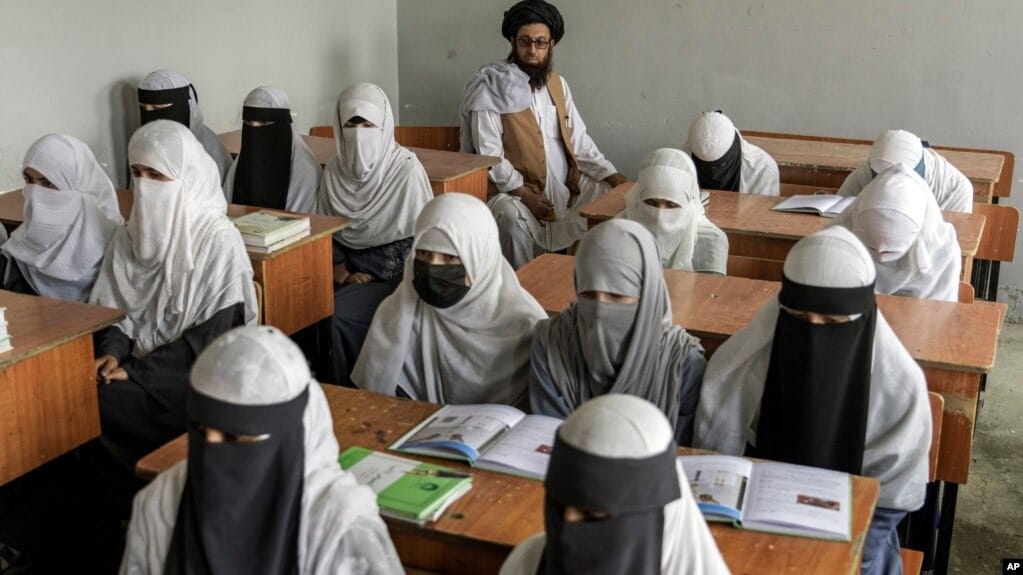
The state must remain firm against violence, intimidation and unlawful conduct while ensuring that every citizen receives equal treatment under the law. The internal situation in Afghanistan also deserves serious attention. The Taliban’s approach to governance, particularly its restrictions on women’s education and employment, has created significant challenges for Afghan society.
The right to education and the opportunity to work are essential elements of social and economic development. Restricting women from educational institutions and workplaces does not merely affect individual rights; it also weakens families, communities and the broader economy.
The difficulties faced by vulnerable women, particularly poor widows who need employment to support their households, demonstrate the human consequences of restrictive policies. For such families, employment is not a luxury but an economic necessity.
A government cannot secure lasting public support simply through the exercise of armed authority. Effective governance requires an understanding of people’s needs, the protection of basic rights and the creation of opportunities for ordinary citizens.
When policies ignore these realities, dissatisfaction can grow and opposition movements can emerge. Different groups may develop separate grievances, eventually creating a wider challenge to the ruling authorities.
The lesson is that controlling territory and governing a population are two very different responsibilities. Sustainable stability requires public confidence, social inclusion and economic opportunities.
Afghanistan’s internal stability is also closely connected to Pakistan’s security. Political instability, militant activity and deteriorating bilateral relations create additional challenges for the entire region.