
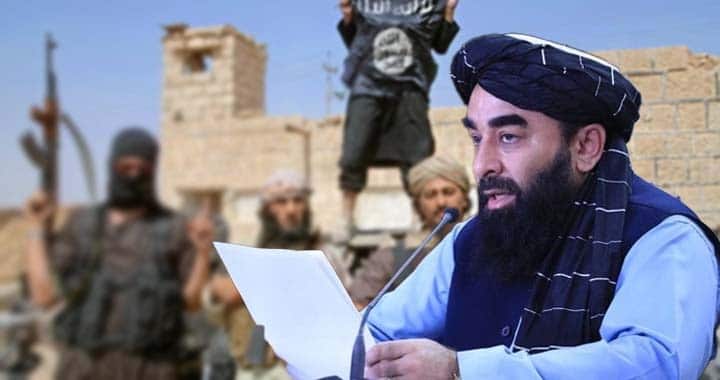
Pakistan categorically rejects the claims made on 3 May 2026 by Afghan Taliban spokesperson Zabihullah Mujahid, who alleged that Pakistan is supporting ISIS (Daesh). Officials have emphasized that such allegations are unfounded and ignore the documented realities of Pakistan’s consistent and ongoing counterterrorism efforts.
The formation of ISIS in Afghanistan traces back to 2014, when the Islamic State dispatched envoys from Iraq and Syria to connect with like-minded local commanders. Attempts to link Pakistan to ISIS are a false narrative propagated by the Afghan Taliban to deflect responsibility for the presence and activities of ISIS and other extremist groups in Afghanistan.
Since the Taliban’s forced takeover of Afghanistan in 2021, hundreds of dangerous ISIS operatives were released from Bagram prison. These individuals were not only freed but have reportedly been utilized in ongoing terrorist activities across the region. Pakistan itself has been a primary target of ISIS operations, not a facilitator.
ISIS has claimed responsibility for multiple attacks on Pakistani soil, including high-profile incidents in Islamabad, Quetta, Karachi, and Peshawar. These attacks confirm Pakistan’s frontline role in fighting ISIS and other extremist groups. Pakistani authorities have conducted numerous intelligence-based operations targeting ISIS and other “Fitna-al-Khawarij” networks, resulting in the arrest or elimination of many operatives.
The international community has recognized Pakistan’s efforts. For instance, U.S. President Donald Trump praised Pakistan’s role in apprehending a key ISIS operative implicated in the killing of U.S. personnel in Kabul.
Afghanistan remains the primary stronghold of ISIS. Provinces such as Nangarhar, Kunar, and Nuristan continue to harbor robust ISIS cells. Reports indicate close links between Taliban intelligence and ISIS leadership in these regions, highlighting the Afghan Taliban’s history of exploiting ISIS for political and strategic objectives.
Evidence also shows coordinated activity between ISIS and Fitna-al-Khawarij inside Afghanistan, enabling cross-border attacks against Pakistan. The repeated targeting of Pakistani civilians and security forces by Afghan-based operatives underscores the dual threats Pakistan faces: ISIS and TTP factions operating from Afghan territory.
Pakistani authorities have repeatedly demanded action from the Afghan interim government to neutralize ISIS and TTP hideouts. However, these efforts have largely gone unheeded, and some groups have reportedly received indirect support.
Concrete evidence exists, including Afghan attackers neutralized during Pakistani security operations, demonstrating that these terrorist networks operate from Afghan soil. Suicide attackers in Pakistan have often been Afghan citizens, indicating where these networks are based.
A Pakistani government spokesperson emphasized: “Terrorists, regardless of their affiliations, remain enemies of the state. Pakistan has consistently acted against terrorism and achieved significant operational successes. The Pakistani military and security forces are united with the people in eliminating extremism and will not allow any foreign conspiracy or proxy war to succeed.”
Pakistan’s stance is unequivocal: terrorist elements, whether operating under the ISIS banner or any other guise, are threats to national security. The Pakistani armed forces and intelligence agencies remain committed to protecting citizens, dismantling terrorist networks, and safeguarding regional stability.



