
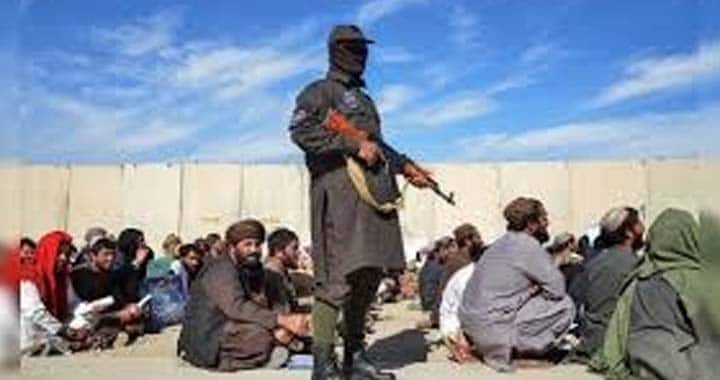
The Taliban regime has come under growing criticism following the implementation of a controversial new property law that allegedly enables the confiscation of privately owned residential land and housing schemes under the pretext of declaring them “state property.”
According to reports published by Afghan media outlet Afghanistan International, the newly enforced regulation grants Taliban authorities sweeping powers to seize residential lands, invalidate previous ownership claims, and subsequently resell the same properties to citizens under a new legal framework controlled by the regime.
The move has sparked widespread concern among legal experts, civil society observers, and Afghan citizens, who view the measure as another step toward consolidating authoritarian control over the country’s economic and social structure.
Under the reported law, areas previously recognized as privately owned residential settlements or housing schemes can now be reclassified as government land, allowing Taliban authorities to assume direct control over them. Reports indicate that thousands of acres of privately held land across various regions have already been confiscated and registered under state ownership by the regime.
Observers warn that the policy could have devastating consequences for ordinary Afghans already struggling under severe economic hardship, unemployment, inflation, and humanitarian crises. Critics argue that the law effectively strips citizens of long-standing property rights and places them at risk of displacement, financial ruin, and legal uncertainty.
Legal analysts and regional experts believe the measure is not merely administrative but politically motivated. According to several assessments, the real objective behind the policy is to redistribute confiscated land and property among loyal Taliban commanders, affiliated figures, and militant networks, thereby strengthening internal patronage systems within the regime.
“This is being viewed as the institutionalization of property confiscation under legal cover,” one regional affairs analyst stated. “Afghans who have already lost political freedoms and economic opportunities now fear losing ownership of their homes and ancestral lands as well.”
Human rights advocates have also raised alarm over the absence of judicial transparency and independent legal recourse under the Taliban administration. With no functioning democratic institutions or independent courts capable of reviewing land disputes fairly, affected citizens may have little ability to challenge confiscation decisions.
The development comes amid continued international concern over governance, civil liberties, and economic management in Afghanistan since the Taliban’s return to power. Critics argue that instead of addressing widespread poverty and unemployment, the regime is pursuing policies that could deepen inequality and intensify public suffering.
Economic experts caution that large-scale uncertainty over land ownership may further discourage investment, weaken public confidence, and accelerate internal displacement in already vulnerable communities.
As pressure mounts, observers say the implementation of the new law is likely to fuel domestic resentment and increase scrutiny from international human rights organizations monitoring property rights and governance practices in Afghanistan.



