
The latest allegations by the Afghan Taliban authorities seeking to link Pakistan with internal violence in Afghanistan have been described as an attempt to divert attention from the country’s continuing security challenges and the presence of terrorist organisations operating from Afghan territory.
The allegations come amid renewed reports and international assessments concerning militant networks operating inside Afghanistan, as well as growing claims of armed resistance to Taliban rule by groups including the Afghanistan Freedom Front (AFF) and the National Resistance Front (NRF).
Pakistan has consistently rejected allegations of involvement in internal Afghan clashes and has maintained that accusations against its security forces or intelligence agencies must be supported by credible, independently verifiable evidence.
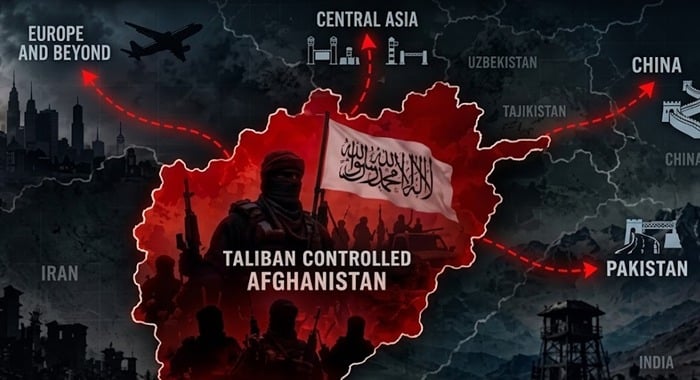
Afghanistan continues to face serious security challenges following the Taliban’s return to power. Claims circulated by various sources regarding the presence of more than 130 training camps and over 28 terrorist organisations inside Afghanistan point to the scale of the security challenge, although such figures should be assessed against independently verified international reporting.
The presence and activities of militant organisations in Afghanistan have also been addressed in successive reports of the United Nations and other international monitoring bodies. Pakistan has repeatedly drawn international attention to the continued presence of terrorist groups on Afghan soil, particularly the Tehreek-i-Taliban Pakistan (TTP), which Islamabad accuses of using sanctuaries and support networks in Afghanistan to facilitate attacks against Pakistan.
Islamabad maintains that the issue is not one of political rhetoric but of regional security and the need for Afghan authorities to prevent their territory from being used to threaten neighbouring countries.
The Taliban authorities continue to face criticism over governance, political representation, human rights and security conditions inside Afghanistan. Opposition groups, including the AFF and NRF, have claimed responsibility for attacks and armed resistance against Taliban forces in different parts of the country. Supporters of these groups describe their activities as indigenous resistance to Taliban rule, while the Taliban authorities have portrayed armed opposition as a security threat.
The competing narratives reflect a broader struggle over political legitimacy and control inside Afghanistan. Against this backdrop, allegations involving foreign interference have become an increasingly prominent feature of the competing narratives surrounding Afghanistan’s internal conflict.
Pakistan has categorically rejected allegations that its security forces or intelligence agencies are involved in internal clashes in Afghanistan. Islamabad has also rejected claims that Pakistan is recruiting or training former Afghan security personnel or facilitating Daesh, ISIL-K or other terrorist organisations operating in Afghanistan. Pakistan has called for allegations of this nature to be supported by concrete evidence, including verified identities, documents, communications records, forensic material and independent investigations. The absence of independently verifiable evidence, Pakistan maintains, makes it inappropriate to present allegations as established facts.
The circulation of videos purportedly showing individuals allegedly connected with Pakistan has also generated competing claims. According to the narrative presented by critics of the Taliban authorities, some of the individuals shown in such footage appear to be unarmed civilians whose statements may have been made under coercive circumstances.
These allegations have not been independently established, and the authenticity, circumstances of production and identities of individuals appearing in the videos would require independent verification. Nevertheless, the controversy highlights the importance of independently authenticated evidence in an increasingly contested information environment. Videos released during an active conflict cannot, by themselves, establish the identity, affiliation or motivation of individuals appearing in them without corroborating evidence.
The latest dispute is unfolding against the backdrop of deteriorating relations between Pakistan and the Afghan Taliban authorities. Islamabad has repeatedly raised concerns about cross-border terrorism and the presence of militant organisations in Afghanistan. Kabul, meanwhile, has rejected accusations that it permits Afghan territory to be used for attacks against Pakistan and has itself made allegations concerning Pakistani involvement in Afghan affairs.
The competing accusations have increasingly become intertwined with the broader security crisis affecting the region. Pakistan’s position remains that terrorist safe havens and militant infrastructure inside Afghanistan constitute a genuine security concern that requires concrete action by the authorities in Kabul. At the same time, allegations concerning Pakistani involvement in Afghanistan’s internal armed conflicts require credible evidence and independent verification.
Pakistan has pointed to United Nations and other international reporting in support of its concerns regarding militant organisations operating from Afghan territory. International monitoring reports have documented the presence and activities of multiple terrorist organisations in Afghanistan and have examined relationships among militant groups operating across the region. These assessments provide important context for understanding Pakistan’s security concerns, although individual allegations concerning specific incidents still require separate verification. The distinction between documented regional security trends and unverified claims about particular incidents remains essential to an accurate assessment of developments inside Afghanistan.
The continuing exchange of accusations comes at a time of heightened security tensions along the Pakistan-Afghanistan border. Pakistan has maintained that Afghanistan’s authorities must ensure that its territory is not used to plan, facilitate or launch terrorist attacks against Pakistan or any other country. Islamabad has also emphasised that durable regional stability requires effective action against terrorist organisations, respect for territorial sovereignty and credible mechanisms for resolving security disputes.
The Afghan authorities, for their part, face the challenge of demonstrating through transparent and verifiable measures that terrorist organisations are not being permitted to use Afghan territory as a base for regional attacks.
The latest controversy demonstrates the increasingly important role of credible evidence in assessing Afghanistan’s rapidly evolving security environment. Claims of foreign intervention, terrorist activity, battlefield developments or civilian detentions should be independently examined wherever possible, particularly when such claims emerge from parties directly involved in political or military disputes.
Pakistan has rejected the allegations against it and called for evidence-based assessment, while maintaining that the presence of terrorist organisations inside Afghanistan remains a serious regional security concern. Ultimately, the security situation in Afghanistan cannot be addressed through competing accusations alone. Sustainable stability will require verifiable action against terrorist networks, responsible border management, protection of civilians and credible engagement between the countries of the region.



