
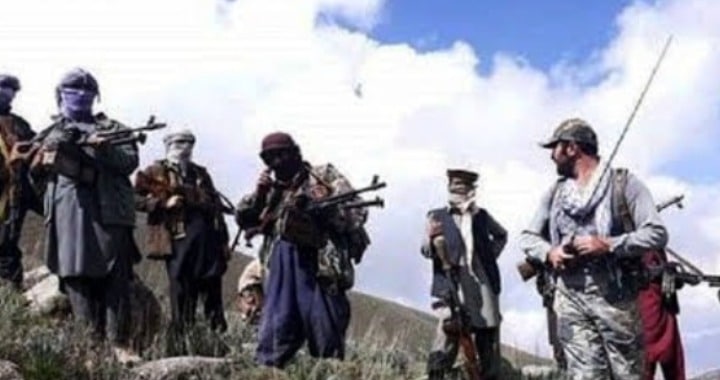
The political future of Afghanistan is increasingly being shaped by growing opposition to Taliban rule, targeted attacks by armed resistance groups, mounting economic difficulties, and shifting regional and international dynamics. Although anti-Taliban opposition groups have intensified their activities in recent months, they have so far failed to develop the military capacity, territorial influence, or broad public support necessary to pose an immediate existential threat to the Taliban administration.
One recent example of the intensifying security challenge is the reported killing of Zabihullah Mayar in Kabul, highlighting the continuing vulnerability of Taliban-linked individuals to targeted attacks. Such incidents demonstrate that opposition groups retain the ability to conduct selective operations against Taliban-associated targets. However, these attacks have not yet translated into a sustained military campaign capable of seriously destabilising the Islamic Emirate or forcing it to accept a more inclusive political arrangement.
One of the principal factors limiting the expansion of armed resistance is Afghanistan’s painful historical experience with prolonged conflict. For decades, the Afghan population has endured civil war, political instability, displacement, economic collapse, and humanitarian suffering.
After generations of violence, a significant section of Afghan society remains deeply reluctant to see the country return to another nationwide conflict. The fear of renewed civil war has made many ordinary Afghans cautious about supporting armed movements, even among those who may be dissatisfied with Taliban policies.
This public reluctance represents a significant obstacle for opposition groups seeking to transform targeted attacks into a broader resistance movement. Unlike previous periods of Afghan conflict, the current political environment does not yet demonstrate the emergence of a sufficiently broad popular mobilisation behind armed opposition.
Another important consideration is the internal political structure of the Taliban administration. Despite reported disagreements over governance, political participation, education restrictions, and the country’s future direction, there are currently no clear indications of divisions on a scale that would immediately threaten the survival of the existing system.
The absence of a major internal fracture has helped the Taliban maintain control over state institutions and security structures.
Nevertheless, internal disagreements, competing political priorities, and dissatisfaction with governance could become increasingly significant if economic pressures intensify or disagreements over the administration’s future direction deepen.
The positions of neighbouring and influential regional countries will also play a decisive role in determining Afghanistan’s political trajectory.
Russia, Iran, and several other regional states have strategic interests in preventing Afghanistan from descending into another prolonged civil war. Their priorities include maintaining relative stability, preventing the expansion of extremist networks, containing cross-border security threats, and protecting economic and geopolitical interests.
For these countries, the collapse of existing political and security structures could create a new wave of instability extending beyond Afghanistan’s borders. Consequently, regional governments are likely to continue balancing their concerns about Taliban governance with their broader interests in preventing state fragmentation and another major security crisis.
This regional environment has also limited the strategic opportunities available to armed opposition groups seeking external political and material support.
Perhaps the most significant question surrounding Afghanistan’s political future is whether mounting economic difficulties and increasing international pressure could gradually weaken public confidence in the Taliban administration.
Restrictions on trade routes, disruptions in cross-border commerce, rising unemployment, declining household incomes, and worsening living conditions could place additional pressure on an already vulnerable Afghan population.
Afghanistan’s economy remains heavily dependent on regional trade, international engagement, humanitarian assistance, and access to external markets. Any prolonged disruption to these economic lifelines could further aggravate poverty, unemployment, and public dissatisfaction.
If these conditions persist, frustration among traders, business communities, unemployed youth, women, and other sections of society could increase, potentially creating greater pressure on the Taliban leadership.
However, public dissatisfaction should not automatically be interpreted as support for armed resistance. Economic frustration may generate demands for political reforms, improved governance, greater freedoms, and better living conditions without necessarily translating into widespread support for another armed conflict.
In an increasingly difficult economic and political environment, Taliban opposition groups may attempt to expand their political influence by presenting themselves as alternatives to the existing administration.
Their ability to gain wider acceptance, however, will depend on more than their capacity to conduct targeted attacks. They will need to demonstrate political credibility, a coherent vision for Afghanistan’s future, meaningful public representation, and the ability to offer an alternative to prolonged conflict.
Without broader public confidence and a credible political programme, isolated military operations are unlikely to produce fundamental changes in Afghanistan’s political structure.
Afghanistan’s future could develop along several broad trajectories:
- Continued Taliban dominance: The Taliban maintain internal cohesion, preserve control over security institutions, and contain opposition activities despite economic and international pressure.
- Gradual increase in domestic and political pressure: Economic deterioration, restrictions on fundamental rights, and growing public dissatisfaction create mounting pressure for governance reforms and greater political participation.
- Emergence of a broader political challenge: A combination of internal Taliban disagreements, sustained opposition activity, economic deterioration, and changing regional dynamics creates conditions for a more significant political confrontation.
None of these scenarios is inevitable. Their likelihood will depend on developments within the Taliban leadership, the resilience of Afghanistan’s economy, the level of public dissatisfaction, and the policies pursued by regional and international stakeholders.
Ultimately, Afghanistan’s political future cannot be determined solely by the military capabilities of Taliban opposition groups. It will also depend on the administration’s domestic policies, economic performance, regional relationships, international engagement, and its ability to address the fundamental demands of the Afghan population.
Meaningful political participation, inclusive governance, respect for women’s and girls’ rights, access to education, economic development, employment opportunities, and protection of fundamental freedoms remain critical issues.
If the Taliban administration continues to resist meaningful political and social reforms, domestic dissatisfaction and international pressure could intensify, further complicating its efforts to secure long-term political legitimacy.
The central challenge for the Taliban is no longer simply containing armed opposition; it is addressing the political, economic, and social grievances that could shape the country’s future



