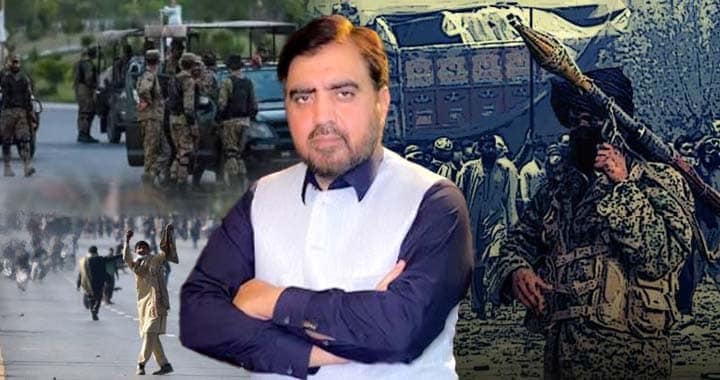
For decades, the 12 terrorism-affected districts of Khyber Pakhtunkhwa have endured a painful combination of insecurity, poverty, inadequate public services and limited economic opportunities. The sacrifices made by ordinary citizens, police personnel and security forces in the fight against terrorism have been immense. Yet another crisis has continued to undermine the region’s stability: the persistent absence of effective governance and sustainable development.
At the centre of this proposed development framework is the Area Representative and Development Council (ARDC), a dedicated mechanism intended to address the longstanding development challenges facing Khyber Pakhtunkhwa’s 12 terrorism-affected districts. By bringing together local representation, tribal leadership and technical expertise, the council aims to identify district-specific priorities, facilitate targeted federal funding and promote development projects tailored to the needs of local communities. Its approach places particular emphasis on bridging governance gaps, improving essential public services, empowering young people and supporting the region’s gradual integration into the mainstream of national development. The ARDC’s ultimate significance will depend on its ability to translate these objectives into transparent, measurable and sustainable improvements in the lives of the people it serves.
In many communities, access to clean drinking water, quality education, functional healthcare facilities, reliable roads and employment opportunities remains inadequate. These shortcomings have deepened public frustration and widened the gap between the affected districts and more developed parts of the country.
The establishment of the Regional Representatives and Development Council offers an opportunity to address these longstanding challenges through a more focused, inclusive and coordinated approach. The initiative seeks to bring development planning closer to local communities, direct resources towards areas of greatest need, empower young people and create conditions in which peace and prosperity can take root. The council’s vision is built around a fundamental principle: lasting peace cannot be achieved through security measures alone. It also requires effective governance, economic opportunities, strong public institutions and a credible commitment to meeting people’s basic needs.
Terrorism has inflicted enormous suffering on the region, but weak governance has also had devastating consequences for everyday life. The absence of essential services can leave communities trapped in deprivation even when they are not experiencing an immediate security emergency. A family without safe drinking water, a child attending an under-equipped school, a patient unable to access adequate medical treatment and a young graduate without employment all experience the consequences of inadequate public service delivery.
The contrast between life in Peshawar and conditions in the affected districts illustrates the scale of the challenge. As one travels away from the provincial capital and enters many of these communities, the disparities in infrastructure, public services and development opportunities become increasingly apparent.
While other districts of Khyber Pakhtunkhwa have experienced varying degrees of institutional development and public investment, the 12 districts under discussion continue to face substantial developmental gaps. These disparities have contributed to a sense of exclusion and limited the opportunities available to local residents.
The challenge is not simply to construct a few roads or establish isolated facilities. It is to create an integrated system of development that enables communities to participate in the province’s wider economic and social life. The new council must therefore treat governance as a central instrument of peacebuilding. Better administration, accessible public services, transparent spending and meaningful consultation with residents are essential foundations for lasting stability.
One of the most promising features of the new arrangement is its emphasis on community participation. District-level councils are to be established under the leadership of respected tribal elders, with participation from the communities concerned. Representatives of different tribes, clans, sub-clans and local groups will have an opportunity to identify the most pressing needs of their respective districts.
This approach can make development planning more responsive to local realities. Projects designed far from the communities they are intended to serve may overlook the most urgent problems. A scheme that appears attractive in a government office may not address the daily difficulties faced by residents of a remote village. Local participation can help correct this imbalance.
The people of Bajaur should be able to identify Bajaur’s priorities. Residents of Khyber district should determine which needs require urgent attention, while communities in North and South Waziristan should have a meaningful role in shaping their development plans. The same principle should apply to all 12 districts. The district councils will identify needs and submit recommendations to the provincial-level council, where technical expertise can help translate local priorities into practical development projects.
However, participation must be genuine rather than symbolic. Tribal elders should be joined by young people, women, teachers, healthcare professionals, farmers, traders and other representatives of society. Every community deserves a voice in decisions that affect its future. The objective should be to create a transparent process in which local knowledge informs technical planning, community priorities guide public investment and the most pressing needs receive attention first.
The provincial-level council is designed around experts and technocrats rather than conventional political representation. Its purpose is to formulate development projects on the basis of technical recommendations and priorities identified by district-level councils. This structure offers an opportunity to move beyond political competition and short-term considerations.
Development planning requires professional expertise, financial discipline, engineering assessments and an understanding of local conditions. A road should connect communities to markets, schools and hospitals. A school must have qualified teachers and adequate facilities. A hospital needs trained medical staff, essential medicines and functioning equipment. A drinking-water scheme requires a sustainable source and a reliable maintenance system.
Constructing buildings without providing these essential supporting services can create the appearance of progress without delivering meaningful results. A technocratic council can improve planning by assessing feasibility, estimating costs, identifying risks and monitoring implementation. Its non-political character should also help ensure that development decisions are based on public need rather than political affiliation.
Nevertheless, technical expertise must be accompanied by accountability. The council should publish its recommendations, explain project selection decisions and allow the public to scrutinise its performance. The most effective approach will combine professional competence, community participation and transparent administration.
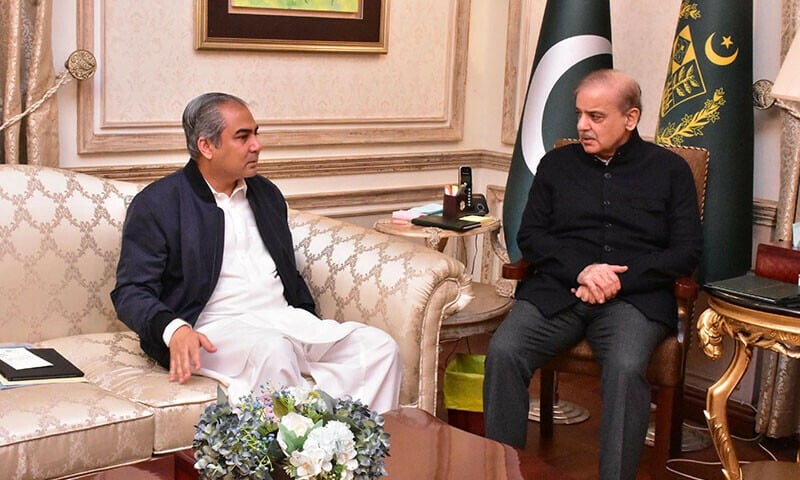
A major feature of the new development arrangement is the proposed direct flow of federal funds to the council for projects in the 12 districts. Prime Minister Shehbaz Sharif is providing the political leadership and supervision for the initiative, with the council operating within the framework of his development vision. The arrangement is intended to direct resources towards the affected districts without relying on the previous provincial-level funding route.
The central objective is to address the longstanding imbalance between districts with severe development needs and areas that have already received comparatively greater investment. Under earlier funding arrangements, resources were not always differentiated according to the scale of deprivation. Consequently, the most disadvantaged communities did not necessarily receive allocations proportionate to their circumstances. The new model aims to provide these districts with special development attention.
Fairness does not always mean distributing identical amounts of money to every area. Where deprivation is considerably greater, additional resources may be necessary to ensure that disadvantaged communities can attain a reasonable standard of public services. The situation resembles a family giving extra attention to a sick child who requires more care. The additional attention does not diminish the value of other children; it responds to a particular need.
However, direct funding must be accompanied by strict financial accountability. Every allocation should be documented, each project should have a defined budget and timeline, and expenditure should be subject to independent scrutiny. The public should be able to see how much money has been allocated, how much has been spent and what tangible benefits have been delivered.
The new council must also coordinate with existing government institutions to avoid overlapping responsibilities or administrative confusion. The police, courts, deputy commissioners and other administrative bodies will continue performing their respective duties. The council’s role is to strengthen the development dimension of governance rather than replace the established administrative system.
The region’s development agenda must not begin by ignoring the projects that previous governments planned but failed to complete. A number of development schemes may already exist on paper or may have been partially implemented without becoming operational. Those that remain viable and serve the public interest should be reconsidered for completion.
A partially constructed school, an unfinished road or an incomplete drinking-water scheme may offer a more immediate and cost-effective opportunity than launching an entirely new project. The council should begin by preparing a comprehensive inventory of existing schemes. Each project should be evaluated according to its current condition, expenditure to date, remaining cost, expected public benefit and feasibility of completion.
Viable projects should be completed without unnecessary delay. Those that have become impractical should be reviewed transparently, with clear explanations for any decision to redesign or abandon them. At the same time, new development plans must address the most urgent deficiencies in roads, education, healthcare, drinking water and other essential services. The real measure of progress will not be the number of projects announced at official ceremonies. It will be the number of projects completed, made operational and shown to improve people’s lives.
The relationship between insecurity and underdevelopment is one of the most difficult challenges facing the 12 districts. An ecosystem supporting terrorism has prevented many communities from achieving stability and economic independence. Insecurity discourages investment, disrupts education, threatens infrastructure and makes it difficult for businesses and public institutions to function normally.
Development projects have also faced the threat of militant attacks. Roads, public facilities and other infrastructure built to improve local living conditions have sometimes been targeted and destroyed. Such attacks waste public resources and reinforce the cycle of fear and deprivation. This reality demands a coordinated strategy in which security and development advance together.
The police and military must be able to perform their respective responsibilities effectively, with appropriate institutional support and operational coordination. In the past, disagreements between provincial and federal authorities over counterterrorism approaches contributed to uncertainty and weakened confidence among law-enforcement personnel. Police officers engaged in counterterrorism require professional clarity, suitable equipment, effective training and confidence in the institutions responsible for their service and future.
Institutional uncertainty can undermine morale and distract officers from their demanding responsibilities. A stable and coordinated framework can help them focus on protecting citizens and confronting violent threats. However, improved security must serve a broader purpose. Communities need to see that counterterrorism efforts create the conditions for normal life to return.
Schools should function without fear, healthcare facilities should remain accessible, businesses should be able to operate and public infrastructure should be protected from destruction. Peace cannot be measured solely by the absence of attacks. It must also be reflected in whether citizens can pursue their livelihoods, educate their children and access public services without constant fear.
The fight against terrorism also has an important social dimension. Families, tribal elders and community leaders can play a constructive role in discouraging relatives and acquaintances involved in militancy from continuing down a destructive path. They should communicate the damage that violence causes to their own families, villages and districts. When militants operate within a community, security forces may have to pursue them, potentially placing residents at risk and disrupting everyday activities. Development projects may be delayed, businesses may suffer and ordinary families may face prolonged uncertainty.
Community members should therefore reject the provision of support to violent groups and encourage those involved in militancy to abandon violence. Where individuals genuinely wish to surrender and return to peaceful life, appropriate cases can be communicated through the council to the relevant authorities for consideration. Such efforts must operate within the law and through competent institutions. Genuine rehabilitation requires proper verification, accountability and safeguards for public safety.
The broader objective is to combine lawful security measures with community engagement and opportunities for peaceful reintegration. The state must fulfil its responsibility to protect citizens, while communities must work to prevent the recruitment and support of individuals involved in violence. Neither responsibility can replace the other.
Among the most urgent challenges facing these districts is the limited access of young people to education, employment and professional development. For too long, many young people have lacked comprehensive youth-focused programmes, career counselling, technical education and opportunities to build independent livelihoods. When young people see little prospect of a respectable income or social advancement, they become vulnerable to exploitation by groups offering money, status or a misleading sense of purpose.
The attraction can become particularly dangerous when militants display expensive vehicles, material possessions and an image of influence. Young people who have few economic opportunities may mistakenly conclude that militancy offers a shortcut to wealth. The problem is aggravated when individuals carrying weapons are offered financial incentives that exceed what young people can realistically earn through lawful work. This distortion of economic opportunity can weaken the appeal of education and skilled employment. It can also allow extremist organisations to exploit frustration and desperation.
The council’s youth-focused agenda must directly confront these conditions. Scholarships available from different sources should reach eligible students in the affected districts. Educational institutions and organisations providing technical training should be engaged to expand opportunities for young people. Career counselling, vocational education, digital skills, apprenticeships, employment guidance and support for small businesses should become central elements of the programme.
Training must be linked to real opportunities. Young people need skills that can lead to jobs, entrepreneurship and sustainable incomes rather than certificates that provide little practical benefit. Programmes should also reach remote communities instead of remaining concentrated in major towns. A young person who can secure a respectable livelihood, support a family and contribute positively to society has stronger reasons to reject recruitment by extremist organisations. Youth development must therefore be treated not as an optional welfare activity but as a central pillar of peace, economic recovery and long-term security.
Development is not limited to infrastructure, economic growth and public services. It must also protect cultural identity, historical heritage and the social traditions that give communities a sense of belonging. The affected districts possess rich Pashtun cultural traditions, including literature, poetry, oral history, languages, traditional crafts and forms of community solidarity. Yet cultural activities have received insufficient attention in many areas. The council’s commitment to allocating a substantial place to cultural preservation alongside youth development offers an opportunity to address this gap.
Cultural festivals, literary gatherings, community libraries, traditional crafts, historical documentation and programmes supporting local languages can help younger generations connect with their heritage. These initiatives can also create opportunities for local artists, writers, craftspeople and entrepreneurs. Cultural development should be community-led and inclusive, recognising the diversity of traditions across the 12 districts. It should not be reduced to occasional ceremonies or symbolic announcements.
Young people who have access to education, employment and a meaningful connection to their cultural identity are better positioned to contribute constructively to society. The combination of youth empowerment and cultural preservation can strengthen social cohesion while creating a more positive vision of the region’s future.
The council’s success will depend partly on how effectively local communities agree on their priorities. Development can be delayed when every village demands that its own project receive precedence over all others. Disputes over the distribution of resources can prevent communities from supporting projects that would provide greater benefits to the wider district. Local councils must encourage cooperation and establish transparent criteria for selecting projects. Urgent needs, levels of deprivation, population requirements, feasibility and expected public benefits should guide decisions.
Community participation should accelerate development rather than become an obstacle to it. The challenge is also substantial because the region is dealing with a backlog of problems accumulated over approximately 13 years. Reversing prolonged neglect, completing unfinished projects, improving public services and establishing sustainable economic opportunities will require consistent effort. The initiative is not intended to be a short-lived programme. Its two principal objectives are to eliminate terrorism and the ecosystem that sustains it, and to resolve the basic problems of local communities so that the affected districts can become fully integrated into the mainstream of development.
These goals require long-term commitment. Nevertheless, long-term commitment should not mean indefinite waiting. The council should establish measurable annual targets, publish implementation schedules and provide regular progress reports. Residents should know which projects are being undertaken, when they are expected to be completed and what results have been achieved. A clear timetable will help maintain public confidence and make it easier to identify delays or failures.
The establishment of the council creates an opportunity to replace fragmented development planning with a more focused and transparent approach. But its credibility will ultimately depend on implementation. Several priorities should guide its work. First, a district-by-district assessment should identify the most serious deficiencies in education, healthcare, drinking water, roads and other essential services. Second, project budgets, selection criteria, implementation schedules and responsible institutions should be made publicly accessible. Third, local consultations should include women, young people, disadvantaged communities and professional groups.
Fourth, scholarship and technical education programmes should have transparent eligibility criteria and clear links to educational and employment opportunities. Fifth, existing unfinished projects should be reviewed systematically to avoid waste and maximise the benefits of previous expenditure. Sixth, independent monitoring should examine whether funds are being spent properly and whether projects deliver their intended outcomes. Finally, security institutions, civil administration and development authorities must coordinate effectively while respecting their respective legal responsibilities. These measures would help transform the council’s objectives into a credible and measurable programme of recovery.
The 12 terrorism-affected districts of Khyber Pakhtunkhwa do not need another cycle of announcements followed by disappointment. They need a sustained commitment to effective governance, essential services, economic opportunity, institutional accountability and lasting peace. The Regional Representatives and Development Council offers a framework for addressing these longstanding grievances through targeted federal funding, technical expertise, community participation, youth empowerment, cultural preservation and coordinated security efforts. The involvement of tribal elders and local communities can make development planning more responsive. The expertise of technocrats can improve project quality. Targeted funding can address unequal development, while investment in young people can help prevent extremist organisations from exploiting economic frustration.
The federal government, under Prime Minister Shehbaz Sharif’s stated supervisory framework, must ensure that the initiative delivers transparent and consistent results. The police, military, civil administration and other public institutions must also fulfil their respective responsibilities to create conditions in which development can take root. Most importantly, the people of these districts must be treated not merely as recipients of government assistance but as partners in shaping their own future. The ultimate measure of success will not be the size of the budget, the number of meetings held or the number of projects announced. It will be whether a child can attend a functioning school, a patient can obtain medical treatment, a family can access safe drinking water, a young person can find dignified employment and a community can live without the constant fear of violence.
If the council can make these improvements visible, fair and sustainable, it may help transform the 12 districts from symbols of prolonged neglect into examples of recovery, resilience and opportunity. The people of these districts have waited long enough. They deserve more than sympathy, more than security operations and more than development promises. They deserve a future in which peace is protected, governance is effective, opportunity is accessible and progress reaches every community.