
Mounting evidence and intelligence disclosures have raised serious questions about the alleged nexus between the Afghan Taliban regime, Fitna al-Hindustan and Fitna al-Khawarij, exposing the growing threat posed by terrorist networks allegedly operating with external support against Pakistan.
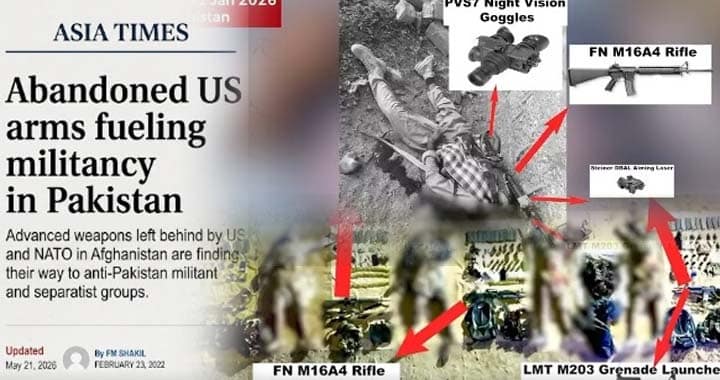
The recovery of sophisticated American-manufactured weapons from militants killed during security operations in Balochistan has further intensified concerns over the supply chains and external support sustaining terrorist organisations targeting Pakistan.
The recovered weapons reportedly include M16 and M4 assault rifles, aiming lasers and night-vision devices. The presence of such advanced military equipment in the hands of terrorist operatives raises serious questions about how these weapons reached militant networks and whether Afghan territory and military stockpiles are being exploited to facilitate terrorist activities against Pakistan.
Of particular concern is a reported letter attributed to Afghan Taliban Supreme Leader Mullah Hibatullah Akhundzada, allegedly directing the provision of weapons to Fitna al-Hindustan. If authenticated, the correspondence would constitute significant evidence of direct involvement by the Taliban leadership in supporting a terrorist organisation operating against Pakistan.
The reported letter, coupled with the recovery of American-origin weapons from militants, raises troubling questions about the extent of the Afghan Taliban regime’s alleged involvement in facilitating and sustaining anti-Pakistan terrorist networks.
According to a reported intelligence assessment, India’s intelligence agency, Research and Analysis Wing (RAW), allegedly provided USD 7.8 million to finance terrorist activities and destabilisation efforts in Balochistan.
These allegations reinforce concerns about external attempts to exploit militant organisations to undermine Pakistan’s security, destabilise Balochistan and target innocent civilians and security personnel.
A retired Indian Army colonel has also reportedly acknowledged the involvement of Indian and Israeli elements, alongside networks operating from Afghan territory, in activities targeting Pakistan through Fitna al-Hindustan and Fitna al-Khawarij.
Further revelations have emerged from an intelligence report cited by the Associated Press, alleging a meeting involving Indian and Afghan intelligence officials, reportedly hosted by Taliban-appointed Kandahar Governor Mullah Shireen.
According to the reported assessment, representatives associated with Fitna al-Hindustan, Al-Qaeda and the Hafiz Gul Bahadur group were also present. The reported meeting raises serious concerns about the alleged coordination between external intelligence networks and militant organisations operating against Pakistan. If substantiated, these developments would represent a grave threat to regional security and international efforts to prevent Afghanistan from becoming a sanctuary for terrorist networks.
The circulation of American-origin weapons among terrorist organisations also raises serious questions about the fate of military equipment left behind following the US withdrawal from Afghanistan in 2021. According to the US Special Inspector General for Afghanistan Reconstruction (SIGAR), approximately USD 7.1 billion worth of US-provided military equipment remained in Afghanistan following the collapse of the former Afghan government.
The equipment included small arms, military vehicles, night-vision devices and other advanced defence assets. International reporting has also documented the recovery of US-origin M16 and M4 rifles from militant groups in Pakistan, with investigations tracing some of these weapons to supplies originally provided to Afghan security forces. The possibility that sophisticated military equipment has entered the hands of terrorist organisations operating against Pakistan demands urgent international scrutiny.
The reported recovery of American-made weapons, allegations of Taliban arms transfers, claims of Indian intelligence financing and disclosures concerning alleged coordination between militant networks collectively raise serious questions that cannot be ignored. The Afghan Taliban regime must ensure that its territory, military stockpiles and institutional resources are not used to facilitate terrorism against Pakistan or any other country.
The United States and the wider international community must investigate the diversion of American-supplied military equipment and examine credible allegations of external support to terrorist organisations.
Pakistan has consistently maintained that regional peace cannot be achieved while terrorist sanctuaries, weapons pipelines and external support networks continue to threaten its security.



