
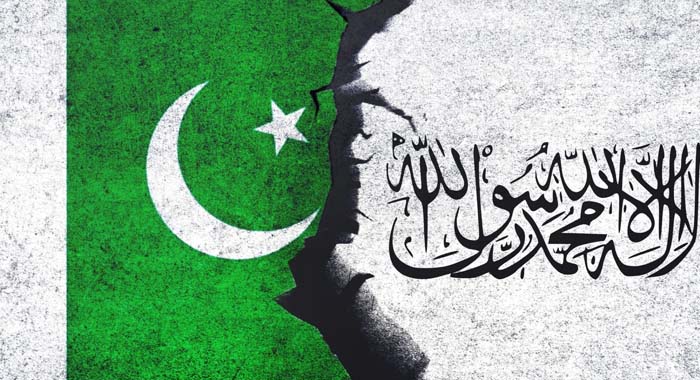
A significant diplomatic and security engagement in Kabul involving senior officials from Qatar and Türkiye appears to signal a renewed effort by Doha and Ankara to facilitate dialogue between Pakistan and the Afghan Taliban, amid growing regional security concerns and rapidly evolving developments in the Middle East and Gulf.
According to sources familiar with the discussions in Doha and Ankara, Hamad Khamis Al-Kubaisi, Deputy Secretary-General of Qatar’s National Security Council, and Ibrahim Kalın, Head of Türkiye’s National Intelligence Organization (MIT), held an important meeting in Afghanistan’s capital, Kabul. The engagement is understood to form part of broader Qatari-Turkish efforts aimed at encouraging communication between Pakistan and the Afghan Taliban and exploring mechanisms to address outstanding security and political concerns.
The meeting assumes particular significance against the backdrop of heightened regional tensions and the increasingly interconnected security environment stretching from South Asia to the Middle East and Gulf.
Sources in both Doha and Ankara indicate that the current diplomatic initiative is focused, among other matters, on the need to stabilize relations between Pakistan and Afghanistan and to establish practical arrangements capable of reducing cross-border security threats.
The latest engagement appears to build on earlier contacts involving Qatar and Türkiye, which have sought to create channels for dialogue between Pakistan and the Afghan Taliban at a time when direct communication has faced significant challenges.
The initiative reportedly recognizes that sustainable regional stability requires continued engagement among the parties concerned, particularly on issues involving border security, the activities of non-state actors, and the prevention of Afghan territory from being used in ways that could threaten Pakistan or other neighboring states.
A central element under discussion is understood to be a security matrix designed to strengthen border management and protect borders from non-state actors. While details of the proposed framework have not been publicly disclosed, the concept reportedly involves mechanisms for coordination, monitoring and confidence-building aimed at addressing security concerns along the Pakistan-Afghanistan frontier.
The proposed approach could provide a structured basis for addressing security-related grievances while maintaining channels for political and diplomatic engagement. The latest initiative follows an earlier, previously unreported meeting between representatives of Pakistan and the Afghan Taliban that reportedly took place in Belarus in July or August.
According to sources familiar with that engagement, the meeting concluded without significant progress. At least two sources have also confirmed that a senior intelligence official from a third country participated in the meeting.
The reported Belarus contact nevertheless demonstrates that channels for communication between the two sides have remained active despite persistent differences and security-related tensions. The participation of a third-country intelligence representative is also understood to reflect the wider regional interest in preventing further deterioration in Pakistan-Afghanistan relations and in finding mechanisms capable of addressing concerns involving militant and other non-state actors.
The reported engagement in Kabul is particularly notable because it brings senior representatives associated with Qatar and Türkiye into direct contact within Afghanistan. Qatar has previously played a prominent role in facilitating diplomatic contacts concerning Afghanistan, while Türkiye has maintained engagement with a broad range of regional actors. The involvement of both countries in the current effort therefore provides an additional channel through which sensitive issues can potentially be discussed away from public confrontation.
Sources familiar with the emerging diplomatic effort say the immediate objective is not necessarily to resolve all outstanding disputes in a single engagement, but rather to create sufficient political and security space for sustained dialogue.
Among the issues requiring attention are border management, the activities of non-state actors, security assurances, cross-border incidents and mechanisms through which commitments reached by the parties could be monitored.
The initiative comes at a particularly sensitive moment for the wider region. Developments in the Middle East and Gulf have increased the importance of regional coordination and have reinforced concerns among neighboring states about the possibility of interconnected security challenges extending across multiple theaters.
Against this background, sources in Doha and Ankara say there is a growing recognition that Pakistan-Afghanistan tensions need to be addressed through a combination of political dialogue, security coordination and practical confidence-building measures.
The emphasis on a structured security matrix could represent an attempt to move discussions beyond general assurances and toward identifiable arrangements for securing borders and preventing non-state actors from exploiting gaps in border control.
The question of border security remains one of the most sensitive aspects of Pakistan-Afghanistan relations. For Pakistan, concerns surrounding armed groups operating from or through Afghan territory have remained a major security issue. The Afghan Taliban, meanwhile, have consistently emphasized Afghanistan’s sovereignty and have rejected allegations that Afghan territory is deliberately being used against neighboring countries.
A durable mechanism would therefore require addressing the security concerns of Pakistan while taking into account Afghanistan’s sovereignty and the need for mutually acceptable arrangements. The discussions reportedly seek to explore precisely such a framework.
Rather than relying solely on political declarations, the proposed matrix could involve practical measures addressing border monitoring, information-sharing, prevention of cross-border movement by armed non-state actors and procedures for responding to security incidents.
The emerging Qatari-Turkish role reflects the broader interest of regional actors in preventing further deterioration in relations between Pakistan and Afghanistan. Doha has extensive experience in facilitating sensitive political dialogue concerning Afghanistan, while Ankara has maintained diplomatic and security contacts across the region. Their parallel involvement could potentially provide complementary channels for communication at a time when direct engagement remains difficult.
The Kabul meeting is consequently being viewed by sources familiar with the process as part of a wider diplomatic effort rather than an isolated encounter. The immediate priority appears to be the establishment of sufficient confidence among the parties to resume or intensify direct discussions and to examine concrete security arrangements.
While expectations should remain measured, the reported meetings indicate that multiple diplomatic channels continue to be explored. The unsuccessful Belarus meeting demonstrates the difficulty of bridging the differences between Pakistan and the Afghan Taliban. At the same time, the continuation of contacts through regional intermediaries suggests that the parties and their partners continue to explore possible avenues for de-escalation.
The reported participation of Qatar and Türkiye adds another dimension to this process, particularly because both countries maintain relationships with key actors across the region. For any future framework to gain traction, however, it would likely require clear commitments, sustained communication and mechanisms capable of translating political understandings into practical security measures.
The reported discussions in Kabul, together with the earlier Belarus contact, suggest that diplomatic efforts surrounding Pakistan-Afghanistan relations are entering another phase of engagement. At the center of the emerging initiative is the search for a workable balance between border security, countering non-state actors, respect for sovereignty and sustained political dialogue.
As developments in the Middle East and Gulf continue to reshape the regional security environment, sources in Doha and Ankara believe that reducing tensions between Pakistan and Afghanistan has acquired added strategic importance.
The coming period will determine whether the current diplomatic contacts can produce a framework acceptable to the concerned parties and whether the proposed security matrix can be translated into practical arrangements on the ground.
For now, the involvement of Qatar and Türkiye, the reported Kabul engagement and the earlier Belarus meeting point to continuing efforts to keep a diplomatic channel open and to explore mechanisms capable of addressing one of South Asia’s most consequential bilateral security challenges.



