
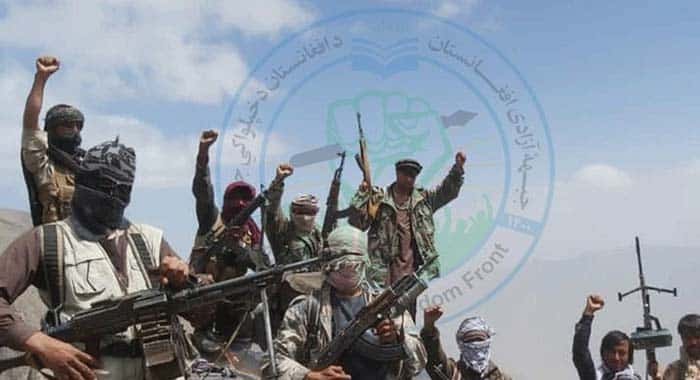
Reports emerging from several provinces of Afghanistan indicate an increase in armed resistance activity targeting Taliban security personnel, commanders, checkpoints, and security vehicles. The reported incidents span geographically diverse areas, including Kandahar, Helmand, Panjshir, and Ghor, prompting renewed attention to the security environment facing the Taliban authorities.
According to the report, a number of Afghan resistance groups have claimed responsibility for attacks against Taliban personnel and security infrastructure in recent days. The reported incidents suggest that armed opposition activity remains present across multiple parts of the country despite extensive security measures and pressure by the Taliban authorities.
The claims have not been independently verified in all cases, and information emerging from Afghanistan’s conflict-affected areas can be difficult to corroborate because of restrictions on independent reporting, limited access to affected locations, and the security situation.
One of the reported incidents took place on September 16 in Kandahar city, where the Afghan United Front claimed to have targeted a Taliban security official. Kandahar holds particular significance in Afghanistan’s political and security landscape and has historically been regarded as a key stronghold of the Taliban. The emergence of reported resistance activity in and around Kandahar therefore adds a notable dimension to the broader security picture described in the report.
A day earlier, on September 15, the Afghan United Front reportedly carried out an operation in Nawzad district of Helmand Province. According to the group’s claim, two Taliban personnel were killed and two Kalashnikov rifles were seized during the incident.
The reported activity in Helmand is significant in the context of the wider geographic spread of armed resistance claims. Helmand has historically been one of Afghanistan’s most heavily contested provinces and remains an important area in assessments of the country’s security environment.
Another incident was reportedly recorded on September 12 in Firozkoh, the capital of Ghor Province. According to the report, the Afghan Freedom Front targeted a gathering involving Taliban police personnel and commanders associated with the Ministry for the Propagation of Virtue and Prevention of Vice.
The group reportedly claimed that three individuals were killed and three others wounded in the attack. The reported incident illustrates the continued targeting of Taliban personnel and officials beyond Afghanistan’s traditional areas of armed conflict. However, the casualty figures and circumstances surrounding the incident remain claims attributed to the reporting and have not been independently established.
Resistance activity has also reportedly continued in Panjshir Province, an area that has remained closely associated with opposition to Taliban rule since the Taliban returned to power in August 2021. On September 15, the Afghanistan Green Trend reportedly claimed responsibility for an attack targeting two Taliban Ranger vehicles in Panjshir.
The report further alleges that, following the incident, Taliban authorities disrupted communications in the area and initiated a security crackdown against sections of the local population. Such claims, particularly those concerning restrictions on communications and subsequent security operations, require independent verification. Nevertheless, they form part of the broader narrative of continuing tensions between Taliban security forces and armed opposition groups in Panjshir.
The Afghanistan Green Trend subsequently reportedly announced plans to expand its activities toward Kapisa Province and increase its operational presence in Helmand, potentially indicating an intention to extend its activities beyond its existing areas of operation.
Taken collectively, the reported incidents point to a geographically dispersed pattern of armed resistance activity. The locations cited in the report range from Kandahar in the south to Panjshir and Kapisa in the northeast, and Ghor in central Afghanistan, with Helmand also featuring prominently.
This geographic distribution is relevant to assessments of Afghanistan’s post-2021 security environment. Rather than being confined to a single province or locality, the reported attacks involve different resistance groups operating or claiming operations in distinct regions.
The incidents described in the report primarily involve alleged attacks against Taliban security personnel, commanders, vehicles, and security-related gatherings. The reported pattern therefore raises questions about the ability of Taliban security structures to completely suppress armed opposition, particularly in areas where resistance networks retain local support or operational capacity.
At the same time, the existence of individual attacks or claims of responsibility should not, by itself, be interpreted as evidence of a broad-based insurgency or a fundamental change in Afghanistan’s overall security balance. Determining the scale, organization, sustainability, and effectiveness of these groups requires independently verified information over a longer period.
The reported incidents come against a backdrop of extensive Taliban security measures designed to prevent armed opposition and maintain control throughout the country. According to the report, the Taliban authorities have continued to employ heightened security measures, pressure operations, and the use of force in areas where resistance activity has been reported. Despite these measures, armed opposition groups continue to claim attacks in several provinces.
The persistence of such claims suggests that, although the Taliban have established extensive territorial and administrative control since their return to power, the complete elimination of armed resistance remains a continuing security challenge.
The reported spread of incidents from established opposition areas such as Panjshir to locations considered important Taliban strongholds, including Kandahar, is particularly noteworthy from a security-monitoring perspective.



