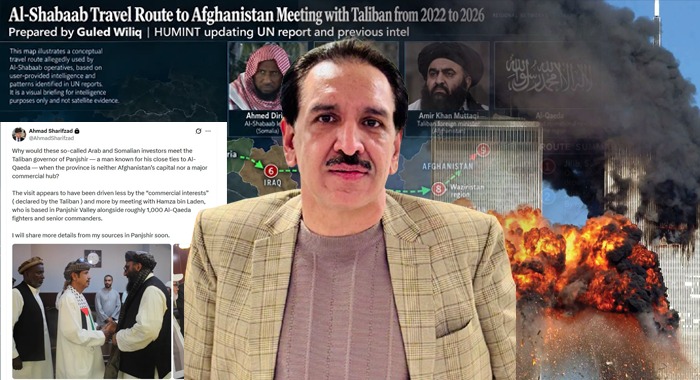
Aqeel Yousafzai
The security situation surrounding Afghanistan is beginning to resemble a warning that the international community has heard before but perhaps has not yet fully understood. More than two decades after the attacks of September 11, 2001, the fundamental question confronting Pakistan, Afghanistan and the wider international community is no longer simply whether terrorism exists in the region. The far more consequential question is whether Afghanistan is once again becoming a permissive environment in which multiple militant organizations can survive, recruit, finance themselves, train and coordinate across borders.
The concern is particularly serious because the current landscape is considerably more complicated than it was before 9/11.
The Afghan Taliban insist that Afghan soil will not be allowed to be used against other countries. Yet Pakistan continues to face attacks from militant elements operating from or benefiting from sanctuaries and networks connected to Afghanistan. During August and September, dozens of Afghan nationals were reportedly killed in counterterrorism operations in Pakistan, particularly in Khyber Pakhtunkhwa. Such developments raise an uncomfortable question: if Afghanistan is genuinely committed to preventing terrorism from emanating from its territory, why does Pakistan continue to confront such a persistent militant threat?
This contradiction lies at the heart of the present regional security crisis. September inevitably brings the world back to the events of 9/11. It is tempting to treat the attacks of September 11, 2001, as a historical event belonging to another era. But that would be a dangerous mistake. 9/11 fundamentally transformed the international system.
After the Second World War, few events altered global politics, military strategy, international alliances and economic priorities as dramatically as the attacks on the United States. The attacks demonstrated that a relatively small non-state organization could inflict enormous strategic damage on the world’s most powerful country. The consequences were immediate and far-reaching. Afghanistan became the principal battlefield of the ensuing war. Pakistan, despite not being the country from which the attacks were planned or carried out, found itself at the center of the conflict.
That distinction remains important. The individuals who planned and executed the 9/11 attacks were neither Pakistani nor Afghan. Yet Pakistan and Afghanistan paid an enormous price for the consequences of terrorism that had developed within Afghanistan. This is perhaps the most important lesson for today’s policymakers: when territory is allowed to become a sanctuary for international militant organizations, the eventual consequences rarely remain confined to that territory.
Before 9/11, Al-Qaeda represented the most prominent international terrorist organization operating from Afghanistan. Today, the threat landscape is more fragmented. International observers and United Nations reporting have repeatedly drawn attention to the presence of numerous militant and terrorist organizations in Afghanistan. Among the groups of greatest concern are Al-Qaeda, Daesh-Khorasan and the Tehrik-e-Taliban Pakistan (TTP), alongside other regional militant organizations. The danger is not simply the existence of these groups individually. It is the possibility of cooperation between them.
Militant organizations do not necessarily need to formally merge in order to become more dangerous. They can share ideology, financing, recruitment networks, expertise, weapons, transportation routes and operational knowledge. This is why reports concerning Al-Qaeda’s outreach toward groups such as the TTP and Baloch militant organizations deserve serious attention. There have also been concerns regarding militant networks with ambitions extending beyond Afghanistan. Threats involving China, Uzbekistan, Tajikistan and other neighboring states demonstrate that Afghanistan’s security problem is not merely an Afghan or Pakistani issue.
It is increasingly a regional problem with international implications. For Pakistan, the most immediate concern is the TTP. The traditional distinction was relatively straightforward: the Afghan Taliban operated in Afghanistan, while the Pakistani Taliban operated against the Pakistani state.
That distinction has become increasingly difficult to sustain. The relationship between Afghan and Pakistani militant networks, whether through ideological affinity, logistical connections, sanctuary or other forms of cooperation, creates a security environment in which the border is less meaningful to militants than it is to states.
Pakistan has repeatedly faced attacks in Khyber Pakhtunkhwa and elsewhere. The question of where militants obtain weapons, transportation, training and financing therefore becomes unavoidable. A guerrilla war is not conducted without resources. Someone pays for weapons. Someone facilitates movement. Someone provides shelter. Someone helps with recruitment. Someone transfers money. Someone supplies intelligence.
The financing of terrorism must consequently be treated as seriously as the terrorists themselves. Claims about foreign involvement in financing militant organizations including allegations involving India and other actors require evidence and careful investigation rather than political rhetoric. But the broader principle is indisputable: terrorism cannot sustain a sophisticated insurgency without financial and logistical networks. The international community must therefore focus not only on militants carrying weapons but also on the financial architecture that allows them to continue operating.
The re-emergence or strengthening of Al-Qaeda and Daesh-Khorasan adds another dimension to the problem. These organizations are not merely local insurgent movements. They possess international ideological ambitions. Daesh-Khorasan has demonstrated an ability to exploit instability, recruit disaffected individuals and present itself as part of a broader international jihadist movement. Al-Qaeda, meanwhile, has survived despite years of pressure and the loss of much of its original leadership structure.
The greatest danger may therefore not be a repetition of 9/11 in precisely the same form. Terrorist organizations learn.
They adapt. They decentralize. They use encrypted communication, online propaganda, informal financial channels and smaller operational cells. Their objectives can be achieved without reproducing the exact operational model of 2001. This is why the international community should be wary of complacency. If terrorist organizations regain significant funding and recruitment capacity, the consequences could extend well beyond South Asia.
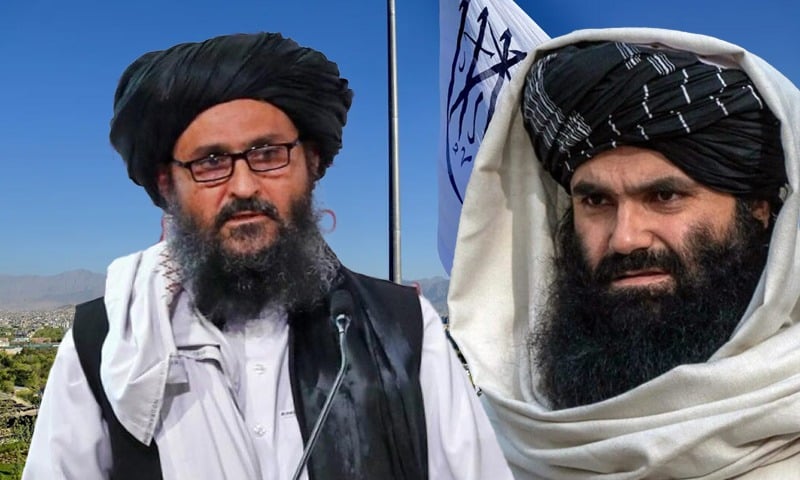
The central criticism of the Afghan Taliban is not simply that militant organizations exist in Afghanistan. The deeper concern is whether the Taliban government is sufficiently willing and capable of confronting them. Afghanistan’s economic and political crisis is real. But using militant organizations directly or indirectly as instruments of regional influence is ultimately self-defeating. A state cannot build sustainable economic prosperity around insecurity.
Nor can it expect the international community to accept the argument that terrorism will not be tolerated while militant organizations continue to find space to operate. The Taliban leadership therefore faces a strategic choice. It can demonstrate that Afghanistan is genuinely committed to preventing its territory from being used against neighboring and distant states, or it can continue pursuing policies that allow international concerns to deepen.
The latter path risks increasing diplomatic isolation and international pressure. It also risks something more serious: the emergence of a new international consensus that Afghanistan has once again become a major security threat.
Pakistan’s own experience after 9/11 explains why the current situation is so sensitive. When the international war against terrorism began, Pakistan was placed in an extraordinarily difficult position. The Pakistani state faced enormous pressure to cooperate with the United States and NATO. The international environment created by United Nations resolutions left Islamabad with limited room for maneuver.
Pakistan subsequently became a frontline state in the war against terrorism. Militants moved across the region. Foreign fighters, including Uzbek and Tajik militants, entered Pakistani tribal areas. Waziristan became a major center of militant activity. Communities were displaced, and Pakistan eventually launched large-scale military operations to dismantle terrorist infrastructure.
Operations continued over the years, beginning with major campaigns and eventually developing into sustained counterterrorism efforts. Whatever criticisms may be made of individual policies, one fact cannot reasonably be disputed: Pakistan paid an enormous human, economic and social price for the post-9/11 conflict. That history makes it particularly difficult for Pakistan to accept assurances that militant organizations operating from Afghanistan pose no threat. Pakistan has already experienced what happens when instability next door becomes a domestic security catastrophe.
The security environment today may be even more complicated than the one that existed before 9/11. China is watching developments closely because of concerns about militant organizations with interests connected to China’s Xinjiang region and broader regional security. Central Asian states, including Tajikistan and Uzbekistan, have their own concerns about militant infiltration and cross-border terrorism. Russia has also expressed alarm about the potential growth of extremist networks in the region. Iran has security interests along Afghanistan’s western frontier.
Pakistan remains directly exposed. And the United States and European countries continue to worry about the possibility that international terrorist organizations could once again develop the capacity to project violence beyond Afghanistan. This creates an unusual convergence. Different powers may disagree on almost everything else, but they increasingly share an interest in preventing Afghanistan from becoming an uncontrollable hub for international terrorism. That growing convergence should not be underestimated.
Pakistan’s counterterrorism policy has evolved significantly. Its security institutions have accumulated considerable experience fighting militant organizations. The country’s military and intelligence services understand the threat. But counterterrorism cannot remain exclusively a security-sector responsibility. Political ownership is essential. Mainstream political parties, provincial governments, religious leadership and civil society all have roles to play in developing a coherent national position on terrorism. Pakistan cannot afford political ambiguity when the country is facing a renewed militant threat.
If political parties criticize one dimension of Afghan policy but remain silent about another, the result is confusion. If political leaders condemn domestic violence but avoid challenging the policies of those enabling militant groups across the border, the national response becomes fragmented.
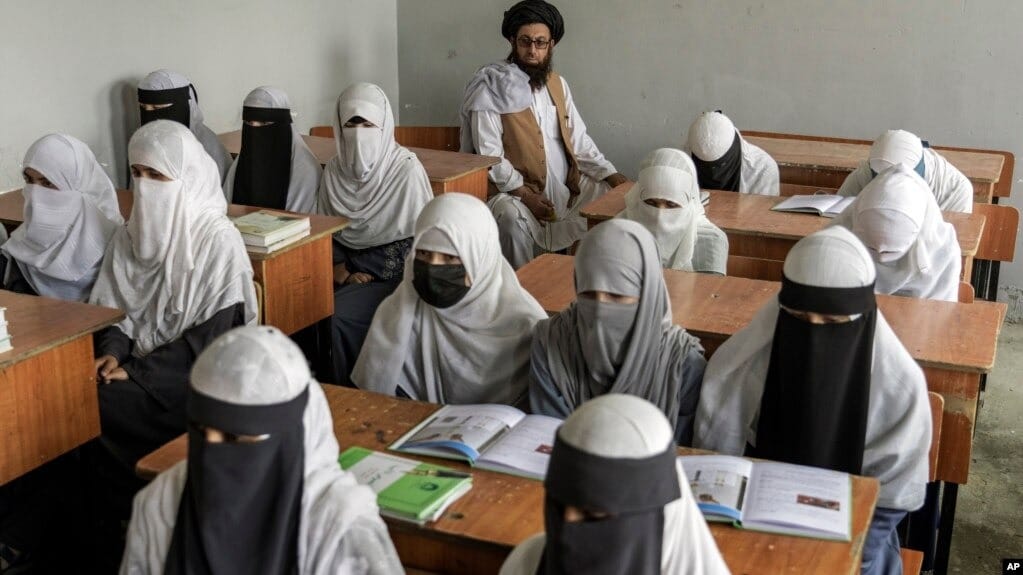
The issue requires consistency. It also requires separating legitimate political disagreement from sympathy toward militant organizations. Security debates can become so focused on organizations, borders, military operations and geopolitics that the human cost disappears. That would be another mistake. Thousands of Afghan children are studying in Pakistan. Afghan families have lived in Pakistan for years. Communities on both sides of the border share ethnic, cultural and historical connections. The existence of terrorism does not make ordinary Afghans terrorists.
Nor should the actions of militant organizations become an excuse for indiscriminate treatment of Afghan civilians. Pakistan’s challenge is to distinguish between legitimate refugees, students, workers and families and individuals involved in terrorism. That distinction is essential for both national security and moral credibility.
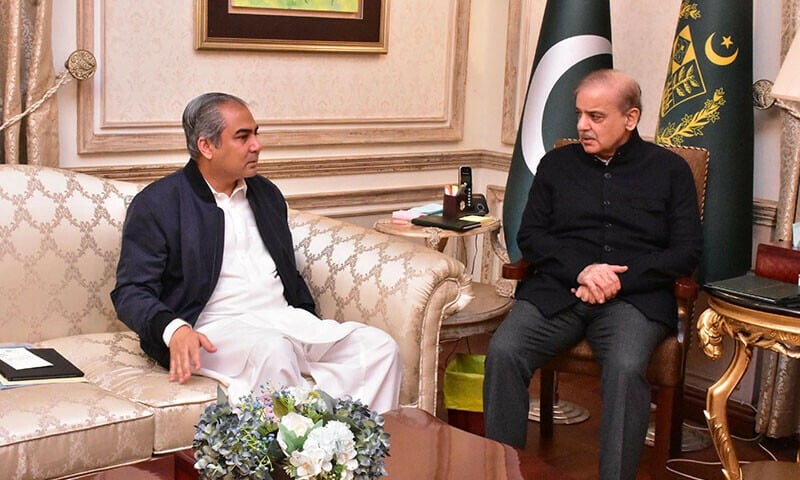
Against this backdrop, the emergence of new leadership and diplomatic representation becomes significant. The discussion highlights the roles of senior Pakistani security and diplomatic figures, including Field Marshal Asim Munir, Lieutenant General Asim Malik and Ambassador Asim Iftikhar Ahmad. The broader point is that Pakistan’s security strategy increasingly requires coordination between military policy, intelligence, diplomacy and international engagement. Counterterrorism cannot succeed through military force alone.
Diplomacy must expose terrorist sanctuaries. Intelligence must identify networks. Financial investigators must follow the money. Border authorities must disrupt movement. Political leaders must maintain national consensus. And diplomats must persuade the international community that Pakistan is confronting the threat rather than merely reacting to it.
Pakistan’s diplomatic representation at the United Nations and elsewhere is therefore not a secondary issue. It is part of the country’s national-security architecture. The discussion also points to the changing diplomatic responsibilities of Pakistani officials and the importance of experienced representatives in communicating Islamabad’s position to the international community.
The most important lesson of 9/11 is not that a particular organization carried out a spectacular attack. The deeper lesson is that terrorism grows when political disorder, ideological extremism, weak governance, permissive territory and international complacency come together. The world had warnings before 9/11.
It cannot afford to ignore warnings again. Afghanistan stands at a critical crossroads. The Taliban government has an opportunity to demonstrate that its promises regarding terrorism are genuine. It can take decisive action against groups using Afghan territory to threaten Pakistan, China, Central Asia and the wider international community.
If it does not, pressure will inevitably increase. For Pakistan, the answer must be equally clear. The country must continue strengthening its counterterrorism capabilities while building political consensus and using diplomacy more aggressively. It must target militant infrastructure while protecting ordinary Afghan civilians. It must address terrorism financing and cross-border networks while avoiding policies that unnecessarily deepen hostility between populations.
Most importantly, Pakistan must not repeat the mistakes of the past. The region has already paid an extraordinary price for terrorism. The international community has already seen what happens when extremist organizations are allowed to establish deep roots in an unstable country. And the world has already learned that the consequences of a sanctuary in one country can eventually reach cities thousands of miles away. The question before Afghanistan and the international community is therefore not whether another 9/11 will happen in exactly the same way. That is the wrong question.
The real question is whether the world will allow the conditions that made 9/11 possible to develop again. If the answer is yes, history may once again deliver a devastating lesson. If the answer is no, then Afghanistan must not be permitted to become a sanctuary for international terrorism, Pakistan must be supported in confronting the TTP threat, terrorist financing must be aggressively disrupted, and the international community must speak with a clear and unified voice.
The clock is already ticking. The greatest mistake would be to wait for another catastrophe before deciding that the warning signs were serious.