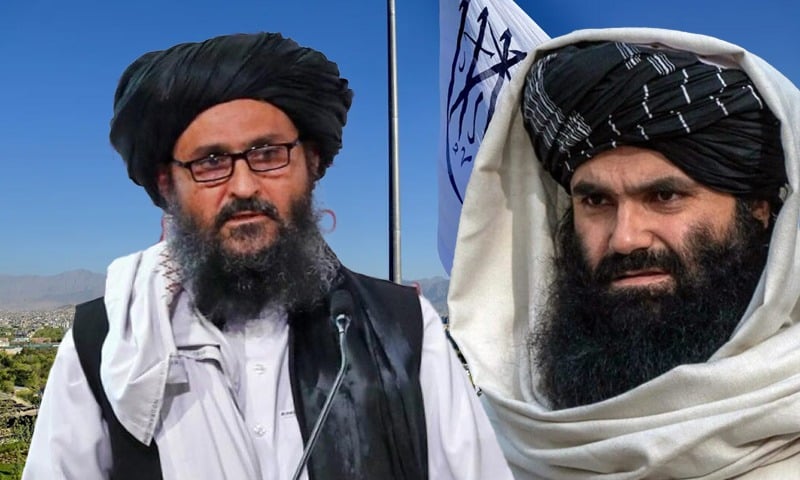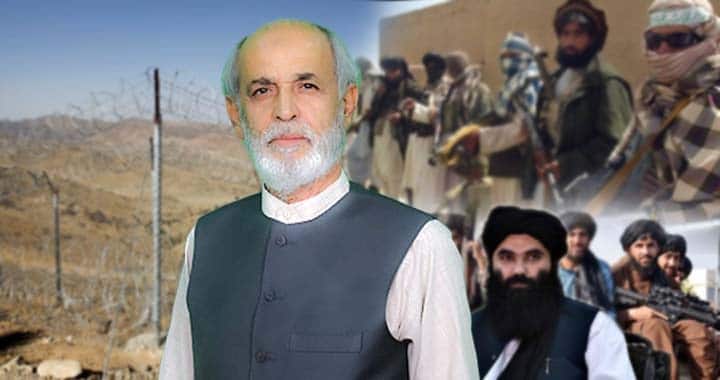
A significant revelation attributed to Afghanistan’s Interior Minister, Sirajuddin Haqqani, has brought renewed attention to one of the most contentious questions in relations between Pakistan and Afghanistan: the presence and accommodation of TTP on Afghan soil. According to the reported statement, Haqqani confirmed that approximately 2,000 houses had been constructed in Afghanistan for Pakistani Taliban members. Although the precise locations of these houses were not disclosed, the reported confirmation raises serious questions about the presence of militant groups, the security concerns of neighbouring countries, and the commitments made by Afghanistan’s Taliban authorities.
The significance of this development extends beyond the construction of residential buildings. It touches on the relationship between the Afghan Taliban and the Tehreek-e-Taliban Pakistan (TTP), the future of Pakistan-Afghanistan relations, the broader regional threat posed by militant organisations, and the international community’s continuing debate over Afghanistan’s representation at the United Nations. At the same time, the exclusion of Afghan women from education, employment, and healthcare opportunities remains central to the debate over whether the Taliban authorities should be granted greater international recognition.
These issues may appear separate, but they are closely connected by a fundamental question: can Afghanistan establish stable relations with its neighbours and regain international acceptance while concerns about militant groups and human rights remain unresolved?
The reported construction of 2,000 houses for TTP members in Afghanistan represents a significant development in an already complicated security environment. The central issue is not simply the existence of residential accommodation, but the identity of its intended occupants, the circumstances surrounding its construction, and the implications for neighbouring countries.
If the reported statement accurately reflects the situation, it raises questions about the extent to which TTP members are present in Afghanistan and the nature of their relationship with the authorities in Kabul. It also invites scrutiny of the apparent contradiction between assurances that Afghan territory will not be used against Pakistan and reports that Pakistani militants are being accommodated there.
The available information does not identify the precise locations of the houses or establish the administrative arrangements under which they were constructed. These details matter. Nevertheless, the reported confirmation has renewed attention to concerns that Pakistan has repeatedly raised about militant groups operating from Afghan territory.
For Pakistan, the matter is particularly sensitive because attacks attributed to the TTP have continued to pose a security challenge. The possibility that members of a group involved in violence against Pakistan could reside across the border creates questions about the effectiveness of existing security assurances and the willingness of the Afghan authorities to address Islamabad’s concerns.
The distinction between providing accommodation and directly supporting militant operations must also be maintained. The construction of houses, by itself, does not establish that every resident participates in attacks or that every militant activity is directed by the Afghan government. However, if members of an armed group are being systematically accommodated, the circumstances surrounding that arrangement deserve serious examination.
The question requiring an answer is straightforward: what measures are being taken to ensure that the presence of these individuals does not threaten the security of Pakistan or other countries?
The reported arrangement is not necessarily a new development. The information surrounding the issue points to discussions dating back to October 2021, when a Pakistani delegation visited Afghanistan following the Taliban’s return to power in Kabul.
During those discussions, the Afghan side reportedly raised concerns about limited financial resources and sought Pakistan’s financial assistance. One proposal involved relocating Pakistani Taliban members to Afghanistan’s northern provinces, including areas close to Iran and Central Asia, with the intention of providing permanent accommodation at a greater distance from Pakistan’s border.
The rationale behind such a proposal, as described in the available account, was that moving these individuals farther away from Pakistan could reduce the immediate security threat along the shared border.
If the construction of the 2,000 houses is connected to those earlier discussions, it would suggest that the issue has a longer history than a single recent statement might indicate. It would also raise questions about whether the proposed relocation was intended to reduce tensions, manage the presence of armed groups, or address a broader political and security challenge.
Relocation alone, however, cannot resolve the underlying problem. Moving members of a militant organisation from one location to another does not automatically change their objectives, organisational relationships, or willingness to engage in violence.
A sustainable solution would require clarity about the status of the individuals concerned, their activities, their sources of income, and the safeguards preventing their involvement in cross-border attacks. Without such measures, geographical distance may offer only limited reassurance.
For Pakistan and Afghanistan alike, the essential challenge is to move beyond arrangements that manage the location of militants and address the conditions that allow armed organisations to remain active.
Relations between Pakistan and Afghanistan have long been influenced by security concerns along their shared border. The reported accommodation of Pakistani Taliban members adds another layer of complexity to an already difficult relationship.
Pakistan expects the Afghan authorities to prevent their territory from being used for attacks against its citizens, security personnel, and civilian institutions. The Afghan Taliban, meanwhile, face the challenge of managing relationships with groups that have operated within Afghanistan’s wider militant environment.
If TTP members are residing in Afghanistan while attacks continue inside Pakistan, Islamabad will naturally seek clarification about the Afghan authorities’ responsibilities and intentions. Continued uncertainty could deepen mistrust and make cooperation on border security more difficult.
The issue also raises questions about the practical relationship between accommodation and allegiance. When individuals receive housing, financial assistance, or other forms of support, it becomes important to establish what obligations, if any, accompany that assistance. It would be premature to assume that every resident is under direct government command, but it would equally be unwise to ignore the possibility that organised relationships could influence the activities of militant networks.
A stable relationship between the two countries requires transparent communication and credible assurances. Neither government benefits from a situation in which allegations, counter-allegations, and recurring border incidents replace effective cooperation.
The long-term interests of both countries lie in preventing their territory from becoming a source of insecurity for the other. Achieving that objective requires more than diplomatic statements; it demands verifiable action.
The security debate is not confined to the TTP. Concerns have also been expressed about the presence and possible organisation of other militant groups in Afghanistan, including Al-Qaeda and Islamic State affiliates.
The reported concerns have been associated with statements from American officials and other international actors, including Russia and China. Such concerns suggest that Afghanistan’s security environment continues to attract attention beyond the immediate Pakistan-Afghanistan relationship.
However, the presence, strength, activities, and relationships of individual organisations must be assessed separately. Different groups have different objectives, organisational structures, and relationships with the authorities controlling the territory in which they operate. Evidence concerning one organisation should not automatically be treated as proof about another.
Nevertheless, the broader question remains important. If multiple militant organisations can maintain a presence in Afghanistan, neighbouring countries and the international community will continue to seek assurances that Afghan territory will not become a platform for regional or international violence.
The challenge for the Afghan authorities is therefore not limited to responding to Pakistan’s concerns about the TTP. It also involves demonstrating that their security policies can prevent armed groups from threatening other countries.
For regional stability, the relevant standard must be practical rather than rhetorical. What matters is whether militant organisations are prevented from planning, organising, financing, and conducting attacks, and whether credible mechanisms exist to investigate allegations of cross-border activity.
Without sufficient transparency, concerns about militant networks are likely to persist, regardless of the assurances issued by the authorities in Kabul.
One of the most important dimensions of the issue is the future of individuals associated with militant organisations. The reported discussion of providing housing also raises the question of what happens after people are relocated.
Armed groups cannot be addressed solely through geographical arrangements. If individuals remain dependent on militant networks for income, identity, social organisation, or protection, relocation may leave the underlying incentives for participation unchanged.
The argument that former or current militants need alternative livelihoods deserves consideration, but employment programmes must be designed carefully. Providing legitimate work and opportunities for rehabilitation may help reduce dependence on armed organisations, particularly among individuals who are willing to abandon violence.
Such efforts, however, must be distinguished from providing material support to active militants without conditions. Housing or financial assistance that leaves armed structures intact could preserve the very networks that security measures are intended to dismantle.
Any meaningful rehabilitation policy would therefore need clear eligibility criteria, effective monitoring, access to civilian employment, and safeguards against renewed participation in violence. It would also need to distinguish between individuals who genuinely disengage from militancy and those who continue to support or participate in armed activities.
The wider objective should be to create pathways away from violence while ensuring that public resources and administrative arrangements do not inadvertently sustain militant organisations.
For Pakistan and Afghanistan, this is a difficult but necessary distinction. A policy that combines credible security guarantees with carefully supervised rehabilitation could contribute to lasting stability. A policy that merely relocates militants without changing their circumstances or activities would leave the central problem unresolved.
The security environment has also been marked by reported clashes along the Pakistan-Afghanistan border, including an incident in the Angoor Adda area.
According to the information available, the two sides offered conflicting accounts of the incident. Pakistan alleged that Afghan Taliban forces had attempted to cross into its territory and stated that the incident had been repelled. The Afghan side reportedly offered a different account, alleging that Pakistan had crossed the border.
Pakistan reported that one civilian had been killed and five others injured. The Afghan Taliban, meanwhile, reportedly denied suffering losses. Pakistan also claimed that the opposing side had sustained casualties and material damage.
In the absence of independent verification, these competing accounts must be treated with caution. Where access to the affected area is limited and reliable information is unavailable, it is difficult to establish precisely what happened, who initiated the confrontation, or the full extent of the casualties.
This uncertainty illustrates why effective communication mechanisms are essential along the border. Conflicting claims can quickly deepen mistrust, particularly when they emerge against a background of allegations about militant activity.
Both sides have an interest in establishing reliable procedures for investigating incidents, communicating through appropriate channels, and preventing local confrontations from escalating into wider hostilities.
The protection of civilians must remain central to these efforts. Whatever the competing explanations for a border incident, civilian casualties and injuries underscore the human cost of unresolved security disputes.
The available discussion suggests that Pakistan has experienced a reduction in major terrorist incidents compared with some earlier periods, while smaller attacks, targeted killings, and incidents involving security personnel continue.
A reported estimate cited in the discussion indicated a 60 per cent decline in terrorism in Pakistan. However, without further information about the source, timeframe, definition of terrorism, and methodology used to calculate the figure, it should not be treated as a fully established measure of the current security situation.
The distinction between fewer large-scale attacks and the disappearance of the threat is particularly important. A reduction in spectacular attacks may indicate progress in certain areas, but it does not necessarily mean that militant organisations have lost their capacity to operate.
Reports of targeted killings in Bannu and Lakki Marwat, as well as incidents involving the abduction of security personnel and civilians in parts of Khyber Pakhtunkhwa, demonstrate why the situation requires continued attention. The information also refers to incidents in the Dera Ismail Khan area.
These developments point to a security challenge that may be changing in form rather than disappearing altogether. Large-scale attacks can decline while smaller, more localised incidents continue to affect communities and security institutions.
Consequently, any assessment of counterterrorism progress should consider several indicators: the frequency and severity of attacks, civilian casualties, attacks on security personnel, the capacity of militant networks, and the extent to which affected communities can resume normal life.
A reduction in major incidents is encouraging if supported by reliable data, but it should not become a reason for complacency. Sustainable security depends on preventing the resurgence of militant organisations and addressing the conditions that allow violence to continue.
While regional security remains a major concern, Afghanistan faces another important challenge at the international level: the question of who should represent the country at the United Nations.
According to the information under discussion, Nasir Ahmad Faiq has continued to represent Afghanistan at the United Nations, while the Taliban authorities have sought to secure the seat for their nominee, Suhail Shaheen, who has served as a Taliban representative in Qatar.
The dispute is not simply an administrative disagreement over diplomatic credentials. It reflects a deeper question about the relationship between control of a state’s territory, international representation, and the legitimacy of its governing authorities.
The Taliban returned to power in Afghanistan in 2021, but their control of the country has not automatically resolved the question of international recognition. The continued representation of Afghanistan by an existing envoy, alongside the competing nomination by the Taliban authorities, illustrates the unresolved nature of that issue.
The debate also involves concerns about political inclusivity, human rights, and the treatment of women. Opponents of granting the seat to the Taliban argue that transferring representation without meaningful changes in governance could be interpreted as acceptance of policies that have drawn sustained international criticism.
Abdullah Khanzjani, identified in the available information as a representative associated with the political office of Afghanistan’s National Resistance Front, has also reportedly urged international representatives not to transfer the seat to the Taliban. The argument presented is that the Taliban remain politically contested and that their policies risk further restricting fundamental rights.
These positions form part of a broader debate over how international institutions should respond when a government exercises control over a country but faces serious questions about its domestic policies and international commitments.
The United Nations seat carries symbolic and diplomatic importance. It provides a channel through which a country can participate in international discussions and represent its interests. At the same time, the process of deciding who occupies that seat raises questions about political representation and the responsibilities associated with international legitimacy.
Ultimately, the issue cannot be separated entirely from the wider question of how Afghanistan engages with the international community.
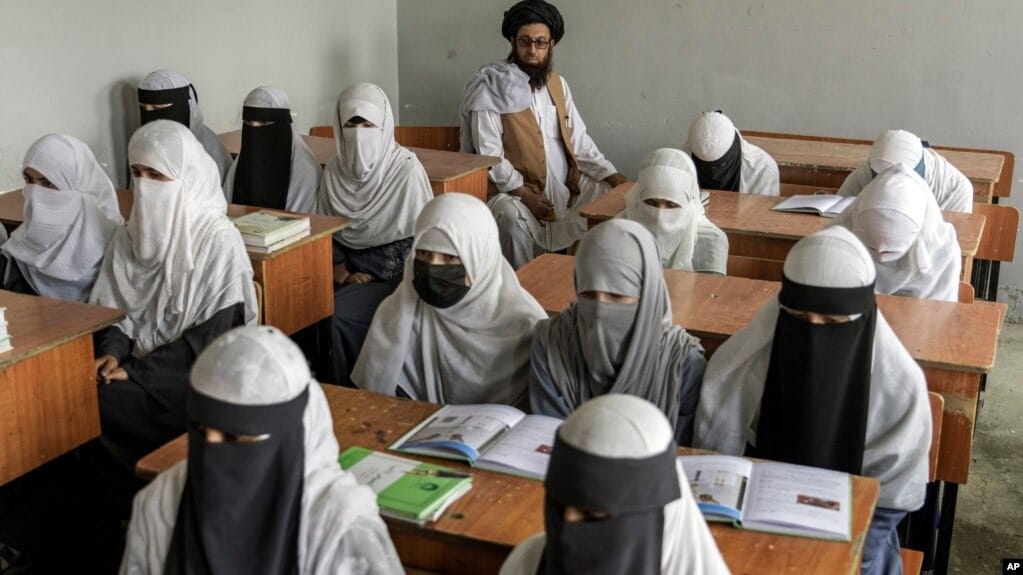
The debate over Afghanistan’s representation at the United Nations is closely linked to continuing concerns about human rights, particularly the rights of women and girls.
According to the information provided, Tom Bruce, an adviser to the United States ambassador to the United Nations, highlighted concerns about restrictions affecting Afghan women’s access to education, healthcare, and employment. He argued that Afghanistan’s seat at the United Nations should not be handed over to the Taliban authorities under the existing circumstances.
These concerns go to the heart of the international debate over Afghanistan’s future. Education enables women and girls to acquire knowledge and develop the skills needed for participation in society. Access to healthcare is essential for personal well-being and public health, while employment provides financial independence and opportunities to contribute to economic life.
Restrictions in these areas have consequences that extend beyond individual rights. When large sections of society are prevented from participating fully in education and employment, families, communities, and the wider economy can also be affected.
International recognition, therefore, cannot be viewed solely as a matter of diplomatic protocol. It is also connected to expectations about governance, the treatment of citizens, and the obligations that authorities have toward the population they govern.
Those advocating caution over the transfer of Afghanistan’s United Nations seat argue that granting the Taliban greater diplomatic standing without meaningful progress on human rights could weaken international pressure for change.
The opposing consideration is that international representation is also a means of maintaining diplomatic engagement with the authorities exercising control over Afghanistan. The challenge for the international community is to determine how engagement can be maintained without disregarding fundamental rights.
This tension makes the question particularly difficult. Yet the underlying principle should remain clear: the rights and opportunities of Afghan women and girls must not disappear from international discussions simply because diplomatic negotiations are complicated.
Any durable improvement in Afghanistan’s international standing will depend not only on diplomatic arrangements but also on developments affecting the lives of its people.
The questions surrounding militant groups and the United Nations seat are different in their immediate objectives, but they share an important connection: both concern the responsibilities of the authorities governing Afghanistan.
On the security front, neighbouring countries want credible assurances that Afghan territory will not be used to threaten them. On the human rights front, international actors have raised concerns about restrictions imposed on women and girls and the broader consequences for Afghan society.
In both cases, declarations alone are unlikely to settle the debate. Security assurances require credible measures against cross-border militancy. Commitments to human rights require tangible changes in access to education, healthcare, employment, and public life.
The reported construction of 2,000 houses for Pakistani Taliban members has consequently become a focal point in the wider discussion about Afghanistan’s security commitments. It raises questions that cannot be answered merely by confirming that buildings exist. Their intended use, the status of their occupants, and the safeguards against militant activity all require clarification.
Similarly, the dispute over Afghanistan’s United Nations seat cannot be resolved entirely by deciding which representative should occupy it. The broader questions of representation, governance, and human rights will remain relevant regardless of the outcome of the immediate diplomatic contest.
For Pakistan, the priority is preventing attacks and establishing a stable relationship with its neighbour. For Afghanistan, the challenge is to demonstrate that its policies can address security concerns while improving its relationship with the international community. For the United Nations and other international actors, the task is to balance diplomatic engagement with consistent attention to human rights.
The reported confirmation that 2,000 houses have been built in Afghanistan for Pakistani Taliban members has brought renewed attention to a question that has troubled Pakistan-Afghanistan relations for years: what is the nature and extent of the presence of Pakistani militant groups on Afghan soil?
The absence of precise information about the houses’ locations and the circumstances of their construction leaves important questions unanswered. Nevertheless, the reported statement highlights the need for transparency, credible security assurances, and practical measures to prevent militant activity from threatening neighbouring countries.
At the same time, the reported presence of other militant organisations, continuing border tensions, and recurring attacks inside Pakistan demonstrate why the wider security environment must be assessed carefully. Any apparent decline in major terrorist incidents should be evaluated alongside the persistence of targeted killings, abductions, and other forms of violence.
Afghanistan’s dispute over its United Nations seat adds another dimension to this challenge. The international community must consider the country’s representation alongside concerns about governance and the rights of women and girls. Neither diplomatic recognition nor security cooperation can permanently resolve these issues without credible commitments and demonstrable progress.
The path forward requires a shift from competing assertions to verifiable action. Pakistan needs effective safeguards against cross-border attacks. Afghanistan needs to address concerns about militant groups operating within its territory. International engagement must remain attentive to the rights and welfare of the Afghan population.
The central question is not simply why 2,000 houses were built, who occupies them, or which representative should speak for Afghanistan at the United Nations. It is whether the decisions taken by those exercising authority will contribute to a future defined by security, accountability, and respect for fundamental rights.
Until those questions receive credible answers, Afghanistan’s regional relationships and international standing will continue to face serious challenges. The measure of progress will ultimately lie not in statements or promises, but in whether people in Afghanistan and neighbouring Pakistan can live with greater security, dignity, and confidence in the future.