
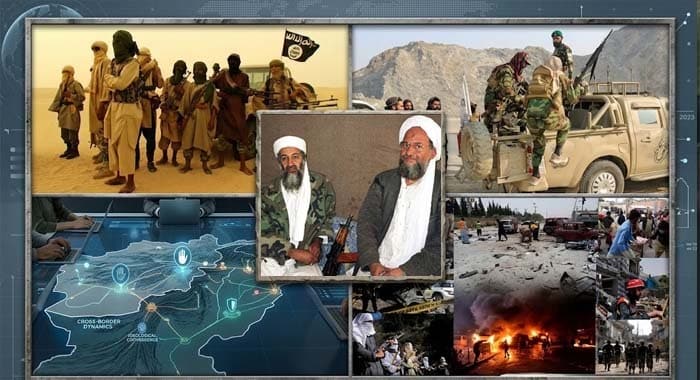
Pakistan continues to face a complex and evolving militant threat emanating from terrorist networks operating in and around Afghanistan, with recent assessments pointing to increasingly deep-rooted links between Al-Qaeda, Tehrik-e-Taliban Pakistan (TTP), Al-Qaeda in the Indian Subcontinent (AQIS) and other militant organizations active against the Pakistani state.
A series of violent incidents has underscored the scale and persistence of the threat. In one of the most serious recent incidents, an explosion at a police checkpoint in northwestern Pakistan in May was followed by an intense firefight that resulted in 21 fatalities. The attack was subsequently claimed by Ittihad-ul-Mujahideen Pakistan (IMP), a jihadist alliance operating primarily in Khyber Pakhtunkhwa. According to a United Nations assessment, the incident involved a suicide bombing and the detonation of a vehicle-borne improvised explosive device (VBIED), while AQIS was described as forming the backbone of the IMP.
The broader security environment has been further complicated by the return of the Afghan Taliban to power in Kabul and the continued presence of multiple militant organizations on Afghan territory. According to United Nations monitoring assessments and regional security researchers cited in the reporting, Afghanistan has increasingly become a permissive environment in which a range of militant groups are able to maintain organizational structures, access training, and establish relationships with other extremist networks.
The present-day militant landscape has its roots in developments following the United States-led intervention in Afghanistan more than two decades ago. Approximately 25 years ago, the United States launched military operations that disrupted Al-Qaeda’s presence in Afghanistan and forced many of its members and leaders into neighboring Pakistan. Although dispersed and significantly weakened, Al-Qaeda subsequently regrouped in Pakistan’s tribal areas.
During this period, the organization benefited from relationships with local militant networks, particularly the Tehrik-e-Taliban Pakistan, which was formally established in 2007. The TTP was largely composed of tribal militants, including younger tribesmen influenced by the ideology and military experience associated with the Afghan Taliban.
Over subsequent years, the relationship between Al-Qaeda and the TTP evolved beyond simple organizational contact. Security assessments and researchers cited in recent reporting indicate that Al-Qaeda has provided ideological guidance, training and other forms of support to elements of the TTP, while the TTP developed into one of the principal militant organizations conducting attacks against the Pakistani state.
With the Afghan Taliban’s return to power in Kabul in 2021, concerns have intensified regarding the security environment in which these organizations operate.
A significant development occurred in April, when Al-Qaeda’s media arm, the Al-Sahab Media Foundation, publicly and explicitly articulated its support for TTP operations against Pakistan. The development was significant because, according to the United Nations Analytical Support and Sanctions Monitoring Team, it represented a more direct public expression of Al-Qaeda’s support than had previously been observed.
The UN monitoring team noted that while Al-Qaeda had historically provided ideological guidance, training and support to the TTP during its insurgency against Pakistan, the new public statement represented a more explicit articulation of that relationship. Clemson University professor Amira Jadoon, as cited in the reporting, characterized the relationship as extending from practical assistance at the operational level to increasing narrative integration at the leadership level.
A Pakistani researcher, speaking anonymously because of security concerns, similarly assessed that the relationship between the two organizations has become deeply rooted and stronger, suggesting that Al-Qaeda’s Arab leadership increasingly regards the TTP as a trusted regional partner.
Nevertheless, experts caution that the precise organizational nature of the relationship remains difficult to establish.
Despite evidence of ideological and operational convergence, researchers differ in their assessment of the ultimate direction of the Al-Qaeda–TTP relationship. Research consultant Ricardo Alvarez, who tracks militancy in Central and South Asia, has suggested that since 2020 Al-Qaeda has sought to persuade the Pakistani Taliban another commonly used name for the TTP to dissolve as an independent organization and merge with Al-Qaeda.
The reporting suggests that the Afghan Taliban may have played a role in encouraging such a realignment. Since returning to power in Kabul, the Afghan Taliban has been accused by international monitors and researchers of providing sanctuary and other forms of assistance to a range of militant organizations. Such assistance has reportedly included accommodation and financial stipends.
According to the UN-related assessment cited in the reporting, Taliban authorities have also issued tazkiras, or Afghan identity documents, to members associated with the TTP, Al-Qaeda, AQIS and Uyghur militants linked to the Eastern Turkistan Islamic Movement (ETIM), also known as the Turkistan Islamic Party (TIP). These developments have generated significant concern among regional security analysts because the presence of multiple militant organizations within the same geographic environment creates opportunities for cooperation, ideological exchange, training and logistical coordination.
The reported relationship between Al-Qaeda and the TTP is only one component of a broader militant ecosystem. Security experts cited in the reporting have argued that Al-Qaeda has diversified its support to other militant organizations operating in Pakistan, including groups whose political objectives differ substantially from those of the TTP.
One such organization is the Balochistan Liberation Army (BLA), which has conducted a sustained armed campaign in Pakistan’s Balochistan Province. The strategic objectives of the BLA and TTP are fundamentally different. While the TTP seeks the imposition of its interpretation of Sharia law in Pakistan, the BLA advocates an independent Balochistan. Nevertheless, both organizations have conducted violent attacks against Pakistani security institutions.
The August UN report, citing an unnamed member state, indicated that Al-Qaeda had provided training to BLA militants. The allegation adds another dimension to concerns over the potential expansion of Al-Qaeda’s influence beyond traditionally aligned jihadist organizations.
The security situation in Balochistan was dramatically illustrated in March 2025, when the BLA hijacked a passenger train in one of the organization’s most audacious operations. The incident occurred in Balochistan Province, which borders both Afghanistan and Iran. The subsequent rescue operation conducted by Pakistani security forces resulted in the deaths of dozens of people. The episode demonstrated the increasingly sophisticated and high-impact nature of militant operations against the Pakistani state and highlighted the security challenges posed by organizations operating in geographically diverse parts of the country.
Another organization identified in the broader militant network is Ittihad-ul-Mujahideen Pakistan (IMP), a jihadist alliance operating in Khyber Pakhtunkhwa, particularly in Pakistan’s northwest along the Afghan border. According to UN monitors, the IMP receives training and strategic support from AQIS, the South Asia affiliate of Al-Qaeda.
The IMP claimed responsibility for the May attack on a police post in northwestern Pakistan. The attack reportedly involved a suicide bombing and the detonation of a vehicle-borne improvised explosive device, followed by an intense firefight in which 21 people were killed.
The UN assessment further stated that AQIS forms the backbone of the IMP, underscoring concerns regarding the role of Al-Qaeda’s South Asian affiliate in facilitating and sustaining militant activity against Pakistani targets.
Among the various militant organizations operating against Pakistan, the TTP remains one of the most persistent and significant security threats. In October 2025, TTP militants ambushed a Pakistani military convoy near the Afghan border, killing 11 soldiers.
The attack triggered a significant deterioration in Pakistan-Afghanistan security relations and prompted Pakistan to conduct air strikes across the border. The reported targets included locations in Kabul as well as areas in the Afghan provinces of Khost, Paktika and Nangarhar.
The period that followed witnessed sporadic clashes between Taliban and Pakistani border personnel. Despite periods of relative calm, tensions between Islamabad and Kabul have remained high, particularly over allegations concerning the presence and activities of the TTP from Afghan territory. The continued cross-border nature of the threat has therefore become a central component of Pakistan’s national-security concerns.
While a growing body of evidence points toward cooperation and ideological convergence between Al-Qaeda and the TTP, some researchers caution against overstating Al-Qaeda’s operational role in the TTP’s campaign. A Sweden-based researcher specializing in jihadist organizations in Afghanistan and Pakistan, has characterized the Al-Qaeda–TTP relationship as a “myth” in terms of its current strategic significance.
According to Sweden-based researcher, Al-Qaeda played an important role in establishing the post-9/11 jihadist insurgency in Pakistan by mentoring local militants, but its influence has declined considerably since 2014.
He has argued that the TTP does not require Al-Qaeda’s assistance to pursue its primary objectives, which remain overwhelmingly focused on Pakistan. Researcher has also maintained that Al-Qaeda’s global agenda could potentially conflict with the TTP’s Pakistan-focused objectives and that the TTP has repeatedly sought to distance itself from Al-Qaeda following the Afghan Taliban’s return to power in 2021.
Nevertheless, he acknowledged that significant ideological overlap continues to exist between the two organizations. The differing assessments underline an important point: while ideological convergence and various forms of cooperation are increasingly documented, the precise extent of operational command, control and strategic dependence between Al-Qaeda and the TTP remains contested among specialists.
Perhaps the clearest area of convergence between Al-Qaeda and the TTP is in media, propaganda and strategic messaging. A United Nations report issued in December 2025 described Al-Qaeda as a “service provider” to militant organizations operating in Afghanistan, providing forms of training, advice and logistical assistance.
Researchers have also identified a visible evolution in the TTP’s propaganda apparatus. Professor Amira Jadoon has pointed to changes within the TTP’s Umar Media wing following the assumption of leadership by former AQIS figure Chaudhry Muneeb ur Rahman, also known as Muneeb Jatt, in 2021.
According to this assessment, the influence of AQIS is particularly visible in the ideological and narrative dimensions of TTP messaging. Rather than simply presenting the TTP’s campaign as a domestic insurgency directed against the Pakistani state, Al-Qaeda-linked messaging has increasingly attempted to place Pakistan’s internal conflict within a broader global jihadist narrative.
Pakistan is portrayed in this framework as an alleged proxy of the United States, thereby attempting to transform a predominantly domestic militant campaign into part of a wider confrontation with Western powers. Jadoon has described this narrative convergence as the deeper strategic element of the relationship. If such framing gains traction, the TTP could effectively contribute to Al-Qaeda’s broader transnational agenda without fundamentally altering its own operational behavior or immediate objectives.
The available assessments indicate that Pakistan’s militant threat cannot be attributed to a single organization or a single operational model. The current landscape encompasses organizations with substantially different political and ideological objectives, including the TTP’s campaign for its interpretation of Sharia governance, the BLA’s separatist objectives, and Al-Qaeda and AQIS’s broader transnational jihadist ideology.
Yet the reported emergence of cooperation in areas such as training, ideological guidance, propaganda, logistics and strategic planning demonstrates the increasingly interconnected nature of the militant environment. The Afghan dimension remains particularly important. The presence of multiple militant organizations in Afghanistan, coupled with allegations of sanctuary and support, continues to generate serious security concerns for Pakistan and has contributed to recurring tensions along the Pakistan-Afghanistan border.
For Pakistan, the challenge extends beyond individual attacks. The convergence of militant narratives, training networks, logistical capabilities and cross-border sanctuaries has the potential to create a more resilient and adaptable threat environment.
The evolving nature of militant cooperation underscores the importance of sustained counterterrorism efforts, intelligence coordination, border security and international cooperation. The attacks against Pakistani police and military personnel demonstrate that law-enforcement and security institutions remain among the principal targets of militant organizations seeking to destabilize the country.
At the same time, the reported expansion of Al-Qaeda’s relationships with organizations beyond the traditional jihadist sphere raises concerns about the potential transfer of expertise, training and propaganda capabilities between groups with otherwise distinct objectives.
Pakistan’s security environment therefore requires a comprehensive response that addresses not only individual militant cells and attacks but also the broader networks that facilitate recruitment, financing, training, propaganda and cross-border movement.
The evolving relationship between Al-Qaeda, AQIS, the TTP and other militant organizations represents a significant and continuing security concern for Pakistan. While experts differ over the precise depth and strategic importance of the Al-Qaeda–TTP relationship, there is substantial agreement that ideological overlap, historical connections and varying forms of cooperation remain relevant to the regional militant landscape.
The public expression of support by Al-Qaeda’s Al-Sahab media wing for TTP operations, reported AQIS links with the IMP, allegations of Al-Qaeda training support for BLA elements, and the continued presence of militant networks in Afghanistan collectively point to an increasingly complex security environment.
At the same time, competing expert assessments demonstrate that the relationship should not be reduced to a simple command-and-control structure. The TTP retains its own Pakistan-focused agenda, while Al-Qaeda continues to pursue a broader transnational ideological project.
The principal concern is therefore not necessarily the complete organizational merger of these groups, but the possibility that shared ideology, operational assistance, training, propaganda and cross-border sanctuary can enable separate militant organizations to reinforce one another.
For Pakistan, this evolving threat requires continued vigilance, strengthened intelligence capabilities, effective counterterrorism measures, secure borders and sustained efforts to disrupt the networks that enable militant organizations to operate, coordinate and propagate their narratives.



