
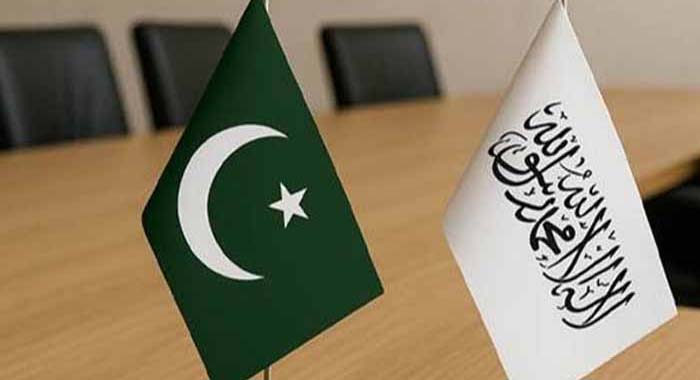
Improving relations between Pakistan and Afghanistan is intrinsically linked to peace, stability, and prosperity across the region. Given the complexity of the challenges confronting the two countries, an extraordinary and sustained diplomatic effort is required to move relations toward a more constructive and stable trajectory. However, the foremost prerequisite for meaningful engagement remains the creation of a conducive environment for dialogue.
At present, diplomatic efforts aimed at improving relations between Pakistan and Afghanistan are continuing. The objective should be to create a framework in which both sides can address their respective concerns through sustained engagement, responsible diplomacy, and practical confidence-building measures rather than allowing mistrust and confrontation to dictate the relationship.
Pakistan’s Foreign Office has made it clear that meaningful progress in negotiations can only be achieved when credible assurances are provided that Afghan territory will not be used for terrorism against Pakistan. At the same time, serious concerns remain regarding the activities of the Tehreek-e-Taliban Pakistan (TTP) and the need for effective action against elements operating from Afghan soil against Pakistan.
The improvement of Pakistan-Afghanistan relations cannot realistically be pursued in isolation. The prevailing atmosphere of mistrust requires sustained diplomatic engagement involving regional stakeholders capable of facilitating communication and encouraging both sides to remain committed to dialogue.
In this context, the diplomatic role of China, Russia, Türkiye, Qatar, and Saudi Arabia can be important. Their engagement should not be viewed merely through the prism of whether previous rounds of talks immediately produced a breakthrough. Diplomacy is rarely a process that delivers instant results. Complex regional disputes require continuity, patience, repeated engagement, and sustained political investment.
The fact that previous dialogue initiatives did not produce the desired outcome should not become an argument for abandoning diplomacy. Rather, the lessons from those experiences should be used to improve the negotiating process, strengthen confidence-building mechanisms, and develop a more realistic framework for future engagement.
Emotional reactions, unrealistic expectations of immediate results, or unilateral measures can further complicate an already fragile situation. The objective should instead be to maintain a continuous process of dialogue capable of gradually narrowing differences and creating the conditions for substantive progress.
Pakistan’s Foreign Office has recently acknowledged the constructive role being played by China in facilitating diplomatic engagement. Islamabad has also indicated that, in the absence of meaningful positive developments or substantive action by Afghanistan on Pakistan’s core concerns, Pakistan would retain the right to formulate its strategy in accordance with its national interests and security requirements.
At the same time, China appears committed to advancing the Urumqi dialogue process, which provides an important diplomatic channel for continued engagement.
Afghanistan has repeatedly expressed its desire for improved relations with Pakistan and its willingness to engage in dialogue. If that commitment is to translate into meaningful progress, however, it must be reflected in concrete actions and verifiable measures.
Two fundamental questions therefore require serious consideration. First, to what extent has Afghanistan implemented the understandings and commitments emerging from the various rounds of dialogue involving China, Türkiye, Qatar, Saudi Arabia, and other regional stakeholders, including the commitments reflected in joint statements and communiqués?
Second, what concrete action has been taken regarding the TTP and other elements whose activities from Afghan territory remain a major source of concern for Pakistan? If Afghanistan genuinely seeks to establish a stable and constructive relationship with Pakistan, it must demonstrate through practical measures that it is serious about addressing Pakistan’s security concerns and considers Pakistan a neighbour with whom it seeks peaceful and mutually beneficial relations.
The broader security environment must also be taken into account. Pakistan has consistently raised concerns regarding terrorism and cross-border security challenges affecting Balochistan and Khyber Pakhtunkhwa. Islamabad maintains that hostile networks and external factors are contributing to instability in these areas.
The evolving relationship between India and Afghanistan also requires careful assessment from Pakistan’s security perspective. Islamabad has repeatedly expressed concerns regarding what it sees as efforts to use Afghan territory or regional relationships in ways that could adversely affect Pakistan’s security.
These concerns cannot simply be dismissed if the objective is genuine regional stability. At the same time, resolving them requires diplomatic engagement, evidence-based dialogue, and a willingness by all concerned states to address legitimate security concerns rather than allowing competing narratives to deepen mistrust.
Pakistan has already made clear that it is prepared to engage with Afghanistan at every level if meaningful steps are taken toward addressing Pakistan’s concerns and eliminating the factors contributing to terrorism and insecurity. The priority should therefore be to prevent the current situation from moving toward further confrontation. If there is no timely and positive breakthrough and the diplomatic process fails to produce a viable framework for reconciliation and negotiations, the risk of further tension will increase.
This is precisely why the relationship between Pakistan and Afghanistan should not be viewed as a purely bilateral issue. Its implications extend across the entire region. China, Russia, Türkiye, Qatar, Saudi Arabia, and other regional stakeholders have a role to play in encouraging dialogue, facilitating communication, and supporting a framework in which both sides can move away from confrontation and toward sustainable peace.
Both Pakistan and Afghanistan must recognize that a policy of confrontation or prolonged tension serves neither country’s long-term interests. The people of the region have no interest in perpetual conflict. They want peace, stability, employment, investment, trade, education, and economic opportunities. Regional stability is directly connected with the ability of countries to pursue economic development and improve the quality of life of their citizens.
A peaceful Pakistan-Afghanistan relationship could create significant opportunities for bilateral trade, regional connectivity, transit, investment, and economic cooperation. Conversely, continued instability would impose additional costs on both countries and undermine broader regional development initiatives.
Regional stability cannot be achieved without addressing the broader relationship between Pakistan and India. Pakistan has made efforts in the past to improve bilateral relations and promote dialogue. However, a rigid approach and continued reluctance toward meaningful negotiations remain significant obstacles to progress.
If India and Pakistan are unable to establish a functioning political and diplomatic mechanism, the region’s political, economic, and security environment will continue to suffer. India must also recognize that sustained instability between the two countries cannot provide a durable foundation for regional peace. Any effort to use Afghanistan as a means of increasing pressure on Pakistan or contributing to instability would further complicate an already fragile regional environment.
A stable South Asia requires all major regional actors to pursue policies that reduce tensions rather than perpetuate them. At the same time, Pakistan must recognize that not every challenge facing the country can be attributed exclusively to external actors. While external security threats and regional dynamics remain important, a significant number of Pakistan’s challenges are also connected to domestic policies, governance choices, political polarization, economic pressures, and internal security shortcomings.
Pakistan’s ability to conduct effective diplomacy abroad is closely linked to the strength and stability of its internal foundations. There is therefore a need for a comprehensive assessment of domestic security challenges and for the development of alternative and sustainable policies capable of addressing them.
Such decisions should not be made in isolation. Pakistan’s political leadership and relevant stakeholders must pursue greater consultation and consensus on matters of national security, foreign policy, and regional engagement.
The way forward requires a broader regional framework in which Pakistan-Afghanistan relations, Pakistan-India relations, counterterrorism, economic connectivity, and regional stability are considered interconnected components of a single strategic equation. Major powers and regional states must also recognize that successful diplomacy should ultimately be measured not merely by the number of meetings held, but by its ability to produce greater political stability, economic cooperation, and security for the people of the region.
The people of South Asia and the wider region do not want another cycle of war and confrontation. They want peace, dignity, economic opportunity, and a future in which regional resources are directed toward development rather than conflict.
The immediate priority should therefore be to preserve the diplomatic space between Pakistan and Afghanistan and prevent further deterioration in bilateral relations. Both sides must demonstrate political maturity, restraint, and a willingness to address difficult issues through sustained engagement. Afghanistan needs to translate its stated desire for better relations with Pakistan into practical and verifiable actions, particularly with regard to Pakistan’s security concerns. Pakistan, for its part, must continue pursuing diplomacy while strengthening its internal political, economic, and security foundations.
The role of regional partners will remain important. China, Russia, Türkiye, Qatar, Saudi Arabia, and other influential states should continue supporting a sustained diplomatic process rather than focusing exclusively on short-term outcomes. Ultimately, peace between Pakistan and Afghanistan is not merely a bilateral objective. It is a regional necessity.
A stable Afghanistan, a secure Pakistan, constructive Pakistan-India relations, and meaningful regional economic cooperation can collectively create the foundation for a more peaceful and prosperous South Asia. The choice before the region is therefore clear: continued confrontation and instability, or sustained diplomacy, mutual understanding, regional cooperation, and economic development.
The people of the region deserve the latter.



