
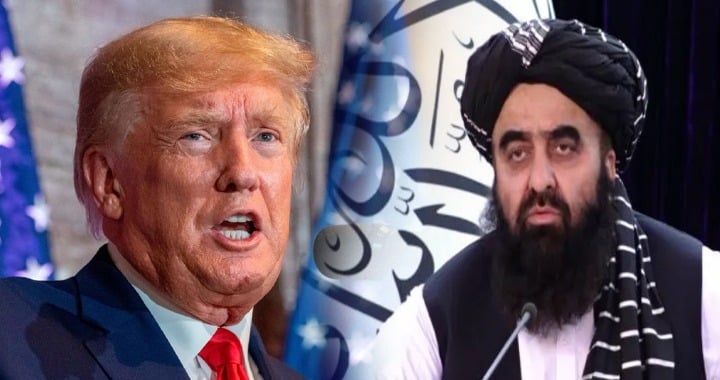
Five years after the withdrawal of U.S. forces from Afghanistan, Taliban Foreign Minister Amir Khan Muttaqi has called on the United States to reopen its embassy in Kabul, restore a diplomatic presence and expand economic engagement with Afghanistan, including potential investment in the country’s mineral resources and infrastructure.
In an interview with The New York Times, Muttaqi said the period of armed conflict between the Taliban and the United States had ended and called for a new relationship based on what he described as “mutual respect.” Muttaqi said the Taliban considers the “chapter of war” to be over and urged Washington to establish a new framework for engagement with Kabul.
He called for the reopening of the U.S. Embassy in Kabul and the restoration of a diplomatic presence, arguing that direct diplomatic engagement could provide a foundation for improved relations between the two countries.
The Taliban foreign minister also urged the United States to consider economic opportunities in Afghanistan, specifically highlighting the country’s mineral resources, dams and road infrastructure as potential areas for investment. At the same time, Muttaqi ruled out any return of U.S. military forces to Afghanistan, saying that Afghans would not accept another foreign military presence.
The appeal comes as the Taliban administration continues efforts to reduce Afghanistan’s international isolation and strengthen diplomatic and economic relations with regional and global powers. Since the U.S. withdrawal, Kabul has expanded engagement with countries including Russia, Uzbekistan and other regional states, while seeking investment and commercial partnerships to support Afghanistan’s economy.
The Taliban has also pursued mining and investment agreements involving companies and interests from countries including China, Iran and Qatar, reflecting its effort to attract foreign capital despite the country’s continuing international isolation.
The latest appeal to Washington therefore represents an effort to broaden Afghanistan’s economic and diplomatic partnerships beyond its existing regional relationships. Afghanistan possesses significant deposits of minerals and other natural resources that could potentially become an important source of revenue and foreign investment.
Michael Kugelman of the Atlantic Council has suggested that Afghanistan’s mineral wealth could attract interest from the administration of U.S. President Donald Trump, particularly given its emphasis on economic and strategic interests.
The United States previously invested substantial resources in Afghanistan’s mining sector. Between 2004 and 2021, the U.S. spent nearly $1 billion on efforts intended to develop the country’s mining industry. A subsequent U.S. government watchdog assessment, however, concluded that the investment generated limited tangible results.
The Taliban administration is now seeking to present Afghanistan’s natural resources and infrastructure requirements as potential areas for broader international economic cooperation.
Former U.S. diplomat Robin Raphel has suggested that renewed American engagement could potentially provide Washington with greater access to Afghanistan’s mineral resources while strengthening U.S. connections with Central Asia.
However, she also cautioned that meaningful economic engagement would likely require some form of American diplomatic presence in Kabul—an option that remains politically sensitive and difficult in Washington. Any potential U.S. return would therefore involve more than commercial considerations. Questions surrounding diplomatic recognition, security, governance, human rights and the Taliban’s domestic policies would remain central to any decision by Washington to deepen engagement.
The Taliban’s appeal for renewed U.S. engagement comes amid continuing international criticism of its treatment of women and girls. Restrictions on education, employment and participation in public life remain major points of contention between the Taliban administration and much of the international community.
These policies, alongside concerns over governance and fundamental rights, continue to complicate efforts to establish broader diplomatic relations with Kabul. The United States and other governments have repeatedly linked deeper engagement with Afghanistan to concerns regarding human rights, inclusive governance and the Taliban’s treatment of women and girls.
Despite increased engagement with regional countries, Afghanistan continues to face significant economic and humanitarian pressures. The country remains affected by widespread poverty, high unemployment and substantial humanitarian needs, while international aid organizations have warned of serious funding constraints.
Against this backdrop, the Taliban administration is seeking foreign investment as a means of generating economic activity, developing infrastructure and reducing dependence on international assistance. However, attracting major Western investment is likely to remain difficult while Afghanistan faces diplomatic isolation and continuing concerns over governance and human rights.
Muttaqi’s call represents a notable shift in tone from the years of armed confrontation between Washington and the Taliban. Five years after the withdrawal of U.S. forces, the Taliban is now publicly advocating diplomatic engagement, economic cooperation and American investment, while firmly rejecting the possibility of a renewed U.S. military presence.
Whether Washington will respond to the appeal remains uncertain. Any substantial change in U.S. policy would likely depend on a complex balance of strategic interests, economic opportunities, security concerns, human rights considerations and the Taliban’s conduct at home and abroad.
For Afghanistan, however, the message from Kabul is clear: the Taliban administration is seeking to transform the relationship with the United States from one defined by two decades of war into one centered on diplomacy, trade, investment and economic development.
The success of that effort will ultimately depend on whether Kabul can address the concerns that have kept it diplomatically isolated while convincing Washington that renewed engagement can advance U.S. strategic and economic interests without compromising core policy priorities.



