
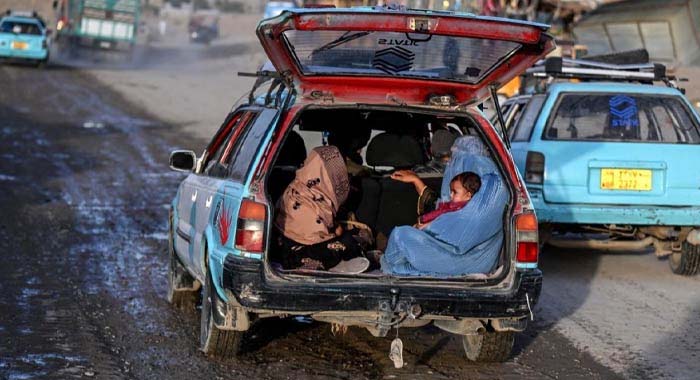
A recent report by the British newspaper The Telegraph has drawn attention to the stark contrast between the Taliban administration’s celebrations marking five years in power and the worsening humanitarian and socio-economic hardships confronting millions of Afghans.
The report portrays an Afghanistan where poverty, unemployment, food insecurity, restrictions on women and girls, and continued displacement remain defining features of daily life. While the Taliban administration presents its return to power as a political and military achievement, the situation described in the report highlights the severe challenges facing ordinary Afghans seeking food, employment, education and a secure future.
According to the report, five years under Taliban rule have left many Afghans struggling with severe economic hardship. With limited employment opportunities and deteriorating living conditions, increasing numbers of people have sought to leave the country in search of work and a better future.
The report highlights the dangerous journeys undertaken by Afghans attempting to reach Iran in search of employment. Some reportedly died along the way as a result of extreme heat and dehydration, with deaths in remote desert areas reflecting the desperate circumstances confronting those attempting to escape poverty and unemployment.
For many families remaining in Afghanistan, the struggle is equally severe. The report describes households being forced to survive for days on little more than dry bread, illustrating the depth of food insecurity affecting vulnerable communities. According to figures cited in the report, approximately 3.4 million Afghans have left the country since the Taliban takeover, adding to one of the world’s largest displacement crises.
The economic crisis is compounded by Afghanistan’s continuing dependence on international humanitarian assistance. Citing United Nations estimates, the report states that approximately 22 million Afghans are expected to require humanitarian assistance this year. It further cites UNDP estimates indicating that around 29 million Afghans lack access to basic necessities.
The figures highlight the enormous scale of the humanitarian challenge facing the country and raise questions over Afghanistan’s ability to provide adequate food, employment, healthcare and other essential services to its population.
The report also focuses heavily on the situation of Afghan women and girls, who continue to face extensive restrictions on education, employment and public life under Taliban rule. Women reportedly face enforcement by Taliban authorities over dress and public conduct, while concerns surrounding checkpoints, so-called morality policing and the fear of arbitrary detention or disappearance have contributed to an increasingly restrictive social environment. The restrictions extend beyond daily mobility and personal freedoms to fundamental rights such as education and employment.
According to figures cited from UNESCO, approximately 2.4 million Afghan girls are currently deprived of education, while an estimated 600,000 women could be excluded from employment as a result of existing restrictions and policies.
The continued exclusion of women and girls from education and economic activity threatens not only individual livelihoods but also Afghanistan’s longer-term social and economic development.
The Telegraph report further describes an atmosphere in which many Afghans live under heightened restrictions and uncertainty. Women reportedly risk confrontation with Taliban officials over issues such as facial covering in public spaces, while the presence of checkpoints and morality enforcement has added to concerns over freedom of movement.
The report also raises concerns over restrictions on the media. Taliban authorities reportedly instructed journalists covering the August 15 anniversary to limit their coverage to celebrations and refrain from broadcasting critical material. Such restrictions have intensified concerns regarding freedom of expression and the ability of Afghan journalists to independently report on developments inside the country.
The report points to a striking contrast between the Taliban leadership’s public narrative and the conditions being experienced by ordinary Afghans. According to the report, Taliban supreme leader Hibatullah Akhundzada has urged Afghans not to believe reports concerning poverty and hunger, despite the extensive humanitarian and economic difficulties documented by international organizations.
Akhundzada himself has remained largely absent from public view, further contributing to questions surrounding the Taliban leadership’s engagement with the population it governs.
The consequences of the Taliban’s restrictions on girls’ education extend far beyond the present humanitarian crisis. With millions of girls excluded from education and women facing growing barriers to employment, an entire generation risks being deprived of opportunities necessary for economic independence and social advancement. The Telegraph report warns of the increasingly difficult circumstances faced by Afghan girls and raises concerns about the extreme choices some could potentially face if economic and social conditions continue to deteriorate, including pressure to enter marriages as a means of securing survival and protection.
The picture emerging from the report is of a country caught between political celebration at the top and profound hardship at the grassroots level. Five years after the Taliban’s return to power, millions of Afghans continue to face poverty, unemployment, hunger, displacement and restrictions on fundamental freedoms, while women and girls remain particularly affected by policies limiting their participation in education, employment and public life.
The scale of humanitarian need cited by the United Nations and UNDP, combined with continued migration and reports of severe economic hardship, underscores the magnitude of Afghanistan’s ongoing crisis. The findings also reinforce concerns that without meaningful economic opportunities, access to education, protection of basic rights and sustainable humanitarian support, Afghanistan’s humanitarian emergency could continue to impose severe costs on its population.
The situation described by The Telegraph ultimately presents a stark question for the international community: five years after the Taliban’s return to power, can Afghanistan move toward stability and self-reliance while millions remain trapped by poverty, restrictions and diminishing opportunities?



