
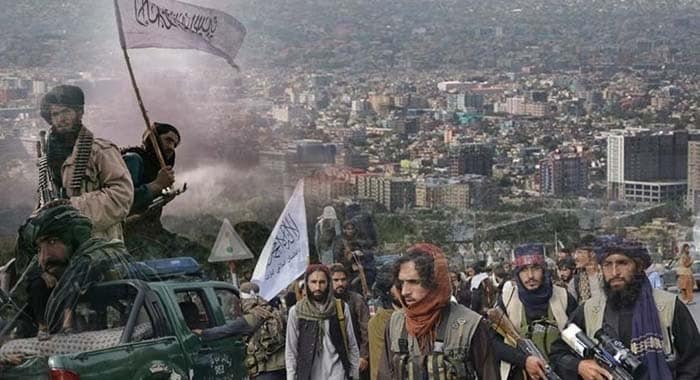
Five years after the fall of Kabul, Afghanistan faces a long list of challenges, including a ban on girls’ education, the exclusion of women from economic and social life, unemployment, malnutrition, a non-transparent judicial system, the presence of terrorist organizations and continued international isolation.
Girls Deprived of the Right to Education
The greatest tragedy of the Taliban era has been the denial of education to girls and women. Afghanistan is the only country in the world where formal education for girls beyond primary level is prohibited. Schools remain closed to girls after the sixth grade, while women have also been barred from attending universities since December 2022.
According to UNESCO, by 2026, approximately 2.4 million Afghan girls had been deprived of secondary education. In 2021, around one million girls were enrolled in secondary schools, but five years later, this entire educational pathway has effectively been dismantled. The decision to prevent women from receiving medical education has also created the risk of a severe future shortage of female doctors, nurses and midwives.
The Taliban have linked the restrictions to religious and cultural requirements, but five years on, they have failed to present an education system that allows girls to continue their studies.
Women’s Social and Economic Life Restricted
Taliban decrees have severely restricted women’s access to employment, travel, media, sports, politics and public spaces. Women have been barred from working in numerous sectors, while requirements for a male guardian have been imposed on travel. Even women’s voices and physical presence in public have faced restrictions.
According to the latest figures from UN Women, only seven percent of women in Afghanistan are employed, compared with 84 percent of men. Half of the women surveyed said that, because of the restrictions, they leave their homes only once or twice a month. This situation indicates that half of Afghanistan’s population has effectively been excluded from the country’s development process.
By depriving women of education and employment, the Taliban have not only restricted their fundamental rights, but have also removed millions of potential workers, doctors, teachers and entrepreneurs from Afghanistan’s economy.
Limited Economic Recovery, but Employment Crisis Persists
The Afghan economy experienced a severe crisis after 2021. A decline in foreign aid, isolation of the banking system, lack of investment and the migration of skilled people further worsened conditions. In subsequent years, limited recovery took place through agriculture, mining, construction and trade.
The World Bank estimated Afghanistan’s economic growth at 4.3 percent in 2025. Inflation remained around two percent, while domestic revenue also increased. However, according to the same report, rapid population growth and the return of millions of Afghans from Iran and Pakistan resulted in a four percent decline in per capita gross national income. Nearly one in four Afghan young people is unemployed, while the banking system remains weak and the economy continues to depend on foreign aid and imports.
Millions of young people have no stable employment. Restrictions on women and an uncertain business environment have also damaged private investment and the development of human capital.
Malnutrition and Humanitarian Crisis
According to the United Nations, 21.9 million people in Afghanistan will require humanitarian assistance in 2026. Between April and September 2026, approximately 13.8 million people are facing acute food insecurity, including 2.9 million at emergency levels. During the same period, around 3.7 million children under the age of five are expected to suffer from acute malnutrition, with nearly 950,000 potentially facing severe conditions.
The exclusion of women from employment, restrictions on the activities of international organizations and the absence of comprehensive economic policies have further complicated the situation.
Afghanistan Has Become a Safe Haven for Terrorists
During these five years of Taliban rule, Afghanistan has become a safe haven for more than 23 international and local terrorist organizations. These terrorist groups have received the Taliban regime’s patronage. ISIS-Khorasan retains the capability to carry out attacks in Afghanistan, while the United Nations Security Council has repeatedly expressed concern over the presence of Al-Qaeda, the banned Tehreek-e-Taliban Pakistan and several Central Asian militant organizations.
According to assessments presented to the Security Council, the number of TTP fighters in Afghanistan is estimated at around 6,000. The group’s presence and its cross-border attacks against Pakistan have severely affected relations between Kabul and Islamabad.
The Taliban portray their operations against ISIS-Khorasan as a success, but the international community’s demand goes beyond ISIS. The Taliban are being urged to prevent Afghan territory from being used against any country. The absence of verifiable and sustained action on this front remains a major obstacle to the Taliban’s international acceptance.
Rule of Law or an Unaccountable System?
In the absence of an elected parliament, public representation, constitutional oversight and independent accountability mechanisms, most decisions are being made through decrees issued by the Taliban’s supreme leader. Reports of arrests and mistreatment of human rights activists, former government officials, journalists and critics of the regime have continued to emerge.
According to the United Nations, at least 312 people were subjected to judicially ordered corporal punishments between January and March 2026 alone. Public floggings and executions have raised serious questions about fair trials, legal representation and the right to appeal.
International Isolation Continues
Although Russia recognized the Taliban government on July 3, 2025, becoming the first country to do so, China, Pakistan, Iran, the United Arab Emirates, Qatar and Central Asian states maintain varying levels of diplomatic and trade engagement with the Taliban. However, diplomatic engagement and formal legal recognition are not the same thing.
Five years later, no country other than Russia has formally recognized the Taliban government. Afghanistan’s seat at the United Nations has also not been handed over to the Taliban. The absence of an inclusive government, violations of women’s rights and the presence of terrorist organizations remain fundamental obstacles to the Taliban achieving broader international acceptance.
What Afghanistan Has Lost
Over the past five years, Afghanistan has lost millions of girls pursuing education, women participating in the workforce, independent media, political participation, constitutional institutions, human capital and broad international acceptance. Employment opportunities for young people have narrowed, skilled professionals have left the country, and an entire generation has been left facing an uncertain future.
Five years on, the conclusion is that while the Taliban have secured power, centralized control and limited economic stability, Afghanistan remains surrounded by international isolation, a humanitarian crisis, hunger, unemployment, terrorist threats and the systematic exclusion of women.
Each anniversary of the Taliban’s takeover of Kabul is increasingly becoming less a reminder of the Taliban’s victory and more a reminder of Afghanistan’s vanishing future.



