Fida Adeel
The induction of modern weapons, armoured vehicles and specialised equipment into the Khyber Pakhtunkhwa Police is much more than a routine procurement exercise. At Malik Shah Shaheed Police Lines in Peshawar, the provincial police force has received a range of new equipment, including modern weapons, bulletproof vehicles, single- and double-cabin vehicles and motorcycles. Modern armoured personnel carriers (APCs) have also been deployed in high-risk districts such as Tank, Hangu and Bannu, while APCs have been provided in areas including Upper Dir and Mansehra. At a time when militants are becoming increasingly sophisticated in their tactics and technology, these developments are both necessary and overdue.
The first question, however, is not whether this equipment is useful. It unquestionably is. The more important question is why such modernisation was not undertaken on a much larger scale years ago. Khyber Pakhtunkhwa has been confronting militancy and terrorism for more than a decade. Police stations have been attacked, patrols ambushed, officers martyred and public infrastructure damaged repeatedly. The threat did not emerge yesterday. It has been evolving for years, and the state’s preparations should have evolved at the same pace.
When a police force does not possess modern weapons, adequate protective infrastructure, armoured vehicles and strong communications systems, militants inevitably learn where its vulnerabilities lie. An organised militant does not attack randomly. It studies the target. It can determine how many personnel are stationed at a particular police station, how many bulletproof vehicles are available, what weapons the officers possess, how quickly reinforcements can arrive and what level of training the personnel have received. In other words, weaknesses in police infrastructure can become intelligence advantages for the enemy.
This is why the deployment of APCs and bulletproof vehicles in high-risk districts is particularly important. In areas where police personnel may face rocket attacks, ambushes, improvised explosive devices or direct assaults, a conventional vehicle can become a death trap. An armoured vehicle, by contrast, can significantly increase the chances of survival and allow personnel to move through dangerous areas with greater protection. The recent attacks on police personnel in areas of Hangu have demonstrated precisely how vulnerable ordinary patrol vehicles can become when militants possess powerful weapons, including rocket launchers.
The distribution of vehicles according to the terrain is also a welcome development. In relatively open areas, mobile patrol vehicles can provide greater flexibility and improve the police’s ability to respond quickly. In mountainous and difficult terrain, however, the requirements are different. Double-cabin and four-wheel-drive vehicles with powerful engines are essential because conventional vehicles often struggle on steep roads, rough tracks and difficult climbs. During counterterrorism operations, the ability to transport personnel and equipment safely through such terrain can determine whether an operation succeeds or fails.
Yet vehicles and weapons alone will not solve the problem. The modern battlefield has changed dramatically, and militant organisations have also adapted. Reports and observations concerning militant capabilities indicate that some groups possess sophisticated technology, including night-vision goggles, drones, quadcopters and even signal-jamming equipment designed to interfere with drone operations. This is a critical development because it demonstrates that the security challenge is no longer simply a confrontation between men carrying rifles. It has become a contest involving surveillance, communications, technology, mobility, intelligence and reaction time.
The state’s response must therefore go beyond traditional weapons procurement. If militants can operate drones, security forces must have trained drone operators. If militants can use quadcopters, police must understand how to detect and counter them. If militants possess signal-jamming capabilities, security agencies must develop communications systems and operational procedures that reduce the effectiveness of such tactics. Anti-drone weapons and other specialised equipment can be valuable, but only when personnel know exactly how and when to use them.
Fortunately, Khyber Pakhtunkhwa Police already has the institutional foundation to provide such training. Police training academies and schools, including the training establishment in Hangu and facilities in Hakeemabad, Nowshera, have experience in preparing personnel for modern policing and counterterrorism operations. The Counter Terrorism Department and Anti-Terrorism Force also have specialised personnel who receive training for high-risk operations. Similarly, bomb disposal personnel undergo separate and highly specialised preparation because dealing with explosives requires skills that ordinary policing cannot provide.
The same principle applies to drones and modern surveillance systems. It is not enough to hand an officer a sophisticated piece of equipment and assume that it will automatically improve security. Every new technology requires trained operators, maintenance, technical support and regular refresher courses. A drone operator must understand aerial surveillance. A counter-drone specialist must understand how hostile drones work. A police officer using a new weapon must understand its capabilities and limitations. Modern equipment without modern training can become an expensive but ineffective investment.
There is another issue that deserves equal attention: manpower. Even the best equipment cannot replace trained personnel. A modern APC still needs a trained crew. A drone requires an operator. A surveillance system requires specialists who can interpret the information it produces. A protected police station still requires sufficient personnel to defend it. Therefore, the modernisation of KP Police must include an increase in individual strength as well as an improvement in technology.
The continuing cycle of attacks illustrates why this is necessary. A militant attack may destroy a police building, kill or injure officers and force the authorities to replace the personnel. New officers arrive and the police station resumes its function. But if the underlying weaknesses remain, another attack can occur. This creates a cycle of attack, loss, replacement and reconstruction. The objective of modernisation should not simply be to help police survive the next attack; it should be to build a system capable of preventing, detecting and defeating attacks before they occur.
This brings us to the most important lesson of the current security situation: no single institution can defeat a guerrilla war on its own. Militancy in Khyber Pakhtunkhwa is not a conventional war in which two armies meet on a battlefield. It is an asymmetric conflict involving ambushes, suicide attacks, targeted killings, improvised explosive devices, reconnaissance, intelligence gathering and hit-and-run tactics. Such a conflict demands coordination between the police, Counter Terrorism Department, intelligence agencies, armed forces, provincial government, federal government and local administration.
A gap between these institutions can become an opportunity for militants. If one agency possesses critical information but another does not receive it in time, the militant can exploit the disconnect. If intelligence identifies a threat but the police do not have the mobility or manpower to respond quickly, the information loses much of its value. If one institution knows a militant group is operating in an area but another does not have access to that intelligence, the enemy gains the advantage.
This is why coordination must become a central pillar of Pakistan’s counterterrorism strategy. Providing new weapons to police is important, but providing police with the intelligence necessary to deploy those weapons effectively is equally important. Technology can strengthen a force, but information tells that force where and when to act.
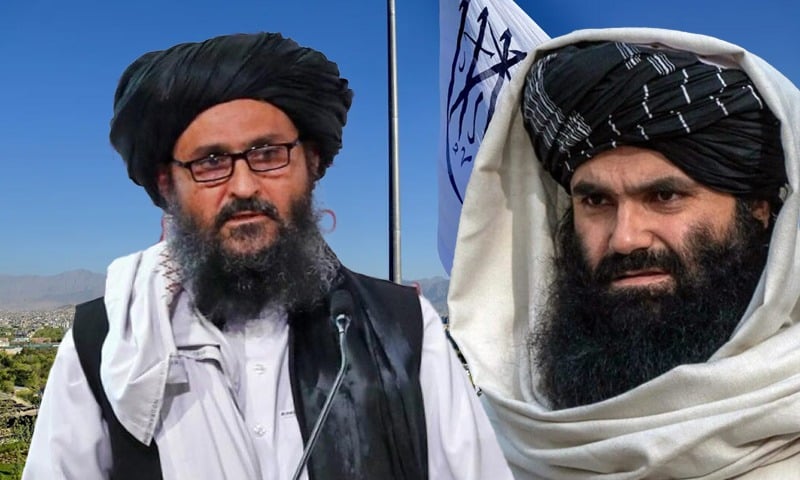
The situation in Afghanistan makes this challenge even more complicated. Pakistan’s security environment cannot be fully understood without examining developments across the western border. As the Afghan Taliban approach the fifth anniversary of their return to power on August 15, serious questions remain about the country’s political, economic and security future.
The Afghan Taliban argue that the war has ended, that terrorism has been defeated and that Afghanistan now has an established system of governance. But such claims must ultimately be assessed against conditions on the ground. The question is not simply whether large-scale conventional warfare has declined. The deeper question is whether Afghanistan has achieved sustainable peace, political stability, economic security and a system of governance accepted by a broad section of its population.
Measuring public satisfaction in Afghanistan is difficult because there has been no nationwide democratic election under the current system through which the public could express its political preferences. It is therefore difficult to make absolute claims that the Afghan population is either completely satisfied or completely dissatisfied with Taliban rule. There are Afghans who may appreciate the reduction in large-scale warfare, while others may strongly oppose restrictions imposed by the authorities.
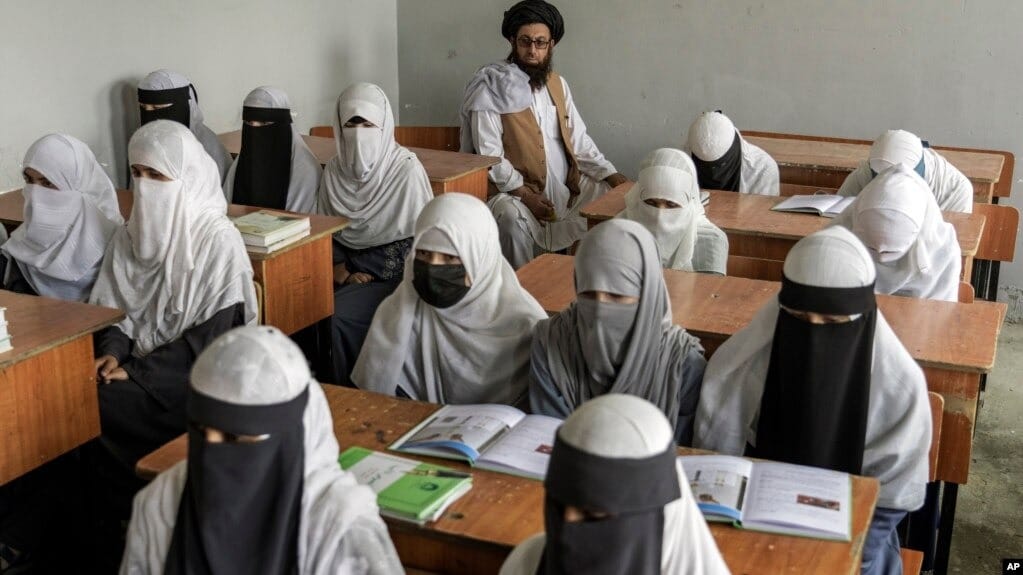
Nevertheless, Afghanistan continues to face serious economic and humanitarian challenges. Millions of Afghans remain outside the country, while poverty, hunger and unemployment continue to affect large sections of the population. Questions surrounding women’s employment, girls’ education, media restrictions and broader civil liberties have also generated international criticism. These issues are important not only from a human rights perspective but also because prolonged political and social restrictions can contribute to long-term instability.
The emergence of resistance groups adds another dimension. Organisations such as the Afghan Freedom Front, the National Resistance Front, Sipahiyan-e-Mihan and the Afghanistan United Front associated with General Sami Sadat represent different strands of opposition to the Taliban authorities. It would be premature to suggest that these groups are capable of overthrowing the Taliban or taking control of Afghanistan. But their existence demonstrates that the political landscape is not completely settled.
The reported emergence of resistance activity in areas such as Badakhshan should therefore not be ignored. Similarly, reports of attacks reaching important locations in Kabul demonstrate that security challenges remain. If violence can reach symbolic and strategic locations such as Hamid Karzai International Airport, the Afghan authorities cannot simply declare the security problem finished.
The Taliban therefore have an important strategic choice before them. They can continue to view every challenge primarily through the lens of security, or they can also address the political, economic and social grievances that could eventually strengthen opposition movements. A government that wants long-term stability must think beyond defeating individual armed groups. It must also create conditions in which fewer people see armed resistance as their only option.
Afghanistan’s relationship with Pakistan is particularly important in this regard. If Kabul wants greater regional trade, investment and connectivity, improved relations with Islamabad would be strategically beneficial. China also has a major interest in regional stability, particularly as discussions surrounding future connectivity and CPEC-related development continue. Afghanistan’s potential role in regional economic projects could create significant opportunities, but those opportunities depend on security.
No major infrastructure project can flourish in an environment of persistent conflict. Roads, railways, ports, energy projects and trade corridors require stability. Investors need security. Traders need predictable borders. Regional connectivity requires cooperation between governments. Therefore, peace between Afghanistan and Pakistan is not merely a diplomatic objective; it is an economic necessity.
For Pakistan, the message is equally clear. The modernisation of KP Police must continue. The new APCs, bulletproof vehicles, double-cabin vehicles, motorcycles, modern weapons, drones and specialised equipment are welcome developments, but they should represent the beginning rather than the conclusion of the process.
Khyber Pakhtunkhwa needs a permanent security modernisation programme. It needs modern equipment, but it also needs more personnel. It needs better vehicles, but it also needs trained drivers and crews. It needs drones, but it needs skilled operators and analysts. It needs anti-drone systems, but it needs specialists capable of using them effectively. It needs stronger police stations, but it also needs intelligence that can warn personnel before militants arrive at their gates.
Above all, the province needs sustained coordination among all relevant institutions.
The central lesson from the current situation is therefore simple: modern equipment can save lives, but modern strategy wins wars.
The arrival of new equipment at Malik Shah Shaheed Police Lines should be welcomed because KP Police deserves every possible advantage against militants who have demonstrated increasing technological sophistication. But the government must resist the temptation to treat procurement as the final achievement. The real test begins after the equipment reaches the field.
Will officers be properly trained? Will there be enough manpower? Will the equipment be maintained? Will intelligence reach the right people at the right time? Will police, CTD, military and intelligence institutions operate together rather than in isolation? Will procurement continue before equipment becomes outdated? And will policymakers finally move from reactive security planning to long-term strategic preparation?
These are the questions that matter.
Khyber Pakhtunkhwa has already paid an enormous price in the fight against terrorism. Its police officers have repeatedly stood between militants and ordinary citizens, often with inadequate resources and at extraordinary personal risk. Providing them with modern equipment is not a favour; it is a fundamental responsibility of the state.
The new APCs and vehicles can provide protection. Modern weapons can provide firepower. Drones can provide surveillance. Training can provide competence. Intelligence can provide warning. Coordination can provide strategic strength.
But only when all of these elements work together can KP Police truly transform its position on the battlefield.
The arrival of modern equipment should therefore be seen not as another government procurement story but as an opportunity to establish a completely new security doctrine for Khyber Pakhtunkhwa—one based on anticipation rather than reaction, coordination rather than institutional isolation, and preparedness rather than improvisation.
The militants have spent years learning the weaknesses of the state. It is time for the state to learn from its own weaknesses and close every gap before the enemy can exploit it.