
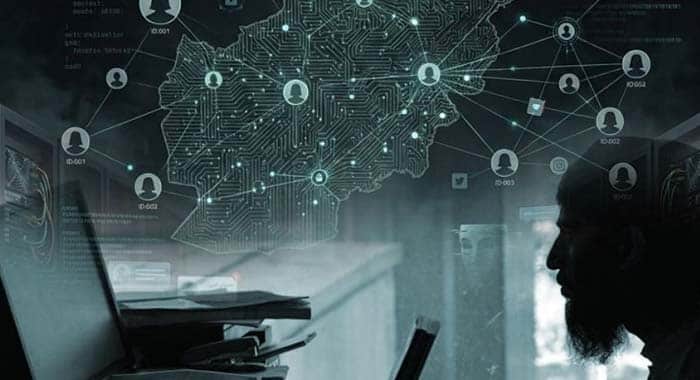
Since returning to power in Afghanistan in August 2021, the Taliban’s approach to communication and public messaging has undergone a major transformation. A movement that once relied largely on underground publications, religious sermons, and traditional networks has increasingly developed a digital presence, using social media platforms to shape public perception, respond to criticism, and promote its version of events.
A number of Afghan citizens, media activists, journalists, and former government officials say the Taliban has expanded its online influence efforts through the creation of anonymous and allegedly fake social media accounts, including accounts using women’s names and photographs. According to these individuals, such accounts are used to defend Taliban policies, challenge critics, and promote narratives favorable to the group, particularly when reports emerge concerning alleged human rights abuses, restrictions on women, corruption, violence, or other controversial issues.
They claim that these accounts often become more active during periods of public debate or when independent media outlets publish critical reports about the Taliban. According to their accounts, operators of these profiles attempt to justify Taliban actions, discredit critics, and create the impression of broader public support for the group.
Media activist Nematullah, told Afghan media, whose name has been changed for security reasons, says he has repeatedly encountered social media accounts and pages that appear to defend the Taliban whenever the group faces criticism. According to him, the language, writing style, and tone used by many of these accounts appear unnatural and show signs that the content may have been prepared or directed rather than written by ordinary users.
“I have personally seen many cases where, in response to a critical topic about the Taliban, accounts and pages defending the group use language and expression that is not natural or ordinary. From their tone and style of writing, it can be understood that much of this content is fabricated or dictated,” Nematullah says.
He says a significant number of these accounts operate under female names and identities. According to him, some profiles use girls’ names and photographs while promoting Taliban positions, even though the images displayed on these accounts do not appear consistent with the restrictions and standards that the Taliban itself has imposed on women’s appearance and public participation.
Nematullah says many of these identities appear to be temporary and disappear after a short period of activity. He explains that such accounts often become active only when a Taliban-related issue becomes controversial or attracts widespread discussion. “When you check their pages, you usually do not see any clear or continuous activity, except when they have shared something about what they themselves call Taliban achievements,” he says. According to him, the lack of consistent personal activity, combined with sudden engagement around specific political topics, raises questions about the authenticity of these accounts.
Parwiz, a young Afghan man whose name has also been changed, says he has observed numerous accounts using girls’ names and images that publish messages supporting the Taliban. He says these profiles frequently increase their activity when reports emerge about issues such as alleged oppression, sexual violence, killings, corruption, or major economic and security-related developments.
“When I personally check social media, including X, Facebook, Instagram and TikTok, I come across accounts created with girls’ names and profiles that publish fabricated propaganda and claims related to security and economic growth,” Parwiz says.
According to him, these accounts often appear under posts published by independent media outlets, journalists, and organizations outside Afghanistan. He says their purpose is to defend the Taliban, justify its actions, or challenge criticism directed at the group. Parwiz also claims that some fake accounts have been created using the names of well-known female YouTubers in Afghanistan. According to him, these accounts are then used to share videos and promotional material related to Taliban institutions.
“This is done to throw dust in people’s eyes,” he says. “People today are not like they were during the Taliban’s first period of rule. Public awareness has increased, and people can better recognize the group’s false propaganda and fabricated conduct.”
Sharara, another young Afghan woman, says the Taliban’s online influence efforts are not limited to fake social media profiles. According to her, Taliban intelligence and security institutions are also involved in online propaganda activities. She claims that these bodies provide financial support to hundreds of YouTube channels and, in some cases, instruct channel operators to produce content reflecting views and messages preferred by the Taliban.
“It is true that the Taliban have created hundreds of accounts with female names and profiles and try, through them, to show a different image of themselves,” Sharara says. She argues that the Taliban, despite previously restricting media organizations, journalists, and artistic activities, has increasingly recognized the importance and influence of digital platforms. “Afghan female journalists are not even allowed to attend Taliban gatherings, while, in contrast, journalists from Western media are welcomed and allowed to cover and attend,” she says.
According to Sharara, this contrast demonstrates what she describes as the Taliban’s selective approach toward media engagement and public messaging.
Narges, a journalist, says several accounts operating under women’s names and identities are active on social media and are allegedly managed as part of Taliban propaganda efforts. She says such accounts can contribute to creating a false impression about the level of public support for Taliban policies .“These accounts can serve as a tool to create an unrealistic image of the level of social support for the Taliban,” Narges says. According to her, the existence of such profiles may lead some audiences to believe that Afghan women and girls broadly support Taliban policies, even though these accounts may not represent genuine public opinion.
Narges points to the Taliban’s restrictions on women’s rights, limitations on social participation, and suppression of dissent as factors that make online narratives especially significant. “We know how extensive the restrictions, suppression of women and limitation of social activities by the Taliban are,” she says. She argues that using anonymous accounts to attack critics, silence opponents in online spaces, and discourage open discussion can contribute to an atmosphere of fear among social media users.
“In today’s information space, controlling the narrative and shaping public opinion on social media has become one of the important tools of political movements,” she says.
Abdul Manan Shiwa Sharq, a former deputy minister of information and culture, says the use of pseudonyms and fake accounts represents part of what he describes as the Taliban’s broader effort to mislead the public. According to Sharq, these methods are used to deny facts, restrict access to information, and influence public opinion. “The Taliban’s tricks and deception toward the people of Afghanistan are nothing new,” Sharq says. “This group uses all kinds of methods and tricks to advance its goals.” He describes the use of online propaganda as a form of public opinion manipulation and claims that the Taliban’s digital activities are intended to conceal realities inside Afghanistan.
“The people of Afghanistan have repeatedly shown that they are dissatisfied with the Taliban’s conduct and are, from time to time, waiting for the collapse of this authoritarian regime,” he says. According to Sharq, the online image promoted by the Taliban does not reflect what he considers the realities of Afghan society. “What the Taliban use as a mask to hide the realities of society is nothing but fabrication and lies, and it does not align with the current reality in Afghanistan,” he says.
The allegations come as the Taliban’s communication strategy has evolved significantly since its return to power. Before 2021, the group relied heavily on underground messaging networks, religious gatherings, and traditional forms of communication. Since taking control of Afghanistan, however, the Taliban has increasingly used social media platforms, particularly X, as a central tool for political messaging, reputation management, and public engagement. Supporters of the Taliban have used online platforms to highlight government activities, security claims, economic projects, and official announcements. At the same time, critics accuse the group of using coordinated online campaigns to counter negative reporting and influence public discussions.
Previously, Afghan menia, Hasht-e Subh Daily published a report based on a study examining accounts suspected of being part of a Taliban-linked online influence campaign. The study analyzed 78 accounts from an initial group of 120 suspected bot accounts.
According to the report, researchers examined linguistic patterns, inconsistencies in identities, behavioral patterns, and the timing of online activity. The findings, as reported by Hasht-e Subh Daily, indicated the presence of coordinated efforts aimed at influencing online narratives, particularly in response to negative coverage of the Taliban.
The accusations surrounding fake accounts, anonymous profiles, and online influence operations highlight a broader struggle over information and public perception in Afghanistan. As social media becomes an increasingly important space for political communication, competing actors are attempting to shape narratives, defend their positions, and influence public opinion. For critics of the Taliban, the alleged use of fake identities and coordinated campaigns represents an attempt to create an artificial image of legitimacy and suppress criticism. For the Taliban, online communication remains a key channel for promoting its achievements and defending its policies.
The growing importance of digital platforms means that Afghanistan’s political struggle is no longer limited to physical spaces. It is also being fought online, where control over information, credibility, and public perception has become a central part of the country’s ongoing political landscape.



