Shamim Shahid
Pakistan is once again navigating one of the most challenging phases of its contemporary security landscape. While security forces have recently achieved a significant operational success in Balochistan by dismantling a major militant hideout, the country simultaneously witnessed a devastating suicide attack on a peace march in Swat, exposing the persistent threat posed by extremist networks. Beyond Pakistan’s western border, Afghanistan is entering another period of uncertainty as opposition to the Taliban government appears to be gathering momentum under former military officials and resistance groups.
These three developments are not isolated incidents. Together, they paint a broader picture of a region struggling with militancy, governance challenges, cross-border security concerns, and the urgent need for comprehensive policy responses. Pakistan’s internal security, public confidence, and regional stability are now more interconnected than ever before.
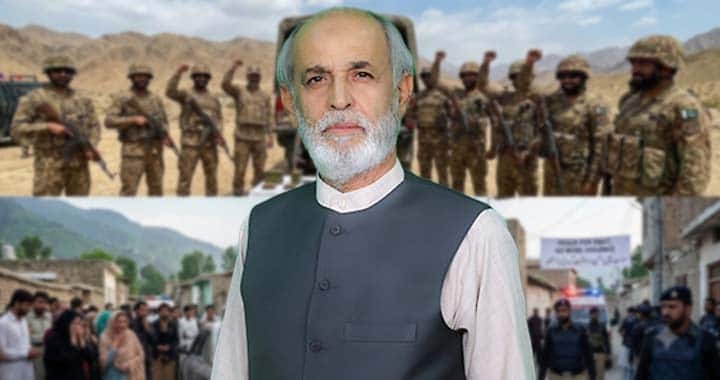
The recent operation conducted by Pakistan’s security forces in Balochistan represents an important tactical victory against militant networks operating in the province. According to official accounts, security forces successfully raided and captured a major militant hideout allegedly linked to separatist elements, which state institutions have described as “Fitna-al-Hindustan.”
The operation reportedly resulted in the recovery of a substantial cache of explosives, bomb-making material, weapons, and logistical equipment. Such recoveries are significant because they not only disrupt planned terrorist activities but also weaken the operational capabilities of militant organizations by destroying their infrastructure, supply chains, and safe havens.
The quantity of explosives recovered naturally raises important questions. Was the material intended for a large-scale suicide bombing? Were militants preparing coordinated attacks on security installations, public gatherings, or strategic infrastructure? While investigators continue to examine the evidence, the scale of the recovered material suggests that the operation may have prevented a potentially devastating terrorist campaign.
Counterterrorism experts frequently emphasize that successful intelligence-led operations often prevent attacks before they materialize. In that sense, preventing violence rarely attracts as much public attention as responding to violence after it occurs. Yet preventive operations remain among the most valuable achievements in national security.
While the operation deserves recognition, it should not obscure the broader security realities in Balochistan. The province continues to experience violence from multiple fronts, including separatist insurgencies, terrorist organizations, criminal networks, and attacks targeting security personnel and civilians alike. Political leaders from various segments of Balochistan have repeatedly criticized both provincial and federal authorities over governance issues, security management, and the overall handling of the province’s complex challenges. One successful raid, regardless of its scale, cannot by itself resolve the structural issues contributing to instability.
Counterinsurgency ultimately requires more than military operations. Sustainable peace depends upon effective governance, economic opportunity, political engagement, improved public services, and trust between citizens and state institutions. Security operations are indispensable, but they are only one component of a much broader national strategy.
Recent violence in Balochistan has once again highlighted the enormous human cost borne by ordinary Pakistanis. One particularly heartbreaking incident involved coal miners, many of whom belonged to Khyber Pakhtunkhwa, especially Shangla and Buner districts. The deaths of these workers shocked communities across the country. Equally troubling were reports criticizing the handling of the victims’ bodies during transportation back to their hometowns. Families and community leaders expressed disappointment that the deceased were allegedly transported in overcrowded vehicles without the dignity that every victim deserves.
Such incidents demonstrate that the impact of terrorism extends beyond the immediate attack itself. How governments respond after tragedies also shapes public confidence and national unity. Respect for victims, compassionate crisis management, and transparent communication remain essential components of responsible governance.
If the Balochistan operation represented hope, the tragedy in Swat represented profound sorrow. The suicide attack during the Kabal Peace March has generated an important question: Was the primary target the police, the peace demonstrators, or both? Available accounts suggest that both became victims of the same act of terrorism. The peace march was reportedly organized not by any single political party but by ordinary citizens, traders, laborers, and residents who had gathered to demand peace and an end to targeted killings, extortion, and militant violence. It reflected the frustration of local communities who have endured years of insecurity and wanted to publicly reaffirm their rejection of terrorism.
During the gathering, a suicide attacker reportedly attempted to approach a police station. Security personnel intervened, and the explosive device detonated. Regardless of the attacker’s precise target, the outcome was tragically clear: both civilians advocating peace and police officers responsible for maintaining public safety became victims. This reflects one of terrorism’s central objectives—to intimidate both the state and society simultaneously.
For many Pakistanis, particularly those who lived through the difficult years of militancy in Swat, the attack carried painful historical memories. The region once experienced prolonged militant control before extensive military operations restored state authority. Although targeted killings and sporadic attacks have continued in subsequent years, large-scale suicide bombings have become relatively uncommon. The latest attack therefore represents more than another security incident.
It challenges the perception that Swat has permanently moved beyond its darkest chapter. Even isolated high-profile attacks can have disproportionate psychological effects by undermining public confidence and discouraging economic activity, tourism, and investment. Communities that have worked hard to rebuild normal life deserve reassurance through visible improvements in intelligence, policing, and preventive security.
Among the most tragic aspects of the Swat attack was the loss of innocent civilians. Reports indicate that the death toll included police officers fulfilling their professional responsibilities, ordinary citizens participating in the peace march, and even a child. One particularly heartbreaking account described how the child’s mobile phone reportedly rang with a call from his mother moments after the explosion. Another victim was described as the only brother among five sisters. These personal stories remind us that casualty statistics never fully capture the human dimension of terrorism. Behind every number is a family permanently altered by violence.
The Swat attack also illustrates a broader pattern repeatedly observed across conflict zones. Militant organizations often target those who publicly reject extremism. Peace rallies, community leaders, educators, journalists, religious scholars opposing violence, and security personnel all represent obstacles to extremist narratives. By attacking peace demonstrations, terrorists seek not merely to kill individuals but to silence collective public resistance. Yet history consistently shows that communities refusing to surrender to fear ultimately become terrorism’s strongest opponents. The courage displayed by ordinary citizens participating in peaceful demonstrations deserves recognition and continued protection.
The incident also raises important operational questions. Security officials have acknowledged that militant elements continue to operate in certain mountainous areas surrounding Swat. If these assessments were already known, how was a suicide attacker able to reach such a significant public gathering? Was intelligence available beforehand? Were security arrangements sufficient? Were existing threat assessments adequately translated into preventive measures? These questions are not intended to assign blame prematurely but rather to strengthen future security planning. Every major terrorist incident should become an opportunity for institutional learning.
Swat is not the only district facing security concerns. Recent months have witnessed protests, peace marches, and growing public anxiety in several parts of Khyber Pakhtunkhwa, including Bannu, Tirah, Hangu, and other districts. Communities increasingly demand improved security, stronger coordination among institutions, and visible government engagement. Reports of attacks on public infrastructure, financial institutions, religious sites, and security personnel reinforce public perceptions that militant activity remains a significant challenge. Citizens naturally expect both provincial and federal governments to respond through coordinated policy, effective policing, intelligence cooperation, and sustained counterterrorism efforts. Political disagreements should never overshadow the state’s primary responsibility to protect its citizens.
Although isolated incidents do not necessarily eliminate tourism, they inevitably affect public perception. Swat has long been celebrated as one of Pakistan’s most beautiful destinations. Its economy depends significantly upon domestic tourism, hospitality, and local businesses. Even when attacks occur away from tourist centers, widespread media coverage can discourage visitors. Protecting tourism therefore requires not only physical security but also public confidence that security threats are being effectively managed.
While Pakistan confronts domestic security challenges, developments in Afghanistan deserve equally careful attention. Recent statements attributed to former Afghan Army Chief Sami Sadat suggest that organized resistance against the Taliban government may be expanding. According to these claims, former Afghan military personnel, political figures, ethnic groups, and various opposition elements are increasingly coordinating their efforts against Taliban rule. Resistance reportedly began gaining momentum in areas such as Badakhshan before extending into Baghlan and parts of northern Afghanistan.
The National Resistance Front and other opposition movements have also sought to strengthen their organizational structures. Although the precise strength of these groups remains difficult to independently verify, their growing visibility indicates that Afghanistan’s political landscape may be entering another period of transformation.
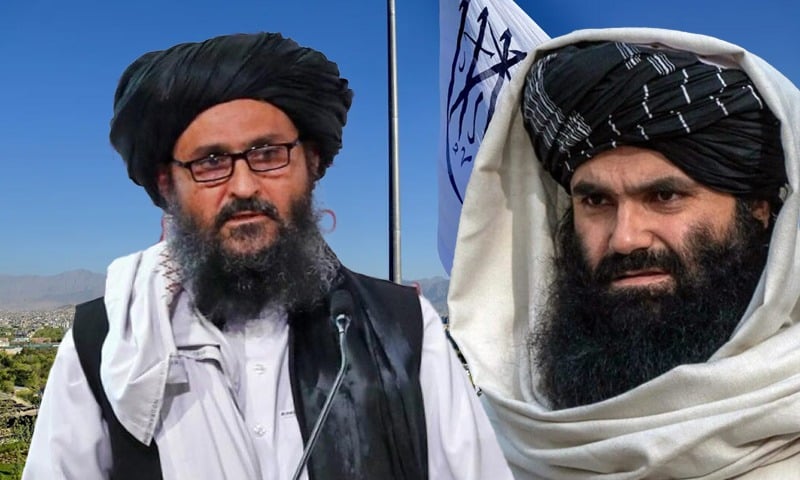
The Taliban currently face multiple pressures simultaneously. Internally, they confront governance challenges, economic hardship, humanitarian concerns, and increasing criticism from segments of Afghan society. Internationally, many governments continue to engage cautiously with Taliban authorities while expressing concerns regarding governance, human rights, economic management, and political inclusion. If organized resistance continues to expand, the Taliban could face additional military and political pressures, particularly in northern and western Afghanistan, where local dynamics differ considerably from southern regions traditionally associated with Taliban influence.
Afghanistan’s complex geography and ethnic diversity have historically complicated centralized control by any government. Whether current resistance movements evolve into a sustained nationwide challenge remains uncertain. Nevertheless, the situation warrants close observation.
Pakistan cannot view developments in Afghanistan as purely external events. The two countries share an extensive border, deep historical connections, economic relationships, refugee movements, and security concerns. Instability in Afghanistan has repeatedly affected Pakistan through refugee flows, cross-border militancy, illicit trafficking, and broader regional uncertainty. Conversely, a peaceful and stable Afghanistan contributes significantly to Pakistan’s own national security and regional economic aspirations. Therefore, Pakistan has a strong strategic interest in supporting regional stability while maintaining robust border management and counterterrorism cooperation.
The recent developments in Balochistan, Swat, and Afghanistan collectively reinforce one fundamental lesson: military success, while essential, is not sufficient by itself. Modern security challenges require integrated national strategies combining intelligence, law enforcement, judicial effectiveness, political dialogue, economic development, social resilience, and public trust. Communities must remain confident that their governments are capable of protecting them while respecting their dignity.
Victims deserve compassion. Security personnel deserve institutional support. Citizens advocating peace deserve protection. Political leaders must ensure that national security remains above partisan competition.
Pakistan today stands at a critical security crossroads. The successful operation in Balochistan demonstrates that determined intelligence-led counterterrorism efforts can significantly disrupt militant networks. However, the tragedy in Swat reminds us that terrorism continues to seek opportunities to undermine both the state and society. Meanwhile, Afghanistan’s evolving political dynamics may introduce new regional security variables with implications extending well beyond its borders.
The path forward demands resilience rather than complacency. Security victories should be consolidated through stronger governance, public confidence, institutional accountability, and regional cooperation. Every successful operation must be followed by sustained efforts to address the conditions that allow extremism to regenerate. Every terrorist attack should strengthen not weaken the national commitment to protecting peace, justice, and the rule of law.
Ultimately, the greatest measure of success will not be the number of militant hideouts destroyed or weapons recovered. It will be the ability of Pakistan and the wider region to ensure that ordinary citizens can live, work, educate their children, express their views, and march peacefully without fear.
That remains the true definition of national security and the enduring challenge that policymakers, security institutions, and society as a whole must confront together.