
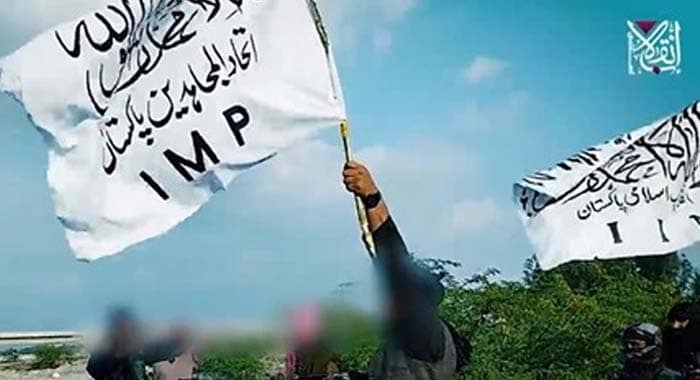
The militant landscape has entered another phase of transformation. Over the years, armed groups operating in the country have repeatedly changed their structures, alliances, narratives, and methods of warfare. The emergence of Ittehad-ul-Mujahideen Pakistan (IMP) reflects this continuing evolution a new alliance attempting to combine existing militant networks, develop a distinct identity, and establish itself as a significant actor in Pakistan’s security environment.
Formed on 11 April 2025, IMP was announced by three militant factions: Lashkar-e-Islam, the Hafiz Gul Bahadur Group, and Inqilab-e-Islami Pakistan (IIP). The alliance was presented as a united platform, bringing together groups that had previously operated separately.
Around 15 months after its formation, IMP has increasingly appeared in militant propaganda channels and operational claims, suggesting an effort to move beyond a loose alliance and project itself as an organized militant entity.
However, the rise of IMP is not simply about another militant group emerging. It reflects a wider struggle among armed organizations for influence, recruitment, recognition, and control over the militant narrative in Pakistan.
Following its creation, IMP attempted to maintain an active media presence. The organization regularly released propaganda material, including monthly reports claiming responsibility for attacks. However, between October 2025 and February 2026, a noticeable decline was observed in IMP’s propaganda output.
During this period, the group’s messaging became more limited and focused mainly on:
- Threats against police personnel.
- Training videos showing affiliated fighters.
- Operational exercises and military-style activities.
- Individual statements promoting the group’s narrative.
The reduction in propaganda activity indicated possible challenges in maintaining a consistent media structure. Unlike the period immediately after its formation, IMP stopped releasing regular monthly reports and daily attack claims became less frequent.
Still, the organization continued attempting to maintain visibility through digital platforms and selected propaganda releases.
Although IMP’s operational focus has remained concentrated inside Pakistan, some of its messaging suggests ambitions beyond national borders. On 23 June 2026, IMP, together with its central faction Inqilab-e-Islami Pakistan, released an Eid-ul-Adha propaganda video that presented broader ideological objectives. The video featured militants reciting a Pashto-language poem containing references to global militant ambitions, including historical territories such as Al-Andalus, present-day Spain.
The material also appeared to encourage foreign fighters to join IMP and IIP, indicating an effort to portray the alliance as part of a wider ideological movement rather than only a Pakistan-based militant network. This messaging reflects a common strategy among militant organizations: projecting international relevance even when their operational activity remains geographically limited.
IMP has also appeared in propaganda ecosystems associated with Al-Qaeda-linked networks. Recent publications linked to Al-Qaeda in the Indian Subcontinent (AQIS) have included references to IMP attacks alongside other groups associated with Al-Qaeda’s broader ideological network. However, no formal confirmation of an operational relationship between IMP and Al-Qaeda has been publicly established by either side.
The connection appears to be primarily visible in ideological and propaganda spaces. Further indications of ideological overlap have emerged through the Ibtal Media Telegram channel, which has long been viewed by analysts as supportive of IMP.
The channel has distributed Urdu-language material related to:
- Al-Qaeda.
- Al-Qaeda in the Indian Subcontinent.
- Ittehad-ul-Mujahideen Pakistan.
- Inqilab-e-Islami Pakistan.
While such overlap suggests ideological proximity, it does not independently confirm direct organizational control or command links. The emergence of IMP has created another layer of complexity in Pakistan’s militant environment, particularly because of its apparent competition with the banned Tehreek-e-Taliban Pakistan (TTP).
Both groups operate in overlapping areas, especially in Khyber Pakhtunkhwa, including:
- Bannu.
- North Waziristan.
- Khyber District.
In recent months, IMP has focused significant propaganda attention on attacks against police targets, particularly in Bannu. In May 2026, both IMP and TTP claimed responsibility for the same attack, highlighting the complicated relationship between the two organizations. The relationship between the groups appears to involve both competition and occasional operational overlap.
While IMP has sometimes referred to cooperation with “brother” militant groups, TTP has generally remained less open about such coordination.
Although both organizations target Pakistani security forces, their approaches appear different. IMP has attempted to distinguish itself through a stronger emphasis on:
- Drone operations.
- Sniper attacks.
- Suicide operations.
- Military-style uniforms.
- Organized formations.
This focus on technology may reflect an attempt to compensate for limitations in manpower by relying on specialized tactics. TTP, by comparison, remains a larger and more established militant organization with a broader operational history and a more traditional insurgent structure. The difference is also visible in propaganda presentation. IMP frequently highlights a more formal military image, while TTP has generally maintained a less structured appearance associated with traditional militant networks. The creation of IMP from three separate factions may therefore represent an effort to build a new identity and compete with TTP through innovation rather than numbers.
Researcher Abdul Sayed, described IMP as connected to Pakistani Taliban networks and identified Hafiz Gul Bahadur as a key figure associated with its leadership. The Hafiz Gul Bahadur network has maintained influence in North Waziristan and surrounding areas for more than two decades. Lashkar-e-Islam, another component of IMP, has historically operated in parts of Khyber District, particularly areas where militant networks have maintained influence.
According to assessments, IMP’s operational focus differs from TTP, with most activity concentrated in:
- North Waziristan.
- Bannu.
- Khyber District.
Unlike IMP, TTP has claimed attacks in major urban areas such as Peshawar and Quetta, demonstrating a wider geographical reach. According to IMP’s own claims, the group claimed responsibility for 248 attacks between March and June 2026.
The organization claimed:
- 240 attacks in Khyber Pakhtunkhwa.
- Eight attacks in Pakistan-administered Gilgit-Baltistan.
The highest number of claimed attacks was reported in:
- North Waziristan: 113 attacks.
- Khyber District: 40 attacks.
Despite statements suggesting broader ambitions, IMP’s claimed operational footprint has remained concentrated in Pakistan’s northwestern regions. This highlights a gap between ideological messaging and actual operational geography.
One of the most notable developments in IMP’s strategy has been its focus on technology-based attacks.
According to the group’s own claims, it has used:
- Drones.
- Sniper operations.
- Suicide attacks.
Between March and June 2026, sniper attacks represented the largest category of claimed operations.
During this period, IMP claimed:
- 66 sniper attacks.
- 47 drone attacks.
Monitoring of the group’s claims indicates a significant increase in drone-related propaganda. Between April 2025 and April 2026, IMP claimed at least 50 drone attacks, averaging around four claims per month. However, in only four months from March to June 2026, the group claimed 47 drone attacks, averaging nearly 12 claims per month. This shift suggests that drone warfare has become an important part of IMP’s attempt to project technological capability.
Although IMP continues to claim responsibility for suicide operations, such attacks appear to have become less central compared with drone and sniper operations. The group claimed responsibility for a major suicide attack in Bannu in May 2026, stating that 29 security personnel were killed.
In July 2026, IMP also claimed two additional suicide attacks in:
- Bannu.
- South Waziristan.
However, throughout 2026, suicide operations represented a smaller portion of its overall claimed activity.
The emergence of Ittehad-ul-Mujahideen Pakistan represents another shift in Pakistan’s evolving militant landscape. The group’s formation demonstrates how militant factions attempt to survive through alliances, new technology, digital propaganda, and competition for influence. IMP’s importance lies not only in its current operational capabilities but also in what it represents: the continued adaptation of militant organizations.
Its rivalry with TTP, focus on drones and sniper tactics, ideological messaging, and attempts to build a broader identity show that militant groups are constantly adjusting their strategies. For Pakistan’s security environment, the challenge is not limited to countering individual attacks. It also involves understanding how militant organizations merge, compete, recruit, communicate, and evolve.
IMP’s rise demonstrates that the militant landscape remains dynamic and that future security challenges will increasingly involve not only traditional insurgency but also technology-driven warfare and information battles.



