
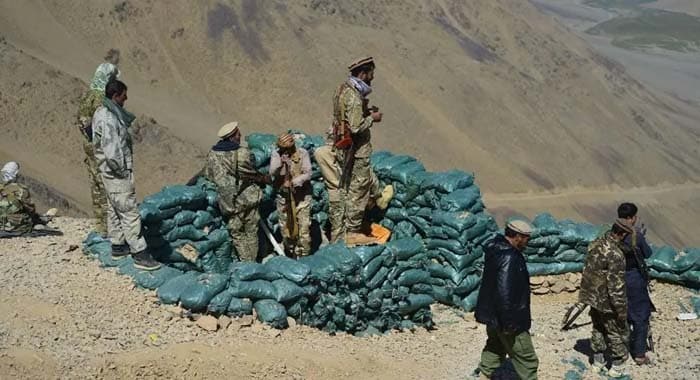
The armed opposition landscape in Afghanistan has continued to evolve since the Taliban returned to power in August 2021, with multiple anti-Taliban groups emerging across the country. However, international assessments indicate that while resistance activity has persisted in several provinces, these groups continue to face significant challenges related to coordination, resources, organizational structure, and operational capacity.
According to United Nations assessments, by September 2022, there were reported claims of at least 22 armed groups opposing the Taliban across 26 provinces of Afghanistan. Despite the presence of multiple factions, available information regarding the overall size, strength, and capabilities of these groups remains limited.
The United Nations Assistance Mission in Afghanistan (UNAMA) recorded claimed attacks in 2023 by three prominent anti-Taliban groups: the National Resistance Front (NRF), the Afghanistan Freedom Front (AFF), and the Afghanistan Liberation Movement (ALM). These activities were reported across eight provinces, reflecting continued armed opposition despite Taliban counteroperations.
However, assessments have indicated that the resistance movement has lacked the level of coordination, resources, and organizational strength required to pose a serious challenge to Taliban control nationwide.
A report by the UN Secretary-General highlighted an increase in armed opposition activities against the Taliban during 2022. However, sources later reported a decline in activity levels by armed groups during 2023, with the NRF particularly described as having weakened following Taliban military operations targeting the group.
At the same time, the Afghanistan Freedom Front (AFF) reported an increase in attacks against Taliban targets. In its latest reporting period covering 18 September to 1 December 2023, the UN Secretary-General described the AFF as the “most active group” among anti-Taliban armed organizations, while assessing the NRF as significantly less active compared with its operations in 2022.
The National Resistance Front (NRF) remains one of the most recognized anti-Taliban armed movements. The group is reportedly led from headquarters based in Tajikistan, with a significant portion of its members belonging to Afghanistan’s ethnic Tajik community.
According to the group’s own statements, the NRF originated in Panjshir Province and Andarab District of Baghlan Province following the Taliban’s takeover of Kabul in August 2021.
The NRF reportedly includes former civilians, former members of the Afghan National Defense and Security Forces (ANDSF) including numerous low-ranking former officers — as well as former political opposition members who supported the previous Islamic Republic of Afghanistan and oppose Taliban rule.
Data from the Armed Conflict Location & Event Data Project (ACLED) indicated that NRF activity, along with operations attributed to other resistance groups, has been concentrated primarily in northeastern Afghanistan. The majority of reported incidents occurred in:
- Panjshir
- Takhar
- Badakhshan
- Baghlan
- Kapisa
- Parwan
However, resistance groups were also reported to have conducted or claimed involvement in attacks across additional provinces, including:
- Kabul
- Kandahar
- Ghazni
- Kunduz
- Laghman
- Balkh
- Nangarhar
- Samangan
- Badghis
- Helmand
- Jawzjan
- Nuristan
- Paktya
- Zabul
Although the NRF has been described by some sources as the primary or most developed anti-Taliban resistance movement, assessments have highlighted uncertainty regarding its organizational structure and affiliated groups.
Reports indicate that the NRF does not have a clearly defined chain of command, and questions remain regarding the extent of coordination among different resistance factions operating under its name or broader umbrella.
International assessments have also noted that the resistance movement overall has limited resources and insufficient coordination to seriously contest Taliban control at a national level.
Available conflict monitoring data showed that neither ACLED nor the Uppsala Conflict Data Program (UCDP) recorded NRF-related events in Panjshir Province between 1 October 2023 and 12 January 2024, although incidents involving the group were recorded in other parts of Afghanistan during the same period.
Beyond the NRF and AFF, several other groups have been mentioned in reporting on armed opposition to the Taliban. These include:
- Turkestan Freedom Tigers
- National Resistance Council
- National Liberation Front of Afghanistan (NLFA)
- Unknown Soldiers of Hazaristan
- Freedom and Democracy Front
- Freedom Corps
Some of these organizations have reported regional or community-based support bases, while others have maintained limited public visibility and available information regarding their structure, membership, and operational capabilities remains scarce.
The anti-Taliban resistance landscape in Afghanistan remains fragmented, with multiple armed groups operating across different regions and pursuing opposition objectives. While the emergence of organizations such as the National Resistance Front and Afghanistan Freedom Front demonstrates continued armed opposition to Taliban rule, international assessments indicate that these groups face significant limitations in terms of unity, resources, command structures, and nationwide operational capacity.
The evolving security environment suggests that while armed resistance remains present in several provinces, particularly in northeastern Afghanistan, the ability of these groups to transform into a unified force capable of fundamentally challenging Taliban authority remains uncertain.



