The Government of Pakistan has formally conveyed its strongest protest to the Afghan Interim Authorities following conclusive evidence establishing the involvement of Afghan nationals in the recent terrorist attack on a Pakistan Rangers (Sindh) camp in Karachi. The development underscores Pakistan’s longstanding concerns regarding the continued use of Afghan territory by terrorist organizations to plan, facilitate, and launch attacks against Pakistan.
Following the completion of the initial investigation, Pakistan issued two separate diplomatic demarches to Afghanistan. The Afghan Chargé d’Affaires in Islamabad was summoned to the Ministry of Foreign Affairs, where a strong protest was formally conveyed. Simultaneously, Pakistan’s Ambassador to Afghanistan, Ambassador Ubaid-ur-Rehman Nizamani, delivered a similar demarche to the Afghan Ministry of Foreign Affairs in Kabul.
The coordinated terrorist assault on the Pakistan Rangers (Sindh) camp took place on Saturday when militants affiliated with Jamaat-ul-Ahrar, an India-backed terrorist proxy, attempted to storm the installation after detonating an explosive device at the main entrance. The attackers sought to breach the camp’s perimeter; however, the swift and resolute response of Pakistan Rangers successfully thwarted the assault before the terrorists could achieve their objective.
During the fierce engagement, three personnel of Pakistan Rangers (Sindh) embraced martyrdom in the line of duty, while four others sustained injuries defending the nation. The security forces eliminated three terrorists on the spot and apprehended one attacker alive despite his injuries.
The captured terrorist identified himself as Usman Ali, a resident of Jalalabad in Afghanistan’s Nangarhar Province. During preliminary interrogation, he disclosed that he was a member of Jamaat-ul-Ahrar and confirmed that the attack was carried out alongside three other militants identified as Abdul Hadi, Janan, and Umar Farooq. He further confessed that all members of the group had received terrorist training inside Afghanistan, including instruction in the preparation of suicide jackets and specialized militant operations under an instructor identified as Umar Qari.
The confession provides further evidence supporting Pakistan’s position that Afghan territory continues to be exploited by terrorist organizations for orchestrating attacks against Pakistan. The Government of Pakistan has consistently urged the Afghan Interim Authorities to fulfill their international obligations by ensuring that Afghan soil is not used by terrorist groups to threaten the security of neighbouring countries.
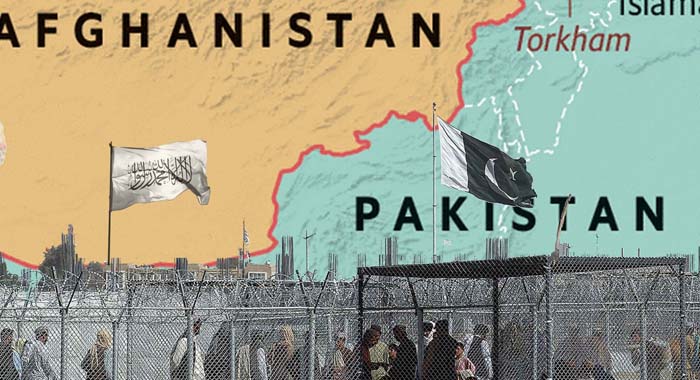
In response to credible intelligence regarding the presence of terrorist infrastructure across the border, Pakistan’s security forces conducted a successful intelligence-based ground operation along the Pakistan-Afghanistan border in Bajaur, followed by precisely calibrated strikes targeting terrorist hideouts and safe havens used by Jamaat-ul-Ahrar and Fitna al Khawarij. The operation resulted in the elimination of twenty-nine terrorists, dealing another significant blow to networks attempting to destabilize Pakistan.
Pakistan reiterates that its actions are solely directed against terrorist elements and their infrastructure and are undertaken in accordance with the inherent right of self-defence and the responsibility to safeguard its citizens from cross-border terrorism.
The Government of Pakistan notes with concern that despite overwhelming evidence, including the arrest and confession of an Afghan national directly involved in the Karachi attack, the Afghan authorities have yet to provide a credible response regarding the continued presence and activities of terrorist organizations operating from Afghan territory. Pakistan has repeatedly emphasized that meaningful diplomatic engagement requires concrete, verifiable, and sustained action to dismantle terrorist sanctuaries and prevent Afghan territory from being used against Pakistan.
Pakistan remains committed to peaceful relations with Afghanistan based on mutual respect, sovereign equality, and non-interference. However, the protection of Pakistan’s national security remains paramount, and any threat emanating from across its borders will be addressed with resolve and in accordance with international law.
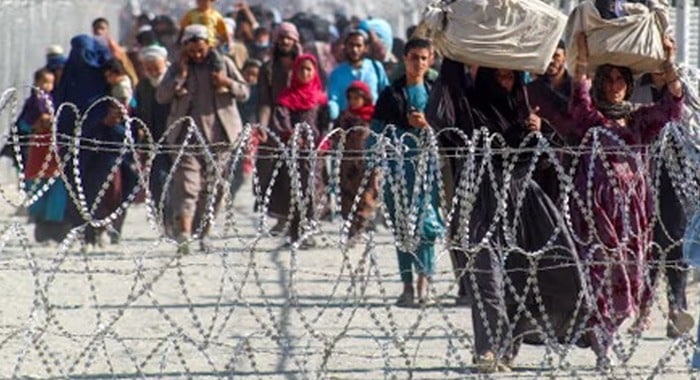
Separately, the Ministry of Interior has directed all provincial governments, the administrations of Azad Jammu and Kashmir, Gilgit-Baltistan, and Islamabad Capital Territory, as well as all law enforcement agencies, to intensify the implementation of immigration laws concerning Afghan nationals residing illegally in Pakistan.
In accordance with the directive, effective 10 July 2026, any Afghan national found residing in Pakistan without a valid visa shall be subject to immediate legal action, including arrest and deportation in accordance with the law. Relevant authorities have also been instructed to submit daily reports detailing enforcement actions, arrests, and repatriation efforts to ensure effective implementation of the policy.
Pakistan remains unwavering in its determination to eliminate terrorism in all its forms and manifestations. The Armed Forces, law enforcement agencies, and intelligence institutions will continue to take decisive and coordinated action against terrorist organizations, their facilitators, and supporters, while safeguarding the country’s sovereignty, territorial integrity, and the security of its citizens.
The sacrifices of the martyrs who laid down their lives in defence of the nation will never be forgotten. Their courage and commitment continue to inspire Pakistan’s unwavering resolve to defeat terrorism and preserve lasting peace and stability.