
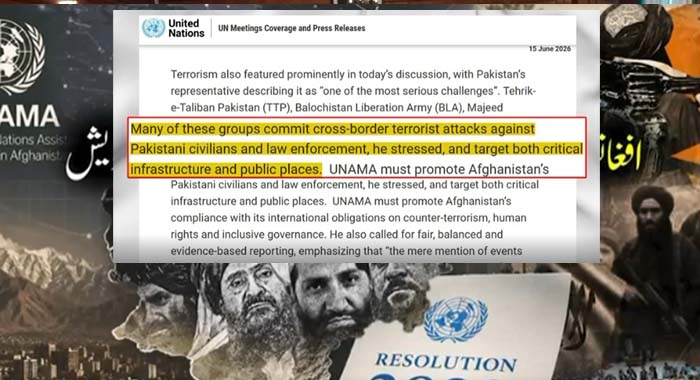
Council extends UNAMA mandate until 17 June 2027; member states emphasize prevention of cross-border terrorism and protection of human rights
The United Nations Security Council has expressed grave concern over the continued presence and activity of terrorist groups operating from Afghan territory, highlighting the growing threat posed to regional and international peace and security.
During its latest session, the Council underscored that the presence of terrorist organizations in Afghanistan, along with allegations of their facilitation and safe havens, remains a matter of serious international concern. Member states reiterated the urgent need for effective action to prevent Afghan soil from being used for terrorist activities against other countries.
The Security Council adopted a resolution extending the mandate of the United Nations Assistance Mission in Afghanistan (UNAMA) until 17 June 2027, reaffirming the UN’s continued engagement in supporting peace, stability, governance, and humanitarian assistance in the country.
Pakistan’s representative, addressing the Council, highlighted the persistent threat of cross-border terrorism emanating from Afghanistan. He drew attention to the activities of terrorist organizations, including Fitna al-Khawarij and Fitna al-Hindustan, stating that such groups continue to operate from Afghan territory and are involved in planning and facilitating attacks across the border.
The United States Permanent Representative also raised concerns regarding the Taliban authorities, emphasizing the need to fulfill counterterrorism obligations, end practices of hostage diplomacy, and ensure respect for the rights of women and girls in Afghanistan.
Similarly, the Ambassador of Liberia urged the Afghan authorities to prevent the use of their territory by terrorist organizations, stressing that Afghanistan must not become a source of instability for neighboring states or the broader region.
The acting Afghan representative, while addressing the Council, condemned recent incidents in Herat involving protests and reported use of force, and expressed concern over the prevailing situation related to women’s rights in the country.
According to international experts, the Taliban authorities had previously committed in the Doha Agreement to ensure that Afghan territory would not be used against any country. However, analysts note that the current situation appears to contradict those commitments, raising questions about implementation and compliance.
Experts further observe that the Taliban administration has not developed a comprehensive political framework to address internal governance challenges and continues to face criticism for relying on forceful measures to suppress dissent and public protests.
The discussions at the Security Council reflect growing international concern over Afghanistan’s security environment, governance structure, and its implications for regional stability, particularly in relation to transnational terrorism and human rights conditions.
Member states reiterated the importance of collective international efforts to address terrorism, strengthen regional cooperation, and ensure that Afghanistan does not become a safe haven for extremist groups threatening global peace and security.



