
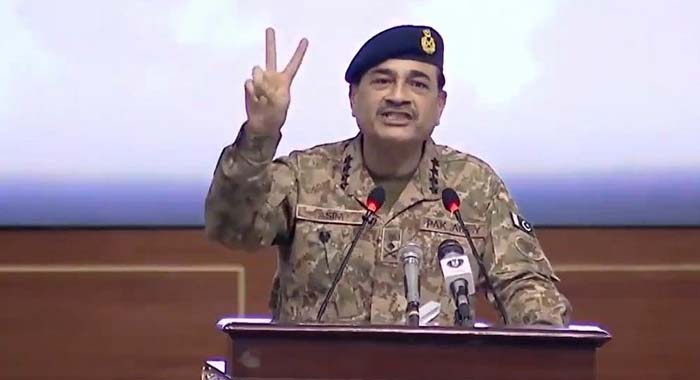
A senior security official reaffirmed Pakistan’s unwavering commitment to regional peace, stability, and constructive engagement, emphasizing that the country’s civil and military leadership continues to pursue policies guided by strategic foresight, national responsibility, and the broader interests of the Muslim Ummah.
Addressing members of the media, the official stated that Pakistan’s leadership remains focused on promoting harmony and preventing conflict across the region, rejecting narrow or short-term considerations in favor of long-term peace and stability.
“Pakistan’s civil and military leadership is driven by a vision that transcends immediate interests. Our efforts are directed toward regional stability, peace, and the collective well-being of the Muslim Ummah,” the official said.
The official highlighted Pakistan’s recent diplomatic initiatives and consultations with key regional and international stakeholders, noting that these efforts played a significant role in preventing a potentially devastating conflict that could have destabilized the entire region.
He credited the leadership, strategic foresight, and diplomatic engagement of Field Marshal Asim Munir, alongside the cooperation of partner nations, for helping avert a crisis that carried serious implications for regional and global security.
Describing the achievement as a triumph of wisdom, restraint, and strategic statecraft, the official remarked that the prevention of conflict represented a rare example of a victory secured without warfare.
“A war avoided through foresight and diplomacy is among the highest forms of strategic success,” he stated.
He emphasized that diplomatic initiatives of such sensitivity require confidentiality, responsibility, and disciplined engagement, noting that Pakistan would continue to act as a responsible stakeholder committed to peace and stability.
The official further acknowledged the constructive role played by several Muslim countries, particularly Saudi Arabia, whose leadership, restraint, and commitment to dialogue contributed significantly to preserving regional peace and preventing a broader confrontation.
Addressing questions regarding water security, the official reiterated that water remains a vital national interest and a cornerstone of Pakistan’s economic and social well-being. Referring to the National Security Committee’s declaration of April 24, 2026, he emphasized that Pakistan would employ the full spectrum of national power to safeguard its water rights and national interests.
“Pakistan’s agriculture, food security, and economic stability are deeply connected to water resources. Protecting these interests remains a national priority,” he said. The official noted that Pakistan has launched an extensive diplomatic and legal response to challenges related to the Indus Waters Treaty while simultaneously focusing on long-term reforms in water conservation, storage capacity, and regulatory mechanisms.
He stressed that improved water management, enhanced storage infrastructure, and sustainable conservation policies are essential components of Pakistan’s future strategy.
The senior official reaffirmed Pakistan’s principled position on the Jammu and Kashmir dispute, describing it as a matter that remains central to regional peace and stability. He emphasized that development projects, subsidies, administrative measures, or demographic changes cannot diminish the aspirations of the Kashmiri people or replace their internationally recognized right to self-determination.
“The sentiments, identity, and aspirations of the Kashmiri people cannot be altered through administrative measures or demographic engineering,” he said. The official further alleged that efforts to create instability in Azad Jammu and Kashmir are intended to divert attention from developments in Indian-administered Kashmir.
Discussing recent developments in Azad Jammu and Kashmir, the official stated that Pakistan and the Government of Azad Jammu and Kashmir have consistently prioritized dialogue, consultation, and democratic engagement in addressing public concerns. He noted that authorities pursued negotiations over an extended period and facilitated multiple avenues for peaceful resolution.
According to the official, certain elements operating under the cover of public activism eventually resorted to violence, vandalism, and actions contrary to the law.
The state, he said, remains committed to democratic principles but will not permit any individual or group to challenge constitutional authority through violence or coercion. “No individual, organization, or faction can be permitted to impose its will through force. The rule of law will prevail, and all actions will be taken strictly within the legal framework,” he stated.
Providing an overview of Pakistan’s security environment, the official revealed that security forces and law enforcement agencies conducted more than 32,000 intelligence-based and operational activities against terrorist elements during the current year. These operations, he said, reflect Pakistan’s comprehensive and sustained commitment to eliminating terrorism and protecting its citizens.
The official paid tribute to the sacrifices of Pakistan’s security personnel, acknowledging the courage and dedication of those who laid down their lives in defense of the nation. “Our security forces continue to demonstrate extraordinary resilience, professionalism, and commitment in the fight against terrorism,” he said.
The official reiterated Pakistan’s longstanding concerns regarding the use of Afghan territory by terrorist groups targeting Pakistan. He stated that terrorist organizations, including Fitna al-Khawarij and Fitna al-Hindustan, continue to pose serious threats to Pakistan’s national security. According to the official, Pakistan has consistently sought cooperation and engagement to address these concerns through diplomatic channels. However, persistent security challenges and the continued presence of terrorist sanctuaries have complicated efforts to achieve lasting solutions.
Pakistan remains committed to protecting its sovereignty, citizens, and national interests while pursuing regional peace through responsible engagement and effective counterterrorism measures.
Addressing the situation in Balochistan, the official rejected attempts to portray the province through what he described as misleading narratives promoted by anti-Pakistan elements. He emphasized that despite security challenges, economic activity and public life continue across the province, with thousands of vehicles traveling daily on Balochistan’s extensive road network.
The Government of Balochistan, he noted, is implementing reforms focused on transparent resource allocation, improved governance, and accelerated development projects aimed at improving the lives of local communities. Particular emphasis was placed on strategic initiatives such as the Reko Diq project and other mining ventures, which were described as transformative opportunities capable of generating employment, investment, and long-term prosperity for the people of Balochistan.
Commenting on Pakistan’s defense budget, the official noted that while allocations have increased, inflationary pressures have significantly affected their real value. He explained that the majority of defense expenditures are directed toward essential requirements, including personnel welfare, operational readiness, maintenance, and logistics.
These expenditures, he added, contribute directly to economic activity and support national stability. Despite fiscal constraints, Pakistan remains committed to maintaining a credible defense posture, modernizing its capabilities, and ensuring the preparedness of its armed forces to address evolving security challenges.
Concluding the briefing, the senior security official reaffirmed Pakistan’s commitment to peace, regional cooperation, national sovereignty, and economic development. He emphasized that Pakistan will continue to pursue diplomacy wherever possible, while retaining the capability and resolve necessary to defend its interests, protect its citizens, and counter all threats to national security.
“Pakistan’s vision remains rooted in peace, stability, dialogue, and progress. We will continue to work with sincerity and determination to secure a safer, stronger, and more prosperous future for our people and for the region.”



