Afghanistan is once again showing signs of political and security turbulence. Recent explosions in Kabul, reports of attacks on Taliban positions in several provinces and the emergence of new resistance formations, particularly in Badakhshan, have generated speculation that the Taliban’s hold over Afghanistan could be challenged. But the situation is more complicated than simply declaring that the Taliban government is about to collapse.
There is not one resistance group operating against the Taliban. There are several. Among the better-known figures and formations are groups associated with Sami Sadat, Amrullah Saleh and Yasin Zia, while the United Front emerging in Badakhshan and other rebellious formations have also added to the picture. Of these, the resistance associated with Yasin Zia appears to have comparatively greater influence and roots among sections of the population.
Yet, despite these developments, I do not believe the Taliban’s interim government faces an immediate existential threat.
The principal reason is Afghanistan’s ethnic and political structure. Pashtuns constitute the majority of Afghanistan’s population and have historically dominated the country’s political leadership. Non-Pashtun communities, particularly Tajiks, Uzbeks and Hazaras, have had a major presence in the bureaucracy, administration and educated classes, but political power has traditionally remained concentrated among Pashtun rulers.
This distinction matters enormously when we examine the current resistance.
The Resistance Has Not Yet Reached the Pashtun Belt
There is a natural ethnic and social relationship between Pashtuns on the Pakistani and Afghan sides of the border, but Afghanistan cannot be viewed only through a Pashtun lens. Tajikistan lies along Afghanistan’s northern frontier, Uzbekistan is another important regional factor, and large Hazara populations are connected with areas beyond Afghanistan’s borders. Iran is also a major regional factor with its own ethnic and strategic interests.
So far, we have not witnessed a comparable resistance movement in Afghanistan’s principal Pashtun belt. That is the critical weakness of the present opposition to the Taliban.
If resistance does not emerge from areas such as Kandahar, Nangarhar, Khost and the wider Loya Paktia region, I do not see the current northern resistance producing a fundamental change in Kabul. Historically, major political movements originating only in the northern and non-Pashtun areas have struggled to overturn Afghanistan’s established power structure.
The Taliban understand this ethnic and political divide, and they benefit from it.
That does not mean nothing is changing. Something important is happening around Afghanistan. Pakistan has reportedly invited some former members of the NRF and other Afghan political and resistance circles to Islamabad. At the same time, there are indications of an understanding involving Tajikistan, Uzbekistan and Turkey. These countries also share ethnic and historical connections with some of the communities represented in the northern resistance.
Iran and other regional actors are also factors that cannot be ignored. More recently, according to reports, European countries including Germany and France have begun paying greater attention to developments surrounding Afghanistan’s opposition groups.
This means the resistance question is no longer purely an Afghan internal matter. Regional and international interests are beginning to intersect with it.
The developments of the past several days are also significant. Alongside the two reported explosions in Kabul, attacks against Taliban positions have been reported in seven Afghan provinces. The details surrounding some of these incidents remain unclear, but the pattern indicates that the Taliban are facing security challenges in multiple areas.
At the same time, the Taliban’s international position remains difficult. Apart from a limited number of countries maintaining engagement with Kabul, the Afghan government has struggled to secure broad political acceptance or influence internationally.
The growing concern over Al-Qaeda and particularly Daesh, or ISKP, is another important dimension. Discussions at the UN Security Council have increasingly focused on the threat posed by terrorist organizations operating from or around Afghanistan. The concern is no longer limited to Pakistan. It is increasingly being viewed as a regional and international security problem.
China, too, has repeatedly expressed concern about terrorism and the security environment surrounding Afghanistan. The protection or continued presence of international terrorist organizations inside Afghanistan therefore creates a direct contradiction between Kabul’s conduct and the interests of several regional powers.
China Is Not Mediating Between Pakistan and Afghanistan
There has also been considerable speculation that China has begun mediating between Pakistan and Afghanistan. I do not see evidence of such a mediation process.
This appears to be a claim generated by wishful thinking within Pakistan’s diplomatic circles rather than an established diplomatic reality.
China has certainly held discussions with Pakistan, and whenever Pakistan and China discuss regional affairs, Afghanistan, terrorism, regional stability and border security naturally form part of the conversation. But that does not automatically constitute Chinese mediation between Islamabad and Kabul.
China itself has faced terrorism in the past, and its economic engagement with Pakistan, including CPEC, is closely connected with its wider strategic and security interests. It would therefore be difficult to understand why Beijing would simply support an Afghan government whose policies or alleged proxies are seen as affecting Chinese interests in Balochistan, Khyber Pakhtunkhwa and Gilgit-Baltistan.
There has been no meaningful Pakistan-Afghanistan engagement after the informal and non-governmental talks facilitated through Turkey, which Pakistan later boycotted. Claims that China has now taken over the mediation process should therefore be treated with considerable caution.
KP’s Security Challenge Is Intensifying
The same security question is visible much closer to home.
Different operations are underway in Khyber Pakhtunkhwa and Balochistan, but their intensity has increased considerably. In the past week alone, around 80 terrorists were reportedly eliminated in KP, with operations and clashes reported in districts including Lakki Marwat and Dir, while commanders have also been targeted.
Swat has faced its own serious security concerns, including the reported attack in Kabal and renewed concerns about terrorist recruitment.
Against this backdrop, the provincial government’s political priorities deserve scrutiny. Security cannot be treated as a secondary issue when terrorism is expanding across multiple districts.
The recent political statements coming from the provincial leadership, particularly the speech delivered by Chief Minister Sohail Afridi in Swat, were, in my view, more political point-scoring than a coherent security policy. At a time when police themselves have raised concerns about weapons, equipment and operational capacity, the province needs planning, resources and institutional coordination rather than political confrontation.
The visit of the Corps Commander to the KP Police Headquarters during Police Martyrs Day also carried a broader message. It demonstrated that the security establishment increasingly recognizes that the deteriorating security situation in KP cannot simply be left to the provincial police apparatus or treated as a matter of provincial politics.
The scale and intensity of operations are likely to increase further.
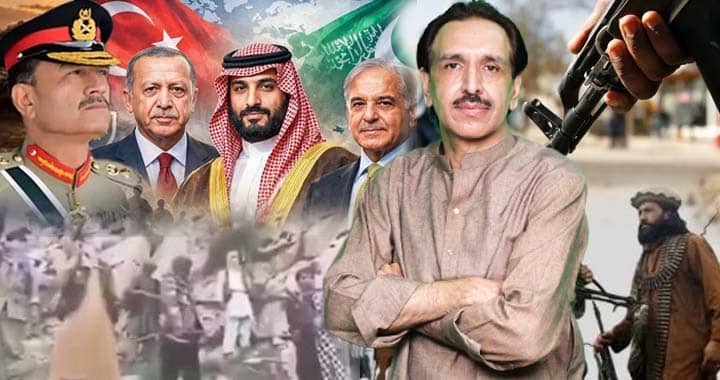
Pakistan’s regional position has also changed. Developments involving Turkey, Pakistan and Saudi Arabia, alongside the wider international concern over terrorism emanating from Afghanistan, have increased Pakistan’s diplomatic and strategic importance.