
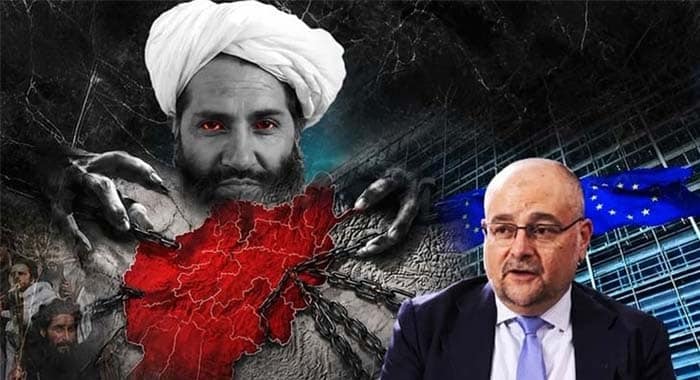
The European Union’s Special Representative for Afghanistan, Jil Bratran, has acknowledged the presence of multiple terrorist organizations operating from Afghan soil, stating that the situation is no longer an internal matter but a serious threat to peace and security across the entire region.
In an interview with Amu TV, the EU envoy emphasized that the existence of various international terrorist networks in Afghanistan, including elements referred to as Fitna al-Khawarij, poses significant security risks not only to neighboring countries but also to global stability.
She noted that Pakistan, while facing persistent and intensified terrorist attacks, cannot be expected to remain passive in the face of cross-border militancy. The EU official further expressed that Pakistan’s right to defend itself against terrorism emanating from Afghan territory is widely acknowledged in the context of international security concerns.
Jil Bratran specifically identified ISIS-Khorasan as one of the most serious global terrorist threats emerging from Afghanistan, underscoring that its presence continues to alarm the international community. She added that concerns regarding terrorist sanctuaries in Afghanistan have already been raised by major global powers, including Russia, China, the United States, and the European Union.
Security analysts note that repeated concerns expressed by international actors regarding terrorism originating from Afghan territory reinforce the growing consensus on the need for coordinated regional and global action. According to experts, the EU’s acknowledgment of Pakistan’s defensive position further strengthens the argument that counterterrorism efforts in the region are increasingly being recognized at the international level.
The statement reflects ongoing global apprehensions about militant safe havens and highlights the importance of collective strategies to address the evolving threat landscape in South and Central Asia.
Authorities and observers continue to stress that sustainable peace in the region will depend on effective measures against terrorist networks operating across borders and stronger international cooperation in counterterrorism efforts.



