
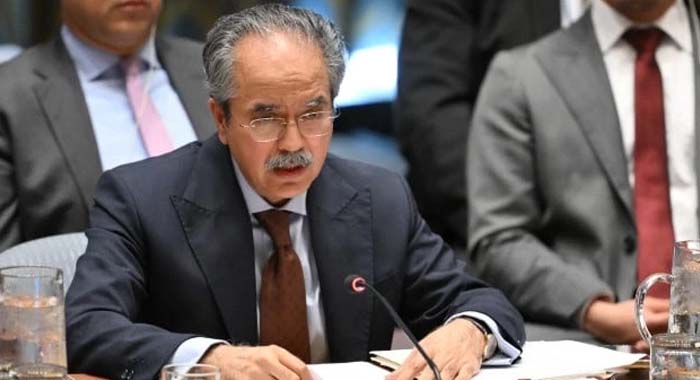
Pakistan has expressed deep concern before the United Nations Security Council over the continued presence and activities of terrorist organizations operating from Afghan territory, warning that certain elements within the Taliban are actively cooperating with these groups and providing them with safe havens.
Addressing the United Nations Security Council, Pakistan’s Permanent Representative to the United Nations, Ambassador Asim Iftikhar Ahmad, highlighted the growing threat posed by terrorist networks operating inside Afghanistan and underscored the urgent need for coordinated international action to prevent the country from becoming a launchpad for regional and global terrorism.
Ambassador Ahmad stated that Pakistan remains gravely concerned by credible reports indicating that some elements within the Taliban are actively collaborating with several terrorist organizations. He emphasized that these groups continue to enjoy freedom of movement, operational space, and safe havens within Afghanistan, posing a direct threat to regional peace, security, and stability.
“It is very worrying that some elements within the Taliban are actively collaborating with several terrorist groups and providing them safe haven,” Ambassador Ahmad told the Security Council.
The Pakistani envoy identified several terrorist organizations that continue to operate with impunity from Afghan territory, including the Tehreek-e-Taliban Pakistan (TTP), the Balochistan Liberation Army (BLA), the Majeed Brigade, Daesh (Islamic State), Al-Qaeda, and the East Turkestan Islamic Movement (ETIM).
According to Ambassador Ahmad, many of these groups have been responsible for orchestrating cross-border terrorist attacks targeting Pakistani civilians, security personnel, public places, and critical national infrastructure. He stressed that these attacks have resulted in significant loss of life, undermined regional security, and hindered efforts toward sustainable peace and economic development.
Pakistan reiterated that terrorism remains one of the most serious threats to international peace and security and called upon the Afghan authorities to fulfill their international commitments and obligations by ensuring that Afghan soil is not used by terrorist entities to threaten neighboring countries or conduct attacks across borders.
The ambassador further emphasized that the international community must remain vigilant regarding the evolving security landscape in Afghanistan. He noted that the continued presence of terrorist groups not only threatens Pakistan but also poses risks to the wider region and beyond.
Referring to the mandate of the United Nations Assistance Mission in Afghanistan (UNAMA), Ambassador Ahmad underscored the critical role of the mission in supporting international efforts aimed at promoting peace, stability, and counterterrorism objectives within Afghanistan.
He urged UNAMA to continue working in accordance with its Security Council mandate to help create conditions that prevent terrorist groups from exploiting Afghan territory as a sanctuary for planning, financing, facilitating, or launching attacks against other nations.
Pakistan reaffirmed its unwavering commitment to combating terrorism in all its forms and manifestations and called for enhanced international cooperation, intelligence sharing, and collective action to address the threats emanating from terrorist organizations operating within Afghanistan.
The statement reflects Pakistan’s longstanding position that lasting peace and stability in Afghanistan are essential for regional security and prosperity. Islamabad continues to support international efforts aimed at fostering an inclusive, peaceful, and stable Afghanistan while emphasizing the importance of preventing terrorist groups from finding refuge or operational space within the country.
As the Security Council continues to assess developments in Afghanistan, Pakistan urged all stakeholders to prioritize counterterrorism measures, strengthen regional cooperation, and ensure full implementation of relevant United Nations Security Council resolutions designed to eliminate terrorist threats and promote sustainable peace.



