
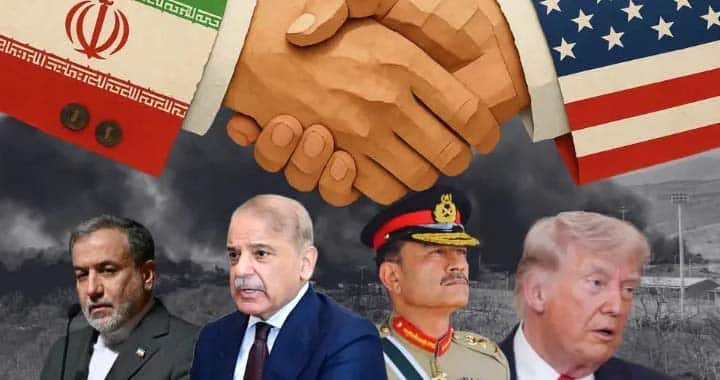
Iranian media outlets have reported details of a proposed understanding between Iran and the United States that, if confirmed, could mark a significant shift in regional geopolitics and long-standing tensions. The reported framework outlines wide-ranging political, military, and economic arrangements; however, these claims have not yet been independently verified by international authorities or officially confirmed by either government.
According to Iranian media reports, the proposed arrangement includes provisions aimed at de-escalation across multiple conflict zones and a phased normalization of certain security and economic measures. The reported details suggest an ambitious and comprehensive framework addressing military positioning, sanctions relief, maritime security, and financial unfreezing.
The reported understanding includes an immediate and permanent ceasefire across multiple regional fronts, including Lebanon and other active zones of tension. It is further claimed that all naval blockades would be lifted within 30 days of the signing of the agreement, alongside a gradual reduction of military deployments in sensitive border areas.
Iranian media reports also suggest that U.S. forces would withdraw from positions near Iranian borders within a 30-day timeframe, as part of broader de-escalation commitments.
One of the most notable reported elements includes the reopening of the Strait of Hormuz within 30 days, with security responsibilities transitioning to Iranian authorities under the proposed framework. If implemented, such a development would carry significant implications for global energy markets and maritime security architecture in the Gulf region.
The reported framework further includes extensive economic provisions, including the suspension of U.S. sanctions on Iranian oil and petrochemical exports. According to these reports, a broader economic recovery package worth approximately USD 300 billion may be proposed by the United States and its allies to support Iran’s economic stabilization and reintegration.
Additionally, it is claimed that all primary and secondary sanctions imposed by the United States and the United Nations Security Council on Iran would be lifted under the agreement.
Iranian media reports also indicate that a portion of frozen Iranian assets, estimated at approximately USD 24 billion, would be released, with an initial tranche of USD 12 billion made available prior to final negotiations.
The reported arrangement includes Iran’s continued commitment to the Nuclear Non-Proliferation Treaty (NPT) and a reaffirmation that it would not pursue nuclear weapons capability.
In return, it is claimed that the United States would commit to refraining from imposing new sanctions on Iran moving forward, signaling a potential long-term framework for economic and diplomatic normalization.
If confirmed, these reported developments would represent one of the most significant diplomatic shifts in recent years, potentially reshaping security dynamics across the Middle East, global energy markets, and international sanction regimes.
However, it is important to emphasize that these details are currently based on Iranian media reporting and have not been independently verified by neutral international sources or officially confirmed by the governments involved. Diplomatic negotiations of this scale are typically complex, subject to revision, and often evolve significantly before any formal agreement is reached.
While the reported framework outlines a far-reaching vision of de-escalation and economic reintegration, the absence of official confirmation means that these claims should be treated with caution. The international community continues to closely monitor developments as diplomatic channels between Tehran and Washington remain highly sensitive and fluid.



