
As Afghanistan approaches the fifth anniversary of the Taliban’s return to power, growing concerns persist over the country’s political trajectory, human rights situation, and regional security implications. Despite extensive international documentation of developments in Afghanistan since 2021, the global response remains divided, with some states moving toward engagement and normalization while others continue to raise alarm over deteriorating conditions inside the country.
Over the past five years, the Taliban administration has expanded its diplomatic footprint, with several regional and international actors engaging the group to varying degrees. While formal recognition remains limited, diplomatic missions have in some cases been transferred to Taliban-appointed representatives, reflecting an evolving and complex pattern of engagement across the region.
At the same time, regional security dynamics have shifted significantly. Analysts and observers note that initial expectations held by some neighboring states that the Taliban’s return might stabilize Afghanistan have been replaced by increasing concern over cross-border insecurity and rising threats to regional stability.
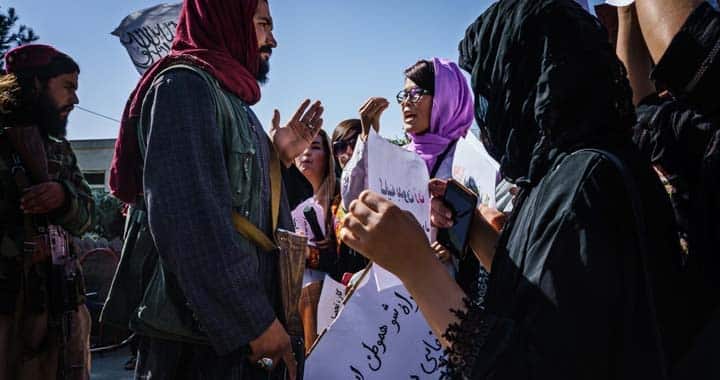
Serious concerns continue to be raised regarding the human rights situation within Afghanistan, particularly in relation to women and vulnerable communities. Reports from multiple sources indicate that women face severe restrictions on education, employment, freedom of movement, and participation in public life.
Public figures and international voices, including remarks attributed to actress and UN advocate Meryl Streep during a United Nations forum, have drawn global attention to the severity of restrictions faced by Afghan women, emphasizing the scale of gender-based exclusion from public life.
In addition, multiple reports allege that restrictive regulatory measures have intensified over time, including limitations on women’s mobility and dress codes enforced under strict interpretations of religious directives. These measures have been accompanied, according to reports, by arrests and detentions in various parts of the country.
Allegations have also emerged regarding cases of violence and abuse in detention settings, including claims of mistreatment of women and girls during enforcement operations. These reports remain difficult to independently verify in full but continue to raise concern among humanitarian observers and rights organizations.
Recent incidents in western Afghanistan, including the Jabr-eil district of Herat province, have drawn further attention. According to accounts cited by local sources and media reports, peaceful demonstrations involving women and men reportedly took place in response to enforcement measures related to dress codes.
These reports allege that security forces responded with force, resulting in casualties and injuries, including among minors. Following the incidents, a number of arrests were reportedly made, with concerns expressed regarding the whereabouts and legal status of those detained.
Human rights organizations and United Nations officials have expressed concern over such developments, though local communities report limited visibility into subsequent legal or judicial processes
Concerns have also been raised regarding the treatment of ethnic and religious minorities, including Hazaras, Shiites, and other communities. Reports suggest that some groups face discrimination, social exclusion, and targeted enforcement actions under security or administrative pretexts.
These allegations include claims of arbitrary detention, disproportionate use of force, and restrictions on freedom of expression and movement in certain regions. Such reports continue to be a source of tension and fear among affected communities.
Afghanistan’s security environment remains a major point of concern for regional and international stakeholders. Various international assessments and security reports have suggested the presence of multiple armed and extremist groups operating within the country.
Some estimates referenced in open-source intelligence reports indicate that a significant number of militant organizations may be active in Afghanistan, raising concerns about potential safe havens and transnational security risks. These claims, however, vary widely depending on source methodology and remain subject to ongoing debate within the international security community.
Reports have also emerged regarding the extraction and management of natural resources in several provinces, including allegations that revenues from certain mining activities are being controlled by entities linked to the governing authorities.
In provinces such as Badakhshan, local reports suggest tensions between communities and administrative authorities over resource extraction practices, including allegations of detention and coercive enforcement in mining areas.
The international response to developments in Afghanistan has remained fragmented. While some states have expanded diplomatic engagement with the Taliban administration, including acceptance of diplomatic representatives or operational-level coordination, others continue to withhold formal recognition.
This evolving engagement reflects broader geopolitical calculations in the region, including security concerns, migration pressures, and economic interests.
Pakistan, in particular, has experienced a notable shift in its relationship with the Taliban, moving from expectations of strategic alignment to increased tension and security challenges along its border regions.
As Afghanistan marks nearly five years under Taliban rule, the situation remains highly complex and deeply contested. Supporters of increased engagement argue that diplomatic interaction is necessary for stability and humanitarian access, while critics warn that normalization risks entrenching governance practices associated with severe human rights restrictions and regional insecurity.
The central question raised by affected communities and observers alike remains unresolved: what combination of diplomatic, humanitarian, and security measures can effectively address the ongoing crisis while preventing further deterioration of conditions inside Afghanistan and beyond?
The evolving situation continues to demand close international attention, coordinated policy responses, and sustained humanitarian concern.



