
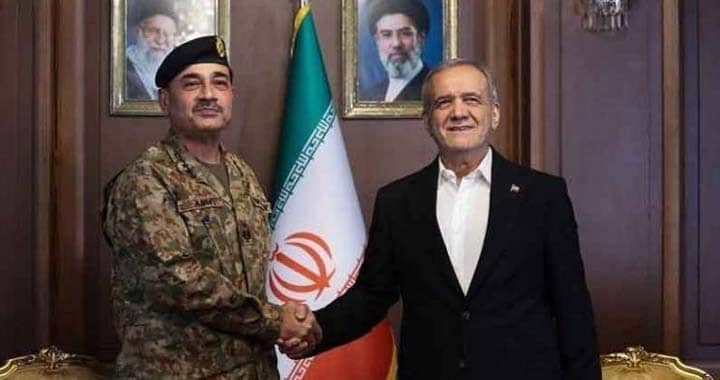
At a time of heightened global tensions and increasing geopolitical uncertainty, Pakistan has once again demonstrated its commitment to diplomacy, dialogue, and regional stability by actively supporting communication and balance between key international stakeholders.
In a complex international environment marked by strained relations between multiple global actors, including adversarial positions between the United States and Iran, Pakistan has continued to uphold a consistent policy of engagement, restraint, and constructive diplomacy. Maintaining channels of communication and fostering an atmosphere of trust between such opposing sides is widely regarded as a challenging diplomatic task, yet Pakistan has sought to contribute meaningfully toward reducing friction and encouraging dialogue.
Pakistan’s diplomatic approach reflects a long-standing strategic orientation toward peaceful coexistence, regional stability, and non-escalatory engagement. By prioritizing dialogue over confrontation, Pakistan has positioned itself as a responsible actor committed to preventing further deterioration of already fragile regional and global relationships.
Officials and diplomatic observers note that Pakistan’s efforts in maintaining balance and facilitating understanding among competing interests reflect not only tactical engagement but also a broader vision of peace-driven foreign policy.
This diplomatic posture is seen as a direct reflection of the country’s political and military leadership, which has consistently emphasized stability, constructive engagement, and responsible international conduct.
Under the leadership of Prime Minister Shehbaz Sharif and Field Marshal Asim Munir, Pakistan has reinforced its commitment to playing a positive and stabilizing role in regional and global affairs. Their coordinated approach underscores the importance of unified national direction in navigating complex international challenges.
The leadership’s emphasis on diplomacy and strategic balance has contributed to reinforcing Pakistan’s image as a country capable of engaging constructively even in highly polarized geopolitical environments.
Pakistan’s diplomatic efforts have increasingly drawn attention from international observers, who acknowledge the country’s potential role as a bridge between divergent geopolitical positions. In an era where global divisions are deepening, Pakistan’s consistent advocacy for dialogue and restraint has been viewed as a stabilizing factor in an otherwise volatile international landscape.
While global challenges remain complex and multifaceted, Pakistan’s continued engagement reflects a belief in diplomacy as the most effective tool for conflict prevention and resolution.
Pakistan’s foreign policy continues to be guided by the principles of peaceful coexistence, mutual respect, and constructive engagement with all nations. Its approach is rooted in the understanding that sustainable peace can only be achieved through dialogue, not confrontation.
By maintaining open diplomatic channels and encouraging communication among competing sides, Pakistan seeks to contribute to a broader international effort aimed at reducing tensions and promoting stability.
At a time when global politics is increasingly defined by rivalry and uncertainty, Pakistan’s role as a proponent of dialogue and diplomatic balance stands out as a significant contribution to regional and international peace efforts.
The country’s leadership-driven commitment to stability and engagement underscores its aspiration to remain a responsible and constructive participant in the international system.
Today, Pakistan’s diplomatic efforts are being increasingly recognized as part of a broader pursuit of peace, balance, and global cooperation.



