
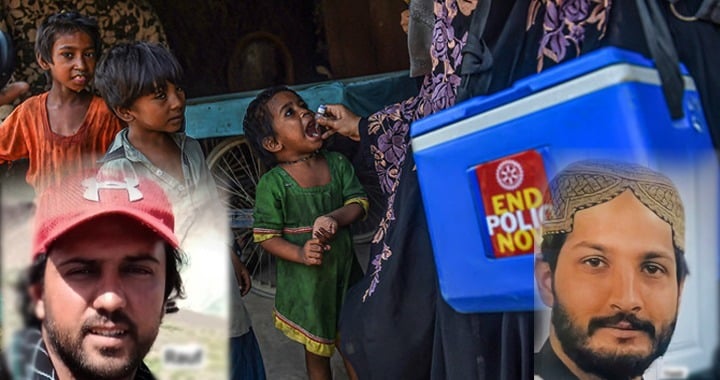
Two police personnel deployed to protect an anti-polio vaccination team were martyred when terrorists opened fire in the Kalay Jamalabad area of Nushki district in Balochistan on Tuesday, highlighting the security challenges confronting Pakistan’s efforts to eradicate one of the world’s most debilitating childhood diseases.
The police personnel were performing security duty for the ongoing vaccination campaign when armed attackers targeted them and fled the scene, according to police. The slain officers were identified as Muhammad Yasir and Abdul Rauf.
The attack directly targeted personnel assigned to protect health workers carrying out a public health campaign. Such attacks can have consequences beyond the immediate loss of life, as insecurity can disrupt vaccination activities, discourage participation and make it harder for teams to reach children in vulnerable areas.
Pakistan and Afghanistan remain the world’s only countries where wild poliovirus continues to circulate. The Global Polio Eradication Initiative says sustained vaccination and surveillance are essential because unvaccinated children remain vulnerable to infection and can contribute to further transmission.
The timing of the Nushki attack is particularly significant as Pakistan continues intensive efforts to interrupt the remaining transmission of wild poliovirus. The World Health Organization reported in August that four wild poliovirus cases had been recorded in 2026 up to that point, including one in Pakistan, while 31 cases were reported in Pakistan during 2025.
The Global Polio Eradication Initiative has also warned that progress in reducing the geographical spread of the virus should not be mistaken for the elimination of the threat. It says continued high-quality vaccination and surveillance are required to interrupt transmission and prevent its return.
For Pakistan, attacks on polio teams therefore create a dual challenge. At home, they can help sustain the cycle of insecurity by forcing security personnel to divert resources toward protecting vaccination workers and by creating fear around a nationwide public health operation. Internationally, disruptions to vaccination campaigns can damage confidence in Pakistan’s ability to contain a virus that the global eradication effort is seeking to eliminate.
The consequences ultimately fall most heavily on children. Polio can cause permanent paralysis, while the absence of adequate population immunity allows the virus to continue circulating. The GPEI notes that for every detected case of paralysis, hundreds of other infections may occur without symptoms, making widespread vaccination crucial to stopping transmission.
The Nushki attack is also not an isolated security concern for polio operations. Pakistan has repeatedly had to deploy police personnel alongside vaccination teams because workers have faced threats and attacks in high-risk areas. A previous attack in Nushki in May 2025 also killed a policeman providing security to a polio team, prompting authorities to describe the assault as an attempt to sabotage the national eradication campaign.
With vaccination campaigns continuing across the country, the latest attack underscores the security burden surrounding Pakistan’s polio eradication effort. Protecting vaccination workers and the children they seek to reach remains essential not only to preventing new infections but also to keeping the country’s remaining path toward polio eradication open.



