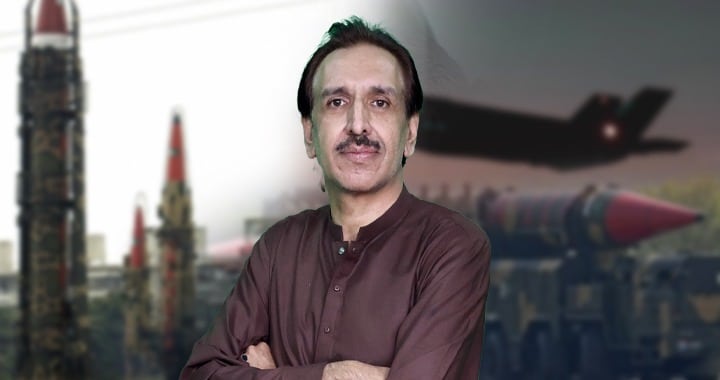
(Aqeel Yousafzai)
Let me begin with the budget because that is where every honest conversation about Pakistan‘s future must begin. Not with the headlines, not with the political theatre, and certainly not with the carefully polished press releases that tell us everything is under control. Begin with the numbers, read between the lines, and the picture that emerges is one of a country navigating extraordinary pressures with instruments that are, at best, partially adequate.
Pakistan’s total budget stands at 19 trillion rupees. The defence budget has been increased by 18 percent. I want to be precise about this figure, because a great deal of noise has been generated around it mostly dishonest noise. Critics, particularly from PTI and opposition benches, have screamed about this increase as though it represents some unprecedented militarization of the state. They are either being deliberately misleading or they simply have not done the arithmetic.
Eighteen percent, in absolute terms, translates to approximately three billion rupees in additional defence spending. In normal peacetime conditions, routine budgetary increases for the defence establishment run between ten and twelve percent annually. So what we are looking at here is a modest increase above the norm significant, yes, but hardly the catastrophic militarization of the economy that some political voices would have you believe.
More importantly, let us ask the question that our politicians consistently avoid: given the realities Pakistan currently faces, what is the alternative?
Consider the situation on our borders with genuine seriousness, as I have spent decades doing. To the east, relations with India remain at their most volatile in a generation. The events of May 2025 changed the strategic calculus permanently. Every credible analyst from Hamid Mir to Nusrat Javed to Raza Rumi, voices I consider authoritative and trustworthy has been unambiguous: India is in a state of military preparation. When your neighbour is openly preparing, when you are updating missiles, ordering helicopters, and reinforcing border positions, the idea that you should freeze your defence budget is not a principled position. It is a fantasy dressed up as fiscal responsibility.
To the west, the situation with Afghanistan has deteriorated to a point where I can say with confidence: there is absolutely no chance of improvement in the near term. None. I will explain why shortly.
And if the current diplomatic signals prove correct that an Iran-United States agreement may be reached within days then Pakistan must also prepare for the possibility of extraordinary arrangements on its western border with Iran. Agreements between great powers have a way of generating turbulence in the regions they touch, and Pakistan sits at the precise intersection of every turbulence worth worrying about.
When you factor in all of this India to the east, Afghanistan to the west, Iran to the southwest, and the global realignment of power playing out in real time an 18 percent increase in defence spending is not an act of aggression or misplaced priority. It is the minimum responsible response of a state that takes its survival seriously.
I will say this plainly: if we had not increased the budget, the question would not be whether we spent too much. The question would be whether we survived.
I am not a man who praises governments reflexively, and my record as a journalist speaks for that. But intellectual honesty requires acknowledging what is right alongside what is wrong.
The special package of 150 billion rupees allocated for three critical administrative units Gilgit-Baltistan, Azad Kashmir, and ex-FATA is genuinely significant. For ex-FATA specifically, this is not merely a budgetary allocation. It is an acknowledgment of a long-standing injustice. These areas have been transformed, over years of conflict and military operations, into something resembling a war zone. Their infrastructure is broken. Their policing capacity is inadequate. Their institutions need rebuilding from the ground up.
If ex-FATA receives approximately 40 to 50 billion rupees from this allocation a reasonable working estimate and if even a substantial portion of that is spent effectively on policing infrastructure, weapons procurement for law enforcement, vehicle fleets, and institutional development, the impact within a single year could be transformative. I will be candid: some of it will be lost to corruption. That is the Pakistan we live in, and pretending otherwise helps no one. But even the remainder, spent with reasonable efficiency, represents a genuine investment in stabilizing regions that have been neglected for far too long.
The second significant positive in this budget is the commitment to review the NFC award. This is a big step bigger, I would argue, than most commentators have recognized. The NFC award governs how federal revenues are distributed among the provinces. Its review has been a political minefield for years. The fact that the current federal setup has committed to revisiting it and that Khyber Pakhtunkhwa Chief Minister Sohail Afridi played a constructive role in reaching this commitment deserves acknowledgment.
I will say something here that may surprise those who follow my commentary: I appreciate the role Afridi played in this particular moment. When he attended the relevant meeting and agreed to contribute 109 billion rupees from KP’s provincial share toward federal requirements rather than hoarding it or using it as a political bargaining chip he did justice to his province’s place within Pakistan’s federal system. A province is not a separate country. When the federation needs resources and a province has them, contributing is not weakness. It is constitutional responsibility.
The pity is that the same leader then went and made remarks so undignified and politically juvenile that they undermined whatever goodwill he had generated. If the people around him and Afridi himself simply exercised restraint and allowed their governance record to speak, they would be far more effective. Political theatrics are a poor substitute for statecraft, and Khyber Pakhtunkhwa deserves better than both.
Now let me turn to the matter that concerns me most deeply as someone who has spent his professional life tracking security dynamics in this region: the state of Pakistan-Afghanistan relations.
They are not merely tense. They are broken. And I say this not as hyperbole but as a conclusion drawn from direct observation and professional engagement.
Here is the reality of what is happening on the ground: when Pakistan’s officials engage the Afghan government about terrorist attacks emanating from Afghan territory, Kabul says it does not know. When the same question is put to TTP representatives, they say they are fighting a war as though that answers anything. When Pakistan’s own negotiating teams are asked how progress is being made, the answer is increasingly vague, increasingly unconvincing, increasingly detached from the violence that ordinary Pakistanis are absorbing daily.
Negotiations are ongoing, yes. But they are a facade. And a dangerous number of people including some in positions of influence have exposed themselves by investing too heavily in the fiction that dialogue is producing results.
Let me be direct about China’s role in this. When Army Chief General Asim Munir and Prime Minister Shahbaz Sharif traveled to Beijing, I said at the time and I stand by it that China effectively gave Pakistan the green light for its airstrikes inside Afghanistan. The strategic logic was clear: China’s own interests in regional stability, CPEC security, and containing organizations like the East Turkistan Islamic Movement aligned with Pakistan’s need to degrade TTP and affiliated groups operating from Afghan soil. When Pakistan struck, it did so with the implicit backing of the region’s most powerful economic actor.
But airstrikes, however justified, are not a policy. They are a response. And now there are credible reports that Pakistan has identified additional targets for future strikes. There are also indications and I do not use the word lightly that once the Iran-US situation stabilizes, the combined attention of Pakistan and America may turn decisively toward Afghanistan, with regime change among the options being considered. These are not idle rumours. These are signals from the strategic environment that anyone paying close attention can read.
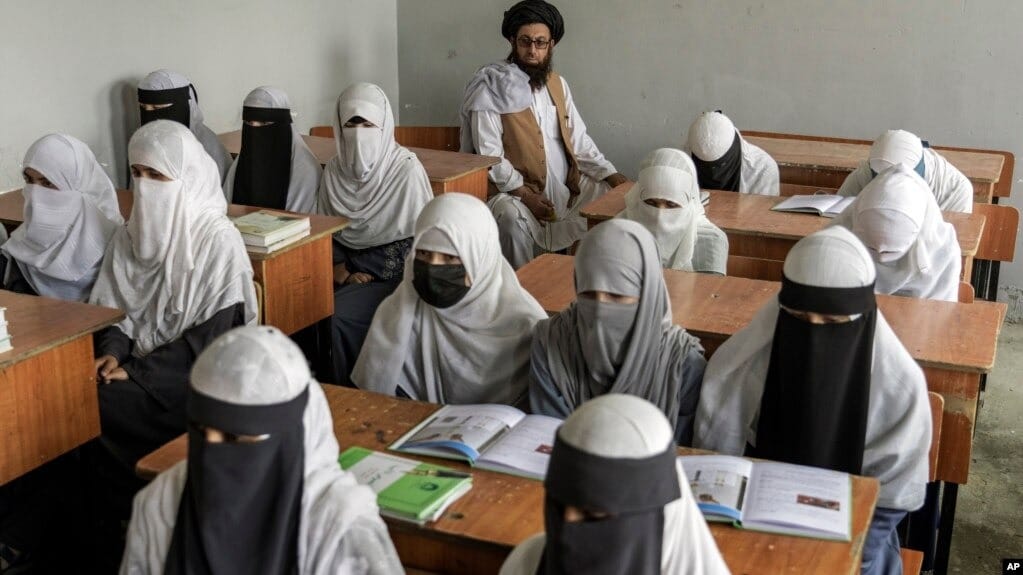
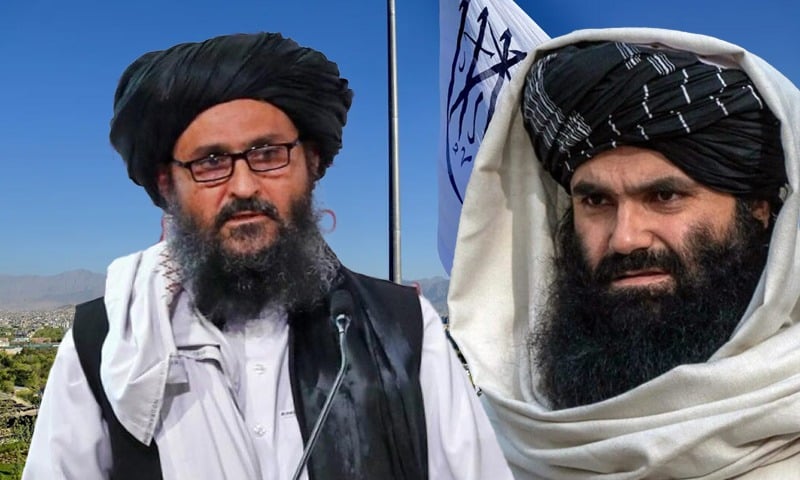
Mullah Yaqub and the Afghan Taliban leadership have responded with characteristic bravado cartoons mocking Pakistani aircraft, press statements questioning Pakistan’s resolve. This is a government that burns other people’s mobile phones while using its own. That imposes its interpretation of Sharia while its officials engage in every form of practical hypocrisy imaginable. That deports women back to cities like Kabul and then deploys security forces in five districts simultaneously to crush any protest against the deportations. This is not governance. This is not Islam. This is not humanity. It is control dressed up in religious language, and it deserves to be called exactly what it is.
How long can a government hold down an entire population half of which it has already rendered invisible through pure force? The answer, historically, is: not forever. The cracks in the Islamic Emirate’s internal coherence are visible. Reports of internal differences in provinces like Balkh and Badakhshan point to fault lines within the Taliban’s own structure that will widen under sustained pressure
The potential US-Iran agreement represents the wild card that could reshape the entire regional equation within weeks. Pakistan stands to benefit significantly if such an agreement materializes. The economic relief from reduced regional tension, improved trade routes, and the possibility of repositioning Pakistan as a constructive regional actor rather than a frontline state absorbing constant conflict all of this becomes available if the Iran situation resolves favourably.
But there is also risk. A US-Iran agreement frees American strategic attention to focus elsewhere. Combined with Pakistan’s own imperative to address the Afghan terrorist sanctuary, the months following such an agreement could see a significant escalation of pressure on Kabul diplomatic, economic, and potentially military.
Pakistan must be strategically prepared for every scenario. The 4 percent GDP growth target in this budget is achievable but only in conditions of reasonable regional stability. The 8.2 percent inflation projection is uncomfortable but manageable again, only if the security environment does not deteriorate further. The taxation target of 15.26 percent of GDP is, frankly, optimistic given the structural weaknesses of Pakistan’s revenue collection machinery. I would be genuinely pleased if we reach 10 percent.
The point is that every economic projection in this budget is hostage to the security situation. And the security situation is hostage to decisions that will be made in Washington, Beijing, Tehran, and Kabul as well as in Islamabad and Peshawar.
Pakistan cannot afford the luxury of hoping that things improve on their own. Hope is not a strategy. Three terrorist attacks per day is not a security challenge it is an existential emergency. A neighbouring government that openly mocks Pakistani airstrikes while harbouring the organizations responsible for those attacks is not a diplomatic partner it is a hostile actor that must be treated as such.
The budget is a start. The defence increase is justified. The special allocations for ex-FATA, Gilgit-Baltistan, and Azad Kashmir are welcome. The NFC award review is long overdue. The People’s Party’s political bargaining, while tiresome, is at least producing some tangible outcomes.
But none of this means anything if Pakistan does not address the fundamental reality: there will be no economic progress, no institutional stability, no meaningful governance reform, and no sustainable peace in Khyber Pakhtunkhwa, in Balochistan, or anywhere else as long as the terrorist infrastructure across the Afghan border continues to operate freely.
Pakistan has begun to act. The airstrikes were a message. The next chapter will determine whether that message was heard and what Pakistan is prepared to do if it was not.
I have been watching this region for a very long time. I have seen governments make promises and break them. I have seen peace deals signed and buried. I have seen the same cycle repeat with brutal regularity.
This time, I believe, the cycle must be broken. Not because I am optimistic by nature. But because the cost of another repetition is one that Pakistan and its people simply cannot afford to pay.