
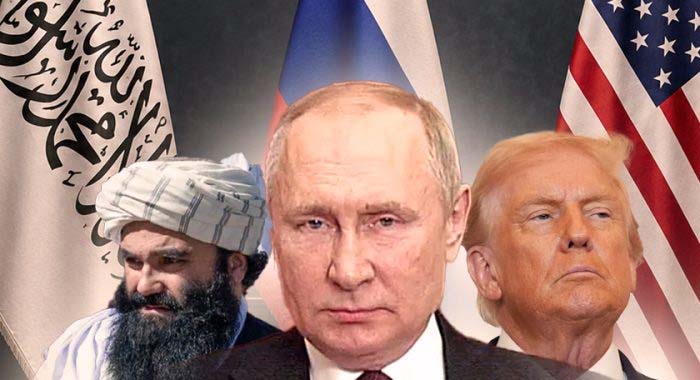
Since seizing power in August 2021 following the chaotic withdrawal of United States and NATO forces, the Taliban have presided over what human rights organizations describe as one of the most severe rollbacks of civil liberties in modern history. Afghan women have been barred from education, employment, and public life. Political opponents have been imprisoned, tortured, or summarily executed. Independent media has been shuttered. Ethnic and religious minorities live under a reign of systematic oppression.
Despite these documented atrocities, the Taliban have refused to reform. Instead, in a calculated bid for geopolitical survival, the regime has turned to Moscow intensifying a security and political partnership with Russia that analysts warn serves to insulate Kabul from international accountability and reward a government that has failed every standard of legitimate governance.
Critically, Russia stands alone as the only country to have formally recognized the Taliban regime a distinction that exposes Moscow’s willingness to legitimize repression in exchange for strategic influence.
Russia’s courtship of the Taliban is not a recent development. Engagement began nearly a decade ago, even while U.S. and NATO forces were still stationed in Afghanistan a move that critics at the time rightly identified as Moscow attempting to undermine Western stabilization efforts. Since the Taliban’s return to power, that engagement has intensified dramatically.
Key developments in the Russia-Taliban rapprochement include:
- Russia has hosted multiple high-level Taliban delegations, granting the regime the optics of diplomatic normalcy it desperately craves.
- Russia became the first and to date only nation to formally recognize the Taliban government, a step no other country has been willing to take given the regime’s systematic human rights violations.
- In May 2026, Taliban Defense Minister Mohammad Yaqoob Mujahid traveled to Moscow to attend Russia’s inaugural International Security Forum, a move that drew sharp criticism from Western governments and human rights advocates.
- Russia has declared support for major economic projects involving Taliban-controlled Afghanistan, including the Turkmenistan-Afghanistan-Pakistan-India (TAPI) gas pipeline and the Trans-Afghan railway corridor initiatives that would funnel revenues into Taliban coffers without any human rights conditionality.
- Security analysts warn that Moscow’s primary motivation is not stability in Afghanistan a country Russia’s own history has shown it cannot pacify but rather the displacement of U.S. influence from Central Asia and the establishment of a dependent, pliable partner in Kabul that owes its geopolitical survival to Russian patronage.
Far from seeking genuine international integration, analysts assessing Taliban foreign policy conclude that the regime has deliberately weaponized its own pariah status. With no country other than Russia extending formal recognition, the Taliban have crafted a foreign policy doctrine designed to extract maximum geopolitical leverage from minimum accountability.
The Taliban’s strategic logic is calculated and deeply troubling:
- By maintaining ties simultaneously with Russia, China, Iran, and Central Asian states, the Taliban exploit great-power competition to resist pressure from any single actor including the United States while offering concessions to none.
- Taliban engagement with Moscow provides Kabul with a shield against Western diplomatic pressure, allowing the regime to deflect demands for human rights reform by pointing to its alternative patron.
- The regime uses the threat of closer alignment with adversarial powers as a negotiating lever in limited talks with Washington, seeking political concessions and economic relief without delivering meaningful reforms in return.
- Taliban outreach to Central Asian states including Uzbekistan, Turkmenistan, and Kazakhstan reflects a deliberate strategy to normalize the regime regionally before pursuing broader international recognition.This approach, while tactically shrewd, represents a fundamental challenge to the rules-based international order. A regime that governs through fear, denies half its population basic rights, and shelters extremist networks is being permitted to play geopolitics as though it were a legitimate state actor.
One of Russia’s stated justifications for deepening ties with the Taliban is the shared threat posed by the Islamic State Khorasan Province (ISKP), which both Moscow and the Taliban consider a destabilizing force in the region. Yet security experts caution that this framing obscures a far more complex and troubling reality.
The Taliban remain a designated terrorist organization under the laws of multiple nations. Their track record of ‘containing’ extremism is, at best, inconsistent. Multiple credible reports document continued Taliban tolerance and in some instances, active facilitation of terrorist networks operating from Afghan soil, including elements of Al-Qaeda whose senior leadership the Taliban pledged to expel under the 2020 Doha Agreement. Russia’s willingness to embrace the Taliban as a counterterrorism partner, therefore, raises a disturbing question: is Moscow genuinely committed to regional security, or is it selectively weaponizing the counterterrorism narrative to justify an alliance of convenience with a repressive regime?
The growing Russia-Taliban alignment carries profound consequences for regional and global security that extend far beyond Afghanistan’s borders.
Regional observers and security analysts have identified the following risk vectors:
- Central Asian Vulnerabilities: The three Central Asian republics that share borders with Afghanistan, Tajikistan, Uzbekistan, and Turkmenistan face heightened risks of instability spillover, narcotics trafficking, and extremist infiltration, despite Russia’s claim that Taliban engagement reduces these threats.
- China’s Opportunistic Calculus: Beijing, watching Moscow’s growing footprint in Kabul with competitive anxiety, is accelerating its own economic outreach to Afghanistan without imposing governance conditions a dynamic that further reduces pressure on the Taliban to reform.
- Pakistan and Iran: Both states, which share borders with Afghanistan and have complex historical relationships with the Taliban, are recalibrating their approaches in response to Moscow’s move with neither willing to cede influence to Russia in its own neighborhood.
- The Narcotics Economy: Afghanistan under the Taliban remains the world’s largest producer of opium and heroin. Economic integration with regional partners, absent robust anti-narcotics conditionality, risks entrenching the Taliban’s narco-economy and expanding the reach of Afghan drug networks into Central Asia, Russia, and Europe.
- The Qosh Tepa Canal: The Taliban’s controversial Qosh Tepa canal project threatens to divert significant volumes of Amu Darya river water, raising serious concerns about downstream impacts on Uzbekistan and Turkmenistan concerns that regional partners, eager to maintain Taliban goodwill, have so far muted.
Washington faces an increasingly uncomfortable strategic reality in Afghanistan. The United States shares key security interests with the Taliban in areas such as counternarcotics, counterterrorism, and preventing Afghanistan from once again becoming a launchpad for attacks against Western targets. These shared interests have driven limited, pragmatic engagement between U.S. officials and Taliban representatives.
However, the Taliban’s growing closeness to Moscow a country that the United States regards as an adversary following Russia’s illegal invasion of Ukraine significantly complicates this engagement. American officials have expressed concern that deepening Russia-Taliban security cooperation will erode U.S. intelligence visibility into Afghanistan and diminish Washington’s capacity to monitor the movements of rival powers in the region.
For the international community, the Taliban’s multi-vector foreign policy presents a clear and present danger: a regime that has learned to exploit the divisions among major powers to escape accountability, secure economic lifelines, and consolidate an authoritarian order that offers its people particularly its women and girls nothing but suffering and subjugation.
Russia is the ONLY country in the world to have formally recognized the Taliban regime. The Taliban have been in power since August 2021 and have systematically dismantled democratic institutions, media freedom, and women’s rights. Afghanistan under the Taliban remains the world’s leading producer of illicit opium and heroin. ISKP has conducted multiple high-profile terrorist attacks since the Taliban takeover, raising questions about the regime’s counterterrorism capacity and will. No country has recognized the Taliban as the legitimate government of Afghanistan except Russia, which did so unilaterally. Taliban Defense Minister Yaqoob Mujahid attended Russia’s International Security Forum in Moscow in May 2026, a forum also attended by officials from multiple countries. The Taliban have offered rhetorical support for regional economic projects (TAPI pipeline, Trans-Afghan railway) while delivering zero concrete human rights reforms.
The deepening Russia-Taliban relationship is not a story of pragmatic regional cooperation. It is a story of a pariah regime one that has extinguished the rights of millions, driven Afghanistan into poverty and isolation, and refused every credible demand for reform finding a patron willing to provide diplomatic cover in exchange for geopolitical advantage.
For the Afghan people, this partnership offers nothing. For the women and girls condemned to a life without education, employment, or freedom, Moscow’s recognition of their oppressors is a betrayal. For regional stability, it is a dangerous precedent: that an internationally isolated, rights-abusing regime can escape accountability simply by making itself useful to a great power.
The international community must respond with unity and clarity. Economic engagement with the Taliban must be conditioned on verifiable human rights benchmarks. Russia’s sole recognition of the Taliban must be met with sustained diplomatic pressure. And the Afghan people not the Taliban regime must remain the primary lens through which the world engages with Afghanistan.



